Andrew Kokoraleis and the Chicago Ripper Crew
Background
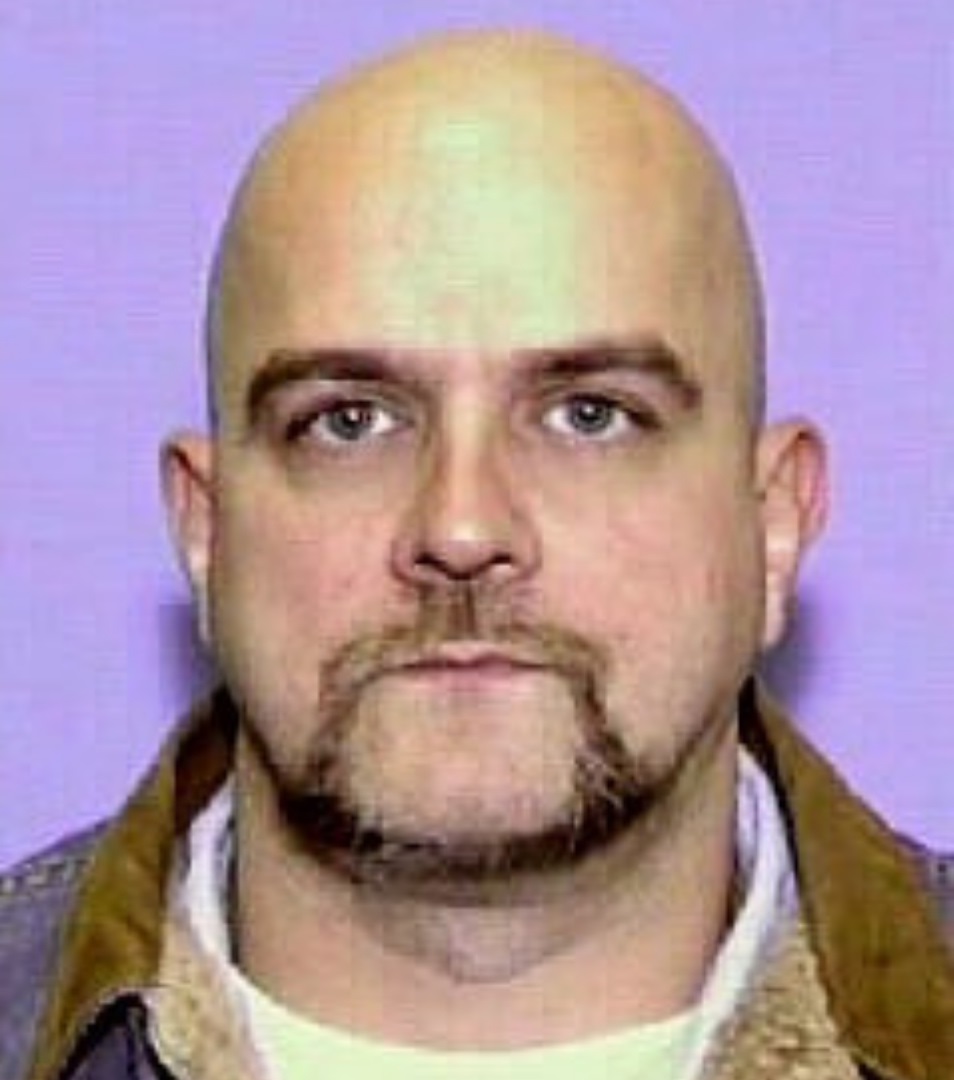
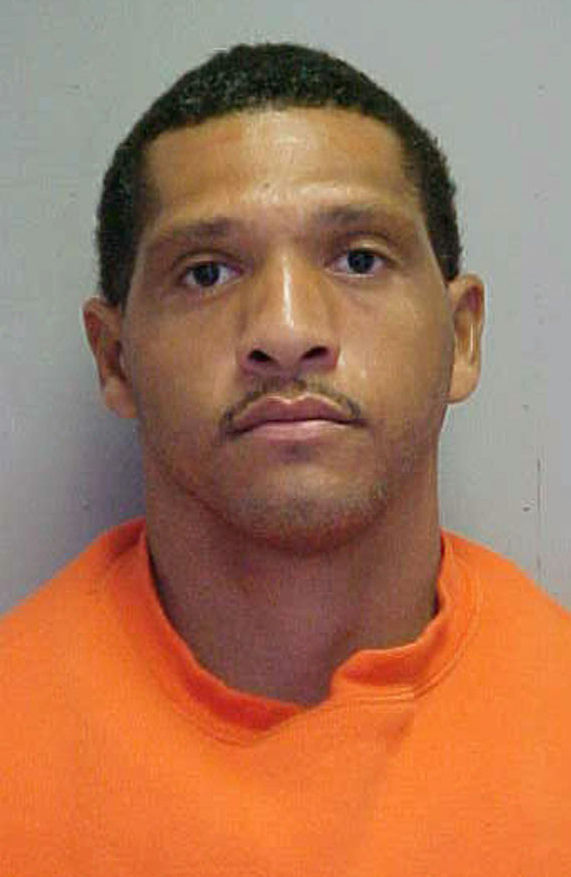
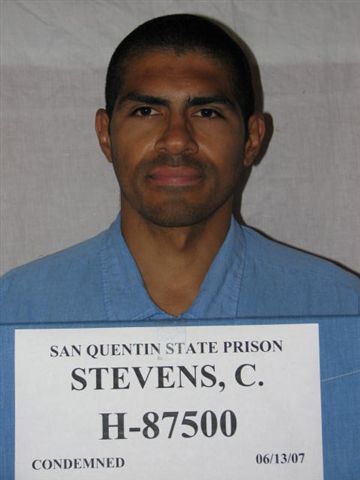
Andrew Kokoraleis was an American serial killer and a member of the group commonly known as the Chicago Ripper Crew. The group operated in Chicago and its surrounding suburbs during the early 1980s. Its known members were Andrew Kokoraleis, his brother Thomas Kokoraleis, Robin Gecht and Edward Spreitzer. Investigators connected the men to a series of abductions, sexual assaults, mutilations and murders involving women who were taken from public places and transported to secluded locations.
The crimes attributed to the group were notable for their repeated pattern. Women traveling alone were approached or forced into a vehicle, usually a reddish-orange van owned by Gecht. They were then driven to isolated fields, alleys, construction sites or other locations where they were assaulted and attacked with knives, axes or ice picks. Several victims suffered extensive injuries to the chest, and prosecutors argued that the similarities demonstrated a recognizable method of operation.
Kokoraleis eventually gave investigators several statements describing his participation in the crimes. He later withdrew those statements and claimed that police officers had supplied him with details, threatened him and forced him to confess. Juries nevertheless accepted the prosecution’s evidence and convicted him of murdering Rose Beck Davis and Lorraine “Lori” Borowski. Evidence concerning the murders of Linda Sutton and Shui Mak was also introduced during his trials to demonstrate the repeated pattern of the group’s attacks.
Known Victims Connected to Andrew Kokoraleis
- Linda Sutton — May 23, 1981 — Chicago and Villa Park, Illinois: Twenty-six-year-old Linda Sutton disappeared from Chicago on the evening of May 23, 1981. Her body was discovered on June 1 in a field behind the Brer Rabbit Motel in an unincorporated area near Villa Park. Her hands had been restrained behind her back, and her clothing had been disturbed. An autopsy determined that she died from stab wounds and the resulting blood loss. Portions of her chest were missing. Although the condition was initially attributed to decomposition or animal activity, a later review concluded that the injuries were consistent with deliberate amputation. Kokoraleis gave several accounts in which he placed himself, Robin Gecht and Edward Spreitzer at the scene, though the details of his statements varied.
- Lorraine “Lori” Borowski — May 15, 1982 — Elmhurst and Darien, Illinois: Twenty-one-year-old Lori Borowski disappeared while arriving for work at a real estate office in Elmhurst on the morning of May 15, 1982. Her employer found her shoes, keys, cosmetics, coins and a small hand tool scattered on the pavement outside the office. Her skeletal remains were discovered on October 10, 1982, in an unused section of a cemetery in Darien. Examination of the remains revealed multiple wounds consistent with stabbing by a knife or ice pick, as well as a fractured nasal bone. Kokoraleis told investigators that he and Edward Spreitzer had forced Borowski into a van, driven her to the cemetery, beaten and stabbed her, and dragged her body into weeds. He was convicted of her murder and aggravated kidnapping.
- Shui Mak — May 30, 1982 — Western Cook County, Illinois: Thirty-year-old Shui Mak disappeared during the early morning hours of May 30, 1982, while returning to Lombard from her family’s restaurant in Streamwood. Her skeletal remains were found on September 30 in a wooded area near a housing development in northwestern Cook County. An autopsy revealed multiple skull fractures caused by blunt-force trauma, broken ribs and a completely severed forearm bone. Kokoraleis stated that he and Edward Spreitzer encountered a woman walking alone, offered her a ride and transported her to an isolated construction area. According to his statement, the woman was dragged from the van, beaten and attacked. Kokoraleis later denied that his confession was truthful.
- Rose Beck Davis — September 8, 1982 — Chicago, Illinois: Rose Beck Davis, a marketing executive from Broadview, was found dead on September 8, 1982, in an alley or gangway near the 1200 block of North Lake Shore Drive in Chicago. She had been abducted, sexually assaulted, beaten and fatally stabbed. Kokoraleis was prosecuted in Cook County for her murder. Prosecutors presented his statement describing how Davis was taken from a Chicago street and assaulted after being driven to a secluded gangway. A jury convicted Kokoraleis of four murder counts, two counts of rape and two counts of aggravated kidnapping arising from Davis’s killing. The jury rejected the death penalty in that case, and he received a sentence of life imprisonment without parole.
The Abduction and Murder of Lori Borowski
The Borowski case became the crime for which Kokoraleis was ultimately executed. Borowski lived only a few blocks from the Elmhurst real estate office where she worked as a secretary. On May 15, 1982, a neighbor saw her leave for work shortly after 8:00 in the morning. She normally arrived by approximately 8:30, but when her employer reached the office, it remained locked. Her personal belongings were lying outside, strongly suggesting that she had been seized suddenly and had struggled during the abduction.
A reddish-orange van had been observed in a normally empty area of the shopping center parking lot that morning. Months later, police stopped a similar vehicle driven by Edward Spreitzer and owned by Robin Gecht. Knives were discovered in the back of the van. Investigators also learned that the interior handle of the rear door was missing and that a tool could be inserted into the mechanism to open it. The small nutdriver found among Borowski’s belongings could have been used for that purpose.
On October 10, nearly five months after Borowski vanished, her remains were discovered in a cemetery in Darien. Clothing and jewelry helped identify her, while dental records and X-rays provided formal confirmation. Her clothes were disarranged, and her bones contained several small circular wounds consistent with an ice-pick attack. Other wounds could have been caused by either a knife or an ice pick.
After his arrest in November 1982, Kokoraleis identified photographs of Borowski and reportedly told detectives that she was the woman he and Spreitzer had killed in the cemetery. He stated that they had seen her near the shopping center, forced her into the van and driven her to the cemetery. There, according to his oral and handwritten statements, both men beat and stabbed her before leaving her body in the vegetation.
Confessions and Claims of Coercion
Kokoraleis was questioned by officers from several law-enforcement agencies following his arrest. During those interrogations, he gave oral, written and recorded statements concerning numerous crimes. His accounts included details about the victims, the vehicles involved, the weapons used and the locations where bodies had been abandoned. A federal appellate court later noted that he had confessed to participating in the killings of as many as eighteen women, although he was not prosecuted or convicted for eighteen separate murders.
At trial, Kokoraleis denied involvement in the Borowski, Sutton and Mak murders. He maintained that investigators had provided him with information and pressured him into repeating it. He alleged that officers struck him, deprived him of rest and threatened him during questioning. Law-enforcement witnesses denied his accusations, and prosecutors emphasized that he had given incriminating statements to personnel from several different agencies at different times.
The prosecution also argued that facts in Kokoraleis’s statements corresponded with evidence that had not been publicly known. The repeated similarities among the attacks strengthened the state’s case. Each of the women had been alone in a public place, taken to a secluded location, violently assaulted and left without an apparent robbery motive. Gecht’s van was repeatedly identified as the vehicle used by the offenders.
Trials and Convictions
Kokoraleis was first convicted in Cook County for the murder of Rose Beck Davis. Although prosecutors sought the death penalty, the jury chose life imprisonment without parole. His attorneys portrayed him as a follower who had been influenced by Robin Gecht rather than the organizer of the crimes. The jury’s decision spared his life in the Davis prosecution but did not prevent prosecutors in another county from seeking a death sentence for Borowski’s murder.
In DuPage County, Kokoraleis stood trial for the murder and aggravated kidnapping of Lori Borowski. Prosecutors introduced his statements about Borowski and evidence concerning Linda Sutton and Shui Mak. The Sutton and Mak evidence was not presented merely to suggest that Kokoraleis had a violent character. The Illinois Supreme Court ruled that it was admissible because the crimes shared numerous distinctive characteristics and helped establish identity, intent, presence and a common method of operation.
The jury convicted Kokoraleis of Borowski’s murder and aggravated kidnapping. During the sentencing proceedings, prosecutors relied partly on his previous conviction for the murder of Rose Beck Davis to establish that he had participated in more than one killing. The jury found him eligible for capital punishment and concluded that the mitigating evidence was insufficient to prevent a death sentence. He also received an additional thirty-year prison term for aggravated kidnapping.
Appeals and Execution
Kokoraleis continued to challenge his convictions and death sentence through state and federal courts. His attorneys argued that his confessions had been coerced, that evidence from other murders had unfairly influenced the jury and that his legal representation during sentencing had been ineffective. They also claimed that because the Davis jury had rejected the death penalty, the state should not have been permitted to seek execution in the Borowski case.
The courts rejected those arguments. They determined that the Cook County jury had selected a punishment for the murder of Rose Beck Davis, while the DuPage County jury had independently selected a punishment for the murder of Lori Borowski. The fact that the first jury imposed life imprisonment did not prevent another jury from imposing death for a separate murder.
Andrew Kokoraleis was executed by lethal injection at Tamms Correctional Center on March 17, 1999. He was thirty-five years old. Shortly before his execution, he expressed sympathy to the Borowski family and said that he was sincerely sorry for their loss. His execution became historically significant because he was the final person put to death in Illinois before the state halted executions in 2000. Illinois later abolished the death penalty.
Legacy of the Case
The crimes associated with Andrew Kokoraleis and the Chicago Ripper Crew remain among the most disturbing serial murder cases in Illinois history. The group’s attacks spread fear throughout the Chicago region, particularly because the victims were taken from ordinary public settings such as streets, parking lots and commercial districts. The investigation eventually brought together evidence from Chicago, Cook County and several suburban jurisdictions.
Kokoraleis’s case also became part of the broader debate surrounding capital punishment in Illinois. His execution occurred while serious questions were being raised about wrongful convictions, police interrogation methods and the reliability of the state’s death-penalty system. Although Kokoraleis repeatedly denied his guilt after withdrawing his confessions, two separate juries convicted him of murder, and reviewing courts upheld the central evidence against him.
Behind the notorious name of the Chicago Ripper Crew were individual victims whose lives ended in calculated acts of violence. Linda Sutton, Lori Borowski, Shui Mak and Rose Beck Davis were not simply names in a criminal prosecution. Their disappearances devastated families, generated extensive investigations and exposed a group of offenders whose crimes crossed city and county boundaries. The convictions of Kokoraleis and his associates brought legal accountability, but the brutality of the crimes and the unanswered questions surrounding other suspected victims have continued to give the case a lasting and deeply troubling place in American criminal history.