Howard Monteville Neal: Murders in Mississippi and California
Overview
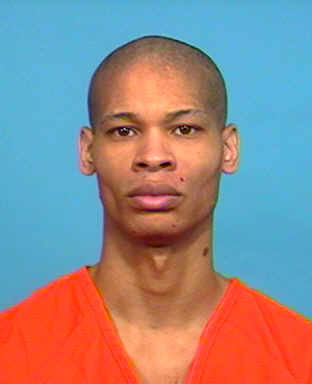
Howard Monteville Neal is an American convicted murderer and self-confessed serial killer whose known crimes occurred in California and Mississippi between 1980 and 1981. He was convicted in Mississippi for the murders of his 13-year-old niece, Amanda Joy Neal, and his half-brother, Bobby Clifford Neal. Evidence and court records also established his responsibility for the murder of 12-year-old Melanie Sue Polk during the same violent episode. Decades later, Neal confessed to killing two young travelers whose bodies had been discovered in a shallow grave in the Mojave Desert in 1980.
Neal’s crimes were marked by abduction, sexual violence, shootings and attempts to conceal the victims in remote locations. Three members of the same Mississippi family were murdered during a single night in January 1981. The earlier California case remained largely unresolved for decades because the victims could not be identified. Advances in forensic genetic genealogy eventually restored their names and strengthened the connection between Neal and five known victims.
The Mojave Desert Double Murder
During 1980, Neal lived in or near Ludlow, a small desert community in San Bernardino County, California. At some point that year, he encountered two young travelers later identified as Pamela Dianne Duffey and William Everette “Digger” Lane. The pair were reportedly hitchhiking together when Neal offered them transportation and brought them to his residence.
According to the confession Neal gave investigators in 2017, he attempted to sexually assault Pamela. William intervened, and Neal attacked and killed him. Neal then sexually assaulted Pamela and killed her. Both victims suffered gunshot wounds and blunt-force injuries. Their unclothed bodies were placed together in a shallow grave in an isolated area of the Mojave Desert near Ludlow.
On November 17, 1980, an archaeologist working in the desert discovered the grave. Investigators found no clothing, identification or personal belongings that could reveal the victims’ identities. Their physical descriptions were entered into missing-person and unidentified-remains databases, but repeated efforts to identify them were unsuccessful. For approximately four decades, they were known only as an unidentified young woman and man.
Neal became a person of interest because he had lived in Ludlow during the period when the murders occurred and had departed the area before committing the Mississippi killings. Investigators were initially unable to question him fully about the California case. When detectives interviewed him in prison in November 2017, Neal confessed to killing the couple and described circumstances consistent with evidence from the crime scene. He claimed that he had never learned their names.
The victims were finally identified through forensic genetic genealogy. Pamela’s daughter, Christina Salley, had been searching for information about her biological mother and submitted DNA during that effort. Investigators established that the unidentified woman was Pamela Dianne Duffey, who was born in 1959. DNA supplied by William Lane’s family subsequently confirmed the identity of the male victim. Authorities announced the identifications in 2021, more than 40 years after the bodies were discovered.
The Mississippi Family Murders
In January 1981, Neal left an oil-field job in Texas and traveled to Mississippi with his wife and young daughter. After leaving them at a motel in Brookhaven, he visited the rural home of his half-brother, 41-year-old Bobby Clifford Neal, near Arm in Lawrence County. Bobby lived there with his 13-year-old daughter, Amanda Joy Neal. Amanda’s 12-year-old cousin, Melanie Sue Polk, was staying with the family for a weekend visit.
On the night of January 24, 1981, Howard Neal, Bobby, Amanda and Melanie left the home together. During the trip, one of the girls complained that Howard had touched her inappropriately. Bobby became angry and confronted his half-brother. Neal later stopped in a wooded area and persuaded or forced Bobby to accompany him away from the vehicle.
Once the two men were isolated in the woods, Neal restrained Bobby’s hands and shot him in the chest. He left Bobby’s body concealed in the remote area and returned to the vehicle, where Amanda and Melanie were waiting. With Bobby no longer able to protect them, Neal used a firearm to control the two girls and drove them to another secluded location.
Neal sexually assaulted Amanda and attempted to assault Melanie. He then shot both children and abandoned them in the woods. Amanda was also beaten and strangled. Although both girls had been gravely wounded, evidence suggested that at least one of them may have remained alive long enough to move from the place where she had initially fallen.
The killings occurred during the night of January 24 and the early hours of January 25, 1981. January 25 is recorded as the date of death for Amanda and is generally used for all three victims because the precise time at which each person died could not be established.
Discovery of the Victims
Amanda’s body was discovered on February 6, 1981, near a logging road close to the Pearl River. A passing couple noticed her remains and contacted authorities. Melanie’s body was found in a separate location later that day. The distance between the girls contributed to investigators’ belief that one may have tried to crawl away after being shot.
Bobby remained missing after the girls were found. Because investigators initially did not know that he had also been murdered, he was briefly considered a possible suspect in their deaths. That theory ended when Bobby’s body was discovered on March 1, 1981. The condition and location of his remains showed that he had been killed during the same sequence of events.
Investigators soon focused on Howard Neal, who had abruptly left Mississippi and returned to California after the murders. Witness statements, his relationship to the victims and information supplied by his wife helped authorities reconstruct his movements. Law enforcement agencies circulated information indicating that Neal was wanted for questioning in connection with all three homicides.
Arrest and Confession
On March 6, 1981, Neal was arrested for shoplifting in Stockton, California. A routine records check revealed that Mississippi authorities wanted to question him about the deaths of Bobby, Amanda and Melanie. Police also discovered firearms and handcuffs associated with Neal, including weapons that investigators examined as part of the murder investigation.
During questioning, Neal made statements describing the Mississippi crimes. His confession included details about taking the victims away from Bobby’s home, shooting Bobby in the woods, sexually attacking the girls and shooting them at a second location. Prosecutors used the confession together with physical evidence and witness testimony to establish his responsibility.
Trials and Sentences
Neal was first prosecuted for the kidnapping and capital murder of Amanda Joy Neal. His trial began in February 1982 after the court considered questions concerning his mental competency. The prosecution introduced his confession and evidence demonstrating that Amanda had been abducted, sexually assaulted and murdered.
On February 4, 1982, a jury convicted Neal of Amanda’s capital murder and sentenced him to death. The conviction and sentence were upheld during the initial stages of his appeals. Neal was later prosecuted for the murder of Bobby Clifford Neal. In August 1982, he was convicted and received a life sentence after the jury did not unanimously agree on imposing another death sentence.
Although Melanie Sue Polk’s murder was an essential part of the evidence presented in Neal’s cases, Mississippi correctional records list two capital-murder sentences, corresponding to the prosecutions involving Amanda and Bobby. Court decisions nevertheless describe Neal as having raped and murdered Melanie during the same episode.
Neal spent years challenging his death sentence. Psychological examinations and court proceedings found that he had significant intellectual limitations. Following decisions restricting the execution of intellectually disabled prisoners, his death sentence was eventually converted to life imprisonment. In 2023, the Mississippi Supreme Court ordered additional resentencing proceedings addressing his intellectual disability, age and deteriorating health. Mississippi correctional records list him as serving life sentences for capital murder.
Known and Confessed Victims
- Pamela Dianne Duffey — Approximately 20 or 21 years old. Killed in 1980; the exact date of death is unknown. Her body was discovered on November 17, 1980, in a shallow grave in the Mojave Desert near Ludlow, San Bernardino County, California. Neal confessed in 2017 to sexually assaulting and killing her.
- William Everette “Digger” Lane — Approximately 19 or 20 years old. Killed in 1980; the exact date of death is unknown. His body was discovered with Pamela Duffey on November 17, 1980, near Ludlow, California. Neal confessed to killing Lane after Lane attempted to protect Pamela from an assault.
- Bobby Clifford Neal — 41 years old. Killed during the night of January 24–25, 1981, near Arm in Lawrence County, Mississippi. He was restrained and shot in the chest in a wooded area. His body was discovered on March 1, 1981. Howard Neal was convicted of his murder in August 1982.
- Amanda Joy Neal — 13 years old. Died on January 25, 1981, near Arm in Lawrence County, Mississippi. She was abducted, sexually assaulted, shot, beaten and strangled. Her body was discovered near a logging road on February 6, 1981. Neal was convicted of her capital murder on February 4, 1982.
- Melanie Sue Polk — 12 years old. Killed during the night of January 24–25, 1981, near Arm in Lawrence County, Mississippi. Neal attempted to sexually assault her and then shot her. Her body was discovered on February 6, 1981, in a location separate from Amanda’s remains.
Identification of the California Victims
The identification of Pamela Duffey and William Lane transformed the California investigation. For decades, investigators knew that two people had been murdered but could not notify their relatives or reconstruct their final movements. Neal’s confession supplied a description of the killings, but because he claimed not to know their names, it did not immediately solve the problem of identification.
Forensic scientists developed DNA profiles from the victims’ remains and compared them with genetic information supplied by potential relatives. Pamela was identified after the search initiated by her biological daughter produced a family connection. William’s identity was confirmed through DNA obtained from his family. The work demonstrated how genetic genealogy could resolve a case even when the offender’s identity was suspected but the victims themselves remained unknown.
Classification as a Serial Killer
Neal’s Mississippi crimes alone involved three murders committed during one continuous event and could therefore be described as a multiple or mass killing. His admitted responsibility for the separate California double murder established another homicidal episode occurring months earlier and in a different state. Taken together, the California and Mississippi cases support his classification as a serial killer with five known or confessed victims.
No reliable public evidence has established additional victims beyond these five, although the long delay in connecting Neal to the Ludlow murders has led investigators and researchers to consider whether he may have committed other crimes while traveling between California, Texas and Mississippi. Any additional involvement remains unproven. His documented record consists of the three Mississippi family murders and the two California killings to which he confessed.
Legacy of the Case
Howard Monteville Neal’s case spans more than four decades of criminal investigation and legal proceedings. The Mississippi murders were solved relatively quickly after his arrest, but the California victims remained without names for most of that period. His eventual confession and the later DNA identifications connected two seemingly separate chapters of violence committed hundreds of miles apart.
The case is also remembered for its complex sentencing history. Neal was originally condemned to death for Amanda’s murder, but extensive litigation concerning his intellectual disability prevented his execution and ultimately resulted in life imprisonment. Regardless of the changes to his sentence, the evidence established a pattern of predatory violence that claimed the lives of five people, including two children and members of his own family.