Winford Stokes: Missouri Serial Killer and Escaped Prisoner
Early Life and Criminal Background
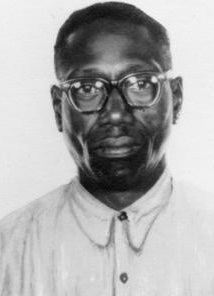
Winford LaVern Stokes Jr. was born on March 21, 1951, in St. Louis, Missouri. He was one of ten children and left school after completing the eighth grade. By the age of 18, Stokes had become involved in armed robbery and lethal violence, beginning a criminal history that continued through repeated imprisonment, escapes from custody, home invasions and murder.
Stokes was ultimately connected to three confirmed homicide victims between 1969 and 1978. He participated in the robbery during which tavern owner Ignatius DiManuele was shot, murdered elderly widow Marie Montgomery during a residential burglary and killed Pamela Benda after meeting her at a lounge. He was convicted of manslaughter in connection with the first death, pleaded guilty to second-degree murder for Montgomery’s killing and received a death sentence for the capital murder of Benda.
The Murder of Ignatius DiManuele
On April 30, 1969, 18-year-old Winford Stokes joined David H. Richards and Allen E. Smith in an armed robbery at a tavern located at 3044 Easton Avenue in St. Louis. The three young men initially entered the business pretending to be ordinary customers. Once inside, they drew pistols and announced that the establishment was being robbed.
The customers and the tavern’s owner, Ignatius DiManuele, were forced to lie on the floor while the assailants emptied the cash register. During the robbery, DiManuele was shot and killed by one of the participants. The three men then escaped in a vehicle belonging to Stokes.
Approximately two weeks later, detectives encountered Stokes and attempted to question him. During the encounter, he reportedly tried to discard a pistol. Stokes was arrested, and the subsequent investigation led authorities to Richards and Smith. Witnesses identified the three men as the perpetrators of the tavern robbery.
Although Stokes was not identified as the person who fired the fatal shot, he was legally responsible as a participant in the armed robbery. He eventually pleaded guilty to manslaughter and other charges arising from the crime.
First Escape from Custody
While awaiting court proceedings, Stokes was held under guard at Homer G. Phillips Hospital in St. Louis. On October 23, 1970, Stokes and four other prisoners overpowered a deputy responsible for guarding them. The prisoners took the deputy’s revolver, clothing and automobile keys. They tied the deputy with strips torn from a bedsheet before fleeing.
Several of the prisoners were recaptured shortly after the escape, while Stokes remained at large for a longer period. He was eventually returned to custody. In August 1971, he was sentenced to nine years in prison for manslaughter, two counts of first-degree robbery and escape.
The Hammer Attack on Erssie Lucas
After serving part of his prison sentence and returning to the St. Louis area, Stokes resumed committing violent crimes. On December 7, 1977, he went to the residence of 71-year-old Erssie Lucas intending to commit a robbery.
When Lucas opened the door, Stokes attacked him with a claw hammer. Lucas suffered serious injuries but survived. Stokes stole money from the residence and fled. The assault demonstrated the extreme violence Stokes was willing to use against elderly and vulnerable victims for financial gain.
The Murder of Marie Montgomery
Five days after attacking Lucas, Stokes entered the St. Louis apartment of 73-year-old Marie Montgomery. Montgomery was a widow who lived alone. During the home invasion on December 12, 1977, Stokes shot her in the neck and right arm, causing her death.
After shooting Montgomery, Stokes ransacked the apartment and searched for valuables. He stole property, including a wristwatch, before leaving the residence. Montgomery’s niece became concerned when she failed to attend church services and went to check on her. The niece discovered Montgomery’s body inside the apartment.
Stokes was arrested on January 15, 1978, in connection with the armed robbery and hammer attack on Erssie Lucas. Authorities transported him to the Malcolm Bliss Mental Health Center for a psychiatric evaluation. Stokes escaped from the institution that same day, once again becoming a fugitive.
The Murder of Pamela Benda
On the evening of February 18, 1978, 33-year-old Pamela R. Benda went to a St. Louis County lounge known as Some Place Else, located on Lindbergh Boulevard. Benda, a divorced mother of three, had recently moved into an apartment at 6600 Washington Avenue in University City and worked at the Washington University Faculty Conference Center.
Stokes was also at the lounge that night with acquaintances. Witnesses observed him talking, drinking and dancing with Benda. When the people who had accompanied Stokes prepared to leave, he told them that Benda had agreed to provide him with transportation. Stokes and Benda remained together after the others departed.
Benda and Stokes later went to her apartment. Inside the residence, Stokes violently assaulted her. She was beaten, cut with a kitchen knife and strangled. An apron was found wrapped around her neck, although the medical evidence indicated that she had been manually strangled. Her bedroom had been disturbed and searched, suggesting that robbery was among Stokes’s motives.
After killing Benda, Stokes stole jewelry and her 1974 Plymouth Scamp automobile. He used the stolen vehicle to travel to South Bend, Indiana, where some of Benda’s property, including a pendant watch, was sold or pawned.
Benda’s body was discovered after an apartment manager used a passkey to admit a maintenance worker. Police searched the apartment and recovered fingerprints from several objects, including a liquor bottle, a cosmetic container and areas near the bed. Multiple fingerprints were identified as belonging to Stokes.
Investigators also developed evidence showing that Stokes had been seen driving Benda’s automobile following her death. Witness testimony placed him with her shortly before the murder, while the fingerprints and possession of her stolen property directly contradicted his initial claims that he did not know Benda and had never been inside her apartment.
The case became informally associated with the phrase “Mr. Goodbar” because a copy of the novel “Looking for Mr. Goodbar” was reportedly found in Benda’s apartment. The novel involved a woman who was murdered by a man she met at a bar, creating a superficial similarity to the circumstances of Benda’s death.
Confirmed Victims
- Ignatius DiManuele — Killed on April 30, 1969, at his tavern at 3044 Easton Avenue in St. Louis, Missouri. He was shot during an armed robbery committed by Stokes, David H. Richards and Allen E. Smith. Stokes was convicted of manslaughter as a participant in the fatal robbery.
- Marie Montgomery, 73 — Killed on December 12, 1977, inside her apartment in St. Louis, Missouri. Stokes shot her in the neck and right arm, ransacked the residence and stole property, including a wristwatch.
- Pamela R. Benda, 33 — Killed on February 18, 1978, inside her apartment at 6600 Washington Avenue in University City, Missouri. She was beaten, cut with a knife and strangled after meeting Stokes at the Some Place Else lounge. Stokes stole her jewelry and automobile after the murder.
Final Arrest and Another Escape
Stokes was eventually arrested after fleeing Missouri. He was returned to St. Louis and indicted in June 1978 for the murders of Marie Montgomery and Pamela Benda. The evidence against him included witness identifications, stolen property, possession of Benda’s vehicle and fingerprints recovered from her apartment.
On December 3, 1978, while being held at Homer G. Phillips Hospital, Stokes escaped again. He fled with prisoners Samuel Smith and Earl Davis after the group overpowered guards and took weapons and clothing. Federal authorities launched a search for the fugitives.
FBI agents located Stokes and the other escapees on the South Side of Chicago. They were captured on December 11, 1978. This arrest ended Stokes’s repeated escapes and allowed Missouri prosecutors to proceed with the murder cases.
Conviction for the Murder of Marie Montgomery
On September 10, 1979, Stokes pleaded guilty to second-degree murder for killing Marie Montgomery. He was sentenced to 50 years in prison. The guilty plea avoided a separate trial in which prosecutors would have presented evidence connecting him to Montgomery’s home invasion, shooting and robbery.
Prosecutors offered Stokes another 50-year sentence, to be served concurrently, if he would plead guilty to murdering Pamela Benda. Stokes rejected the offer and elected to face a jury trial on the capital murder charge.
Capital Murder Trial
During Stokes’s trial for Benda’s murder, prosecutors presented a combination of eyewitness testimony and physical evidence. Witnesses established that Stokes had met Benda at the lounge and remained with her after his acquaintances left. Other evidence showed that he possessed her vehicle and stolen jewelry after she was killed.
Fingerprints recovered from Benda’s apartment provided particularly significant evidence. Stokes had initially denied knowing Benda or entering her residence, but his fingerprints were found on objects inside the apartment. Prosecutors argued that he had accompanied Benda home, attacked and strangled her, searched the apartment and fled with her property.
On October 24, 1979, the jury found Stokes guilty of capital murder. During the sentencing phase, prosecutors emphasized the brutality of the killing, the robbery motive, Stokes’s prior violent record and the fact that he was an escaped prisoner when he murdered Benda. The jury recommended a sentence of death.
Appeals and Execution
Stokes challenged his conviction and death sentence through the state and federal court systems. The Missouri Supreme Court upheld the conviction and sentence. His execution was delayed while courts considered additional appeals, but each attempt to overturn the judgment was ultimately unsuccessful.
Winford LaVern Stokes Jr. was executed by lethal injection on May 11, 1990, at the Potosi Correctional Center in Mineral Point, Missouri. He was 39 years old. Stokes declined to make a final statement and was pronounced dead at 9:39 p.m.
Criminal Pattern and Legacy
Stokes’s confirmed crimes extended across nearly nine years and revealed a persistent pattern of armed robbery, attacks on vulnerable victims and escalating homicidal violence. He began as an accomplice in a fatal tavern robbery and later became the direct perpetrator of two residential murders.
His repeated escapes from hospitals and institutional custody were a defining feature of his criminal history. Most significantly, his escape from the Malcolm Bliss Mental Health Center allowed him to remain free long enough to encounter and murder Pamela Benda.
The evidence in the Benda case ended Stokes’s ability to deny responsibility. Witnesses placed him with the victim, his fingerprints were recovered from her apartment, and he possessed her stolen vehicle and jewelry. His conviction and execution concluded a criminal career that left three people dead and several others traumatized or seriously injured.