Polly Bartlett: The Legendary "Murderess of Slaughterhouse Gulch"
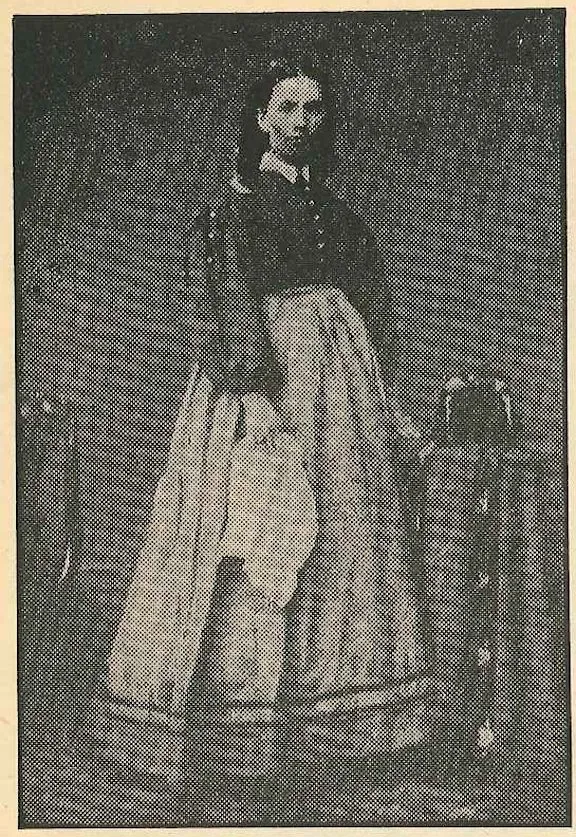
Polly Bartlett is one of the most disturbing and controversial figures in the folklore of the American West. According to a story that became widely circulated during the twentieth century, Bartlett and her father operated an isolated lodging house near South Pass City in what is now Wyoming and murdered travelers for their money during the gold-rush era of the late 1860s. Polly was said to have selected men who appeared to be carrying gold, cash, or other valuables, served them food or whiskey containing arsenic, and then robbed them after they died. Her father allegedly helped dispose of their bodies.
The traditional account credits the Bartletts with approximately 22 murders during 1867 and 1868. However, Polly Bartlett's story has a serious historical problem: researchers have been unable to verify the murders through surviving contemporary records. The earliest detailed version generally cited appeared many decades after the supposed crimes. Modern Wyoming historians have therefore questioned whether Bartlett was a genuine serial killer at all, and some consider the entire story to be frontier folklore rather than documented criminal history.
Arrival Near South Pass City
Later accounts describe Polly as the daughter of a man variously identified as Stephen, Jim, or John Bartlett. This inconsistency is one of several problems encountered when attempting to establish the family's history. The Bartletts were supposedly from Cincinnati, Ohio, where Polly's father operated a saloon or drinking establishment. Some versions claim that Polly was already involved in schemes in which men were distracted or seduced while her father robbed them.
The family reportedly traveled west during the mining boom and eventually stopped near South Pass City. Gold discoveries had transformed the area into an active mining district filled with prospectors, businessmen, cattle dealers, salesmen, and travelers. Many of these men carried cash or gold and traveled alone, making them potentially attractive targets for robbery.
The Bartlett family supposedly established themselves along Willow Creek approximately three miles from South Pass City. What began as a camp was later described as the Bartlett Inn, a simple lodging establishment with a house, barn, livestock corrals, and enough space to accommodate travelers.
The Alleged First Murder
According to the traditional story, one of the first men to encounter the Bartletts was a prospector named Lewis or Louis Nichols. Nichols was reportedly traveling east after having some success searching for gold. When he approached the Bartlett camp, he smelled food cooking and offered to pay generously for a meal.
The story claims that Nichols displayed enough money to convince Polly that robbing him would be far more profitable than simply accepting payment for dinner. Polly supposedly placed arsenic in his food. Nichols became violently ill, suffered convulsions, and died shortly afterward. His money and valuables were taken, and his body was allegedly buried in or near the family's livestock enclosure.
No reliable contemporary death record has been located that independently verifies Nichols' supposed murder or establishes an exact date of death. Because of that lack of verification, an exact death date should not be presented as established fact.
The Bartlett Inn and the Alleged Poisoning Scheme
The success of the Nichols robbery supposedly convinced Polly and her father to remain in the South Pass area. They constructed a more permanent lodging establishment and began waiting for additional travelers. According to the legend, Polly would evaluate arriving guests and attempt to determine whether they possessed enough money to make killing them worthwhile.
Travelers selected as victims were allegedly offered meals, alcohol, and Polly's companionship. Arsenic was said to have been mixed into steak, whiskey, or other food and drink. Once a victim became incapacitated and died, Polly and her father supposedly searched the body, removed money and valuables, and buried the remains in shallow graves around their property.
The remote environment offered the killers an effective explanation for disappearances. A lone traveler could vanish for numerous reasons on the nineteenth-century frontier. Later versions of the Bartlett story claim the family suggested that missing guests had continued on their journeys and subsequently encountered highway robbers or other dangers. Such explanations supposedly prevented immediate suspicion from falling upon the inn.
Named Alleged Victims
Although approximately 22 victims are claimed in the traditional account, only a small number are consistently identified by name. Exact death dates attributed to several of these men originate in later retellings and cannot presently be independently verified through contemporary records. They are therefore identified below without presenting disputed dates as confirmed historical facts.
- Lewis or Louis Nichols - Described as a successful gold prospector traveling east. He was allegedly poisoned with arsenic while eating a meal at the Bartlett camp near Willow Creek, approximately three miles from South Pass City. No independently verified exact death date has been established.
- Timothy "Tim" Flaherty - Described as a salesman or collection agent from Omaha who traveled through the region on business associated with the cattle industry. According to the story, Flaherty disappeared after stopping at the Bartlett property. No independently verified date of death has been established.
- Edmund or Edmond Ford - Identified in later accounts as the brother of a South Pass City resident. Ford supposedly disappeared after staying at the Bartlett Inn. Some twentieth-century versions assign him an April 14, 1868 death date, but that date has not been independently verified in contemporary records and should be regarded as part of the later narrative rather than a confirmed date of death.
- Theodore "Teddy" Fortune or Fountain - Usually described as a 23-year-old college student and the son of a wealthy mine owner. The surname appears as both Fortune and Fountain in different versions of the story. He was supposedly expected in the South Pass area around August 14, 1868 and disappeared after reaching the Bartlett Inn. August 14 is frequently repeated in later accounts, but surviving evidence does not establish it as a verified date of death.
- Carl Armentrout - Named as a Bartlett victim in later versions of the story. A date of June 18, 1867 has been attributed to his supposed murder, but the date comes from later accounts and has not been independently confirmed by contemporary documentation.
- James Lee - Listed among the alleged Bartlett victims in twentieth-century accounts. Reliable information concerning the circumstances, exact location, and date of his supposed death has not been independently verified.
- John Vaness - Another name appearing in later lists of alleged Bartlett victims. An independently documented date and location of death connected to Polly Bartlett have not been established.
- Unidentified men - The legend claims that a total of approximately 22 male victims were ultimately discovered buried around the Bartlett property near South Pass City. Most were never named in published versions of the story, and no contemporary record confirming the discovery of 22 bodies has been located.
The Disappearance of Theodore Fortune
The disappearance of the young man usually called Theodore Fortune is portrayed as the event that finally destroyed the Bartletts' operation. Theodore was said to be the son of a wealthy mining businessman named Barney or Bernard Fortune. Other versions use the surname Fountain for both father and son, illustrating the inconsistencies that developed as the story was retold.
Theodore was reportedly traveling to visit his father before returning to college. When he failed to arrive as expected, his family became concerned. Investigators were supposedly hired to retrace his journey. According to the legend, they successfully followed Theodore's movements until he reached the Bartlett Inn, where his trail abruptly ended.
Polly allegedly claimed Theodore had left the inn alive despite warnings that traveling alone after dark was dangerous. Investigators initially found no body or obvious evidence of murder. Nevertheless, suspicion increasingly centered on the Bartlett property.
An Intended Victim Who Escaped
Another frequently repeated element concerns a cattle buyer who allegedly escaped Polly's trap. The man was supposedly invited into the hayloft of the Bartlett barn after Polly determined that he carried substantial amounts of money while conducting cattle transactions.
While they were in the loft, Polly's father reportedly entered carrying a double-bit axe and whiskey. Polly encouraged the visitor to drink, but he refused alcohol. Becoming suspicious of the situation, he left the barn, mounted his horse, and returned to South Pass City. He reportedly told others about the disturbing encounter.
Some versions connect this surviving intended victim with the Ford family, but the identities and relationships vary from one telling to another. These inconsistencies make it impossible to treat the episode as firmly documented history.
Discovery of the Alleged Graves
According to the legend, the Bartlett family realized that suspicion was increasing and abruptly abandoned the inn. Their hurried departure reportedly attracted additional attention, causing authorities and local residents to search the property again.
Freshly disturbed earth was supposedly discovered beneath hay in the livestock corral. Searchers began digging and uncovered human remains. Additional graves were then discovered until, according to the most dramatic version of the story, 22 bodies had been recovered.
Edmund Ford was allegedly identified through a personalized Masonic ring. Theodore Fortune was reportedly identified through a distinctive gold belt buckle given to him by his family. These details are commonly repeated but have not been supported by known contemporary investigative reports, newspaper accounts, burial records, or court documents.
The claimed discovery of 22 murder victims would have represented an extraordinary crime even by frontier standards. The absence of surviving contemporary reporting about such a discovery is one of the principal reasons historians question whether it occurred.
The Hunt for Polly and Her Father
The traditional account says that substantial rewards were offered after the alleged graves were discovered. Theodore's wealthy father supposedly offered $10,000, while an additional territorial reward of $3,000 was said to have been authorized for the capture of the Bartletts.
A man associated with the Ford family reportedly followed the fugitives into the wilderness. Approximately a week after the Bartletts fled, he supposedly located their camp in the Hoback River Valley. When Polly's father attempted to reach a firearm, the pursuer shot and killed him.
Polly was allegedly taken alive and returned to the South Pass area. Other family members traveling with the Bartletts were reportedly released because authorities did not believe there was sufficient evidence connecting them to the murders.
Polly Bartlett's Alleged Death
The story places Polly in a jail at Atlantic City or in the South Pass area while she awaited trial. According to later accounts, she never had the opportunity to appear before a jury.
On October 7, 1868, a man identified as Otto Kalkhorst allegedly approached the jail carrying a shortened double-barreled shotgun. Kalkhorst was described as a mine foreman employed by the father of Theodore Fortune. He supposedly fired through the jail window or bars, striking and killing Polly.
Some versions claim that authorities chose not to prosecute Kalkhorst because local residents considered Polly's death frontier justice. Like the murder accusations themselves, however, the circumstances and even the October 7, 1868 date attached to Polly's death remain dependent upon later accounts rather than a complete surviving contemporary criminal record.
A Serial Killer or a Frontier Legend?
The greatest problem with the Polly Bartlett story is not merely disagreement over individual details. Historians have questioned whether the Bartlett murders occurred at all. The famous narrative appears to have entered widespread circulation many decades after 1868, most notably through a detailed article published in Real West magazine in 1963. Later books, magazines, websites, and local stories repeated and expanded the account.
Researchers familiar with South Pass City history have searched for contemporary evidence of Polly Bartlett, the Bartlett Inn murders, the supposed discovery of 22 bodies, the enormous reward, and the sensational killing of an accused female serial murderer in jail. They have not found the type of documentation that would normally be expected from a crime of this magnitude.
The problem is especially significant because South Pass during the gold rush was observed by travelers, miners, officials, businessmen, and chroniclers whose writings have survived. A discovery of 22 murder victims followed by a massive manhunt and the public killing of the accused murderer would have been an extraordinary event, yet the story is conspicuously absent from known contemporary accounts.
Problems With the Victim Dates
Several exact dates commonly attached to Bartlett's alleged victims can be traced to twentieth-century versions of the story rather than verified nineteenth-century death records. For that reason, dates such as June 18, 1867 for Carl Armentrout, April 14, 1868 for Edmund Ford, and August 14, 1868 for Theodore Fortune or Fountain should not be represented as independently confirmed dates of death.
There are also inconsistencies in basic names. Polly's father is variously called Jim, John, and Stephen Bartlett. Theodore's surname appears as both Fortune and Fountain. Different accounts reverse the names of the Ford brothers or change which brother survived and which supposedly died. Such discrepancies reinforce the need to separate the traditional narrative from established historical fact.
Legacy
If the traditional account were accurate, Polly Bartlett would rank among the most prolific female serial killers in American history and would have committed her crimes before Wyoming was even fully established as a territory. Her alleged method combined poison, robbery, isolation, and the anonymity of frontier travel in a manner that resembles several genuine nineteenth-century murder cases involving criminal innkeepers.
Yet Polly Bartlett cannot responsibly be presented in the same manner as a serial killer whose victims, deaths, investigations, and convictions are supported by official records. No trial established her guilt, and modern historical research has failed to confirm the supposed 22 murders. Even historians who believe the legend may contain some element of truth acknowledge that the surviving evidence is insufficient to determine how much of the story actually happened.
Polly Bartlett therefore occupies an unusual place between criminal history and Western folklore. The image of a young innkeeper quietly poisoning wealthy travelers, robbing their bodies, and burying them beneath a Wyoming cattle corral has endured for decades. It is a compelling and frightening story, but the named victims and precise dates found in later accounts should be treated as allegations rather than verified homicide records. Until contemporary documentation is discovered, the "Murderess of Slaughterhouse Gulch" remains one of the American West's most enduring alleged serial-killer legends rather than a conclusively documented murderer.