Charles Howard Schmid: The “Pied Piper of Tucson”
Background and Reputation
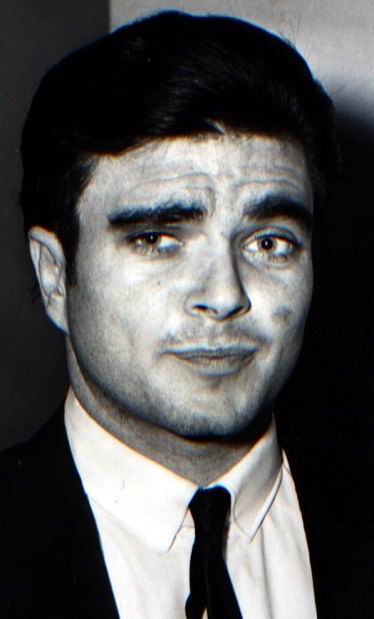
Charles Howard Schmid Jr. was an American serial killer who murdered three teenage girls in Tucson, Arizona, during 1964 and 1965. Known by acquaintances as “Smitty,” he became nationally infamous as the “Pied Piper of Tucson” because of his unusual ability to attract and influence teenagers. Although he was only about five feet four inches tall, Schmid attempted to make himself appear taller by stuffing newspapers, rags, flattened cans, and other material into his cowboy boots. The padding gave him a distinctive rolling walk that he falsely claimed resulted from injuries suffered during a fight with organized-crime figures.
Schmid carefully constructed an appearance intended to make him resemble a rebellious celebrity. He dyed his naturally reddish-brown hair black, applied makeup, whitened his lips, and drew an artificial mole on his cheek. He was fascinated by Elvis Presley and adopted exaggerated facial expressions and mannerisms. His strange appearance, access to money, willingness to host parties, and open rejection of conventional authority made him appealing to some young people in Tucson.
Born in Tucson on July 8, 1942, Schmid was adopted as a child by Charles and Katharine Schmid, who operated a nursing home. He was intelligent and athletically talented, becoming an accomplished gymnast who helped his high school win a state championship. However, he left school before graduating after being suspended for stealing tools. As a young adult, he lived in separate quarters on his family’s property, received a generous allowance, and spent much of his time driving around Tucson, attending parties, and surrounding himself with teenagers who were impressed by his money and defiant personality.
The Murder of Norma Alleen Rowe
Schmid committed his first confirmed murder on May 31, 1964. The victim was 15-year-old Norma Alleen Rowe, who was generally known by her middle name, Alleen. Schmid had reportedly spoken about wanting to kill someone and selected Rowe after she resisted the sexual attention of members of his social circle. Rather than approach her alone, he involved his girlfriend, 17-year-old Mary French, and his friend John Saunders.
French repeatedly contacted Rowe and eventually persuaded her to leave home by presenting the outing as a double date. Before picking her up, Schmid and Saunders obtained a shovel and placed it in the trunk of Schmid’s car. The preparation of a burial tool before the group left for the desert demonstrated that Rowe’s death was planned rather than the result of a sudden confrontation.
After arriving in an isolated desert area outside Tucson, Rowe was restrained. Schmid blamed the situation on Mary French and claimed that French hated her. According to later testimony, Schmid assaulted Rowe and encouraged Saunders to participate. Saunders later stated that Schmid ordered him to strike Rowe with a rock, but Saunders refused. Schmid then killed Rowe by repeatedly striking her with a rock.
Schmid, French, and Saunders buried the teenager in the desert. Rowe was initially considered a missing person, and her fate remained concealed for more than a year. Schmid treated the killing as proof of his power, eventually telling several acquaintances that he had murdered her. He also showed at least one person the approximate location of her grave. His willingness to boast about the crime would later contribute to his arrest.
The Murders of Gretchen and Wendy Fritz
In 1965, Schmid became involved with 17-year-old Gretchen Fritz, the daughter of a prominent Tucson physician. Their relationship was volatile and controlling. At some point, Schmid told Gretchen that he had murdered Alleen Rowe and reportedly showed her where Rowe had been buried. Gretchen therefore possessed information that could have connected him to the still-unsolved disappearance.
As Schmid attempted to distance himself from Gretchen, she allegedly threatened to reveal what she knew. Schmid appears to have decided that killing her was the only way to prevent her from going to the police. Gretchen’s 13-year-old sister, Wendy Fritz, was also killed because she was present and could identify Schmid or disclose what had happened.
Gretchen and Wendy disappeared on August 16, 1965, after leaving home in Tucson. Schmid strangled both sisters and concealed their bodies in the desert near East Pontatoc Road. Unlike Alleen Rowe’s carefully hidden grave, the sisters’ burial site was relatively shallow and poorly concealed. Their disappearance attracted considerable attention because of their family’s community standing and because both girls had vanished together.
Schmid again spoke about the murders to people around him. He confided in his friend Richard “Richie” Bruns and took him to the place where the sisters had been buried. Bruns became increasingly disturbed by Schmid’s behavior and feared that Schmid might kill additional people, including Bruns’s girlfriend. After leaving Arizona and going to Ohio, Bruns disclosed what he knew to members of his family. He eventually contacted authorities and returned to Tucson to assist investigators.
Confirmed Victims
- Norma Alleen Rowe, age 15 — Murdered on May 31, 1964, after being taken from her Tucson home under the pretense of a double date. She was assaulted and killed with a rock in an isolated desert area near Tucson, Arizona. Her body was buried in the desert and remained undiscovered until November 1965.
- Gretchen Fritz, age 17 — Murdered on August 16, 1965, in Tucson, Arizona. Gretchen had been romantically involved with Schmid and knew that he had killed Alleen Rowe. Schmid strangled her after she allegedly threatened to reveal his secret. Her body was buried near East Pontatoc Road in the Tucson desert.
- Wendy Fritz, age 13 — Murdered on August 16, 1965, along with her older sister Gretchen in Tucson, Arizona. Wendy was strangled because she was present and could become a witness. Her body was buried beside or near Gretchen’s body in the desert near East Pontatoc Road.
The Investigation and Discovery of the Bodies
Richard Bruns’s decision to cooperate gave investigators the information they needed to focus on Schmid. Bruns described Schmid’s admissions and directed police toward the desert burial site. In November 1965, investigators recovered the remains of Gretchen and Wendy Fritz near the Pontatoc Road area. The sisters were identified through dental records.
The discovery transformed the missing-person investigation into a double-murder case. Police also began reexamining the disappearance of Alleen Rowe. Mary French and John Saunders were questioned about the night Rowe vanished, and their statements provided investigators with a detailed account of Schmid’s planning and actions. Rowe’s remains were subsequently recovered from her desert grave.
Schmid was arrested on November 10, 1965. His carefully cultivated image quickly collapsed as investigators reconstructed the murders through physical evidence, witness statements, and the testimony of people who had once belonged to his social circle. The investigation revealed that several teenagers had heard rumors or direct admissions about the killings but had remained silent because they feared Schmid, admired him, or believed that reporting him would place them in danger.
Accomplices and Other People Charged
Mary French and John Saunders were not accused of personally committing all three murders, but both became legally involved because of their participation in the events surrounding Alleen Rowe’s death. French had helped lure Rowe from her home, while Saunders accompanied the group into the desert and helped conceal the crime. Their cooperation later became important to the prosecution of Schmid.
Saunders pleaded guilty to a murder charge connected to Rowe’s death and testified about Schmid’s actions. French was convicted as an accessory in connection with the killing. Richard Bruns was not prosecuted as an accomplice to the murders. Although he had delayed reporting Schmid’s admissions, his eventual decision to contact authorities and guide investigators to the bodies was crucial in solving the case.
Trials and Convictions
Schmid was first prosecuted for the murders of Gretchen and Wendy Fritz. The trial attracted extensive local and national attention. Newspapers and magazines portrayed Tucson as a community struggling to understand how a young man with such an unusual appearance and public reputation could maintain control over a group of teenagers while openly hinting that he had committed murder.
In March 1966, Schmid was convicted of first-degree murder for killing Gretchen and Wendy Fritz. He received two death sentences. During separate proceedings concerning Alleen Rowe, he initially went to trial but later pleaded guilty to second-degree murder. He received a sentence of 50 years to life for Rowe’s death.
Schmid challenged his convictions, arguing that extensive publicity had made it impossible for him to receive a fair trial. The Arizona Supreme Court rejected his claims and upheld the convictions. His case became one of the most widely discussed criminal proceedings in Arizona history during the 1960s.
Death Sentence and Imprisonment
Schmid was sent to the Arizona State Prison in Florence. His death sentences were later affected by changes in American capital-punishment law. After the United States Supreme Court invalidated existing death-penalty procedures in the early 1970s, Schmid’s death sentences were reduced to prison terms.
On November 11, 1972, Schmid escaped from the Arizona State Prison with fellow inmate Raymond Hudgens. The escapees briefly held several people hostage at a ranch near Tempe before separating. Schmid was recaptured and returned to prison. The escape added to his notoriety but did not result in lasting freedom.
Death in Prison
On March 20, 1975, Schmid was attacked by fellow prisoners Jimmy Ferra and Dennis Eversole. He was stabbed dozens of times and suffered severe injuries, including the loss of an eye and a kidney. Although he survived the initial assault, his condition deteriorated.
Charles Howard Schmid died from his wounds on March 30, 1975, at the age of 32. Ferra and Eversole pleaded guilty to second-degree murder and received additional prison sentences. Schmid was buried in the cemetery at the Arizona State Prison in Florence.
Legacy of the Case
The crimes of Charles Schmid became a disturbing example of manipulation, peer pressure, and collective silence. He did not depend on physical size or conventional attractiveness to control people. Instead, he created a rebellious identity that attracted vulnerable teenagers and convinced some of them that loyalty to him was more important than the lives of his victims.
The case received national attention through magazine reports, books, and later fictional works. Author Joyce Carol Oates drew inspiration from the Schmid case when writing her short story “Where Are You Going, Where Have You Been?” His crimes also influenced several films and novels involving charismatic young killers who prey upon teenagers.
Behind Schmid’s manufactured image were the deaths of three young girls: Alleen Rowe, Gretchen Fritz, and Wendy Fritz. Their murders exposed how intimidation and misplaced loyalty can delay justice. Schmid maintained his secret only as long as the people around him remained silent. Once Richard Bruns and others began speaking to investigators, the image of the mysterious “Pied Piper” was replaced by the documented reality of a calculating murderer who killed to satisfy his desires and protect himself from exposure.