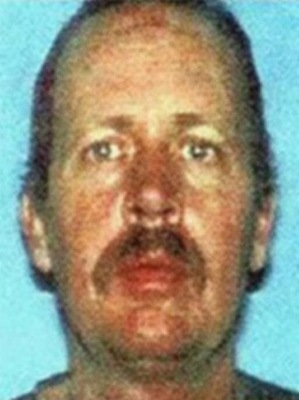
Serial Killer Gregory John Teron Jr.
Overview
Gregory John Teron Jr. was an American serial killer convicted of three murders committed in California and Michigan between 1975 and 1977. His known victims included a motel guest whom he killed during a robbery, an elderly landlady whom he beat and hanged, and a fellow jail inmate whom he strangled. Teron also claimed responsibility for at least two additional killings, although those statements did not result in confirmed identifications or murder convictions.
Teron used different methods of violence depending on the circumstances. He beat, strangled, smothered and hanged his victims, often attacking people who were isolated or unable to obtain immediate assistance. Robbery was a clear motive in at least two of the confirmed murders. His statements to investigators suggested that he viewed killing with extraordinary indifference and could not, or would not, provide a reliable total of how many people he had murdered.
The Murder of Earl Reed
On the evening of October 3, 1975, Earl Reed checked into room 227 at the Caravan Inn in Anaheim, California. Teron was staying nearby in room 229 on a weekly basis. According to Teron’s later confession, he spoke with Reed in the motel parking lot and decided that he would rob him. Teron admitted that he also intended to kill Reed so that the victim could not identify him afterward.
During the early morning hours of October 4, Reed invited Teron into his room for beer. Both men had been drinking, and Reed was intoxicated. Teron briefly lost consciousness while sitting in the bathroom. When he emerged, he demanded Reed’s money. Reed refused, and Teron struck him repeatedly in the face, knocking him backward onto the bed.
Reed resisted when Teron attempted to strangle him and began crying for help. A guest in the adjoining room heard a man shouting that he was being killed. The cries continued for several minutes, but no one entered the room or summoned immediate assistance. Teron pressed a pillow over Reed’s face until he stopped struggling.
A motel maid discovered Reed’s body later that morning. He was lying facedown on the bed and had been wrapped in bedding. His face was severely bruised, several teeth had been dislodged, and blood was found on a pillowcase and towel. An autopsy determined that Reed died after aspirating blood produced by the extensive injuries to his mouth and nose. By holding the pillow over Reed’s face, Teron prevented the blood from escaping and effectively caused him to suffocate in it.
Teron ransacked the room and stole Reed’s wallet, obtaining only $1.75 and several credit cards. Police questioned him the following day. He agreed to take a polygraph examination but fled to Colorado instead. He was not returned to California until after he had been convicted of two murders in Michigan.
The Murder of Norma Maxham
In 1976, Teron rented a room in the Fairplain area of Benton Township, Michigan, from 75-year-old Norma Maxham. On October 17, 1976, Maxham confronted Teron about the filthy condition of the room and told him that he would have to leave. Her criticism provoked a violent attack.
Teron beat Maxham until she was unconscious. He removed her clothing, bound her with electrical cord and suspended her by the neck from a bedpost. He waited until he was certain she was dead before taking her money and leaving the residence.
Accounts presented during later court proceedings described particularly disturbing conduct after the murder. Teron reportedly left to purchase pizza and beer, then returned to the room where Maxham’s body remained hanging. He ate, drank beer, showered and watched a football game while the victim’s body was still present. He later fled Michigan and traveled to Florida, where authorities apprehended him.
The Murder of Earnio Leo Crane
While Teron was being held in the Berrien County Jail awaiting proceedings in the Maxham case, he shared a cell with Earnio Leo Crane. On June 25, 1977, Crane was found strangled to death inside the jail. Teron was subsequently charged with Crane’s murder and admitted responsibility for killing his cellmate.
The jail killing demonstrated that incarceration had not stopped Teron’s violence. He used strangulation or hanging against Crane, repeating a method similar to the one used against Norma Maxham. Teron was ultimately convicted of second-degree murder in connection with both Michigan deaths.
Confirmed Victims
- Earl Reed — October 4, 1975 — Caravan Inn, Anaheim, California: Reed was beaten in the face, subjected to an attempted strangulation and smothered with a pillow during a planned robbery. He died from aspirating blood caused by his facial injuries. Teron stole Reed’s wallet, which contained $1.75 and several credit cards.
- Norma Maxham, 75 — October 17, 1976 — Fairplain area, Benton Township, Michigan: Maxham was Teron’s landlady. After she criticized the condition of his rented room and ordered him to leave, Teron beat her unconscious, bound her with electrical cord and hanged her from a bedpost. He then stole her money.
- Earnio Leo Crane — June 25, 1977 — Berrien County Jail, Michigan: Crane was Teron’s fellow inmate and cellmate. He was found strangled to death in the jail while Teron was awaiting trial for Maxham’s murder.
Suspected Additional Victims
Teron’s recorded confession contained references to at least two other murders. He indicated that he had killed a woman in California and a man in North Carolina. Some accounts have also associated his suspected crimes with Virginia, but no identified victim or verified date of death has been conclusively connected to him there.
Teron offered few useful details about the alleged additional victims. He claimed that he did not know the total number of people he had killed. In describing his inability to remember every murder, he compared killing someone to drinking a cup of coffee and suggested that an ordinary person might not remember each cup consumed weeks earlier. Because the additional victims were never conclusively identified, they cannot be included among his confirmed murders.
Arrest and Michigan Convictions
Teron was captured in Florida after fleeing Michigan following Norma Maxham’s murder. He was returned to Michigan and prosecuted for the murders of Maxham and Crane. On September 29, 1977, he was convicted of two counts of second-degree murder.
Those convictions allowed California authorities to pursue the still-unresolved murder of Earl Reed. Teron waived extradition and was transported to Orange County. A grand jury indicted him on January 18, 1978, accusing him of Reed’s murder and noting that he had already been convicted of two other killings.
California Trial
Teron chose to represent himself during the California proceedings. The trial judge repeatedly warned him about the dangers of proceeding without an attorney and questioned him to determine whether he understood the consequences. Teron persisted, waived a jury trial and permitted prosecutors to use portions of his recorded confession.
The prosecution presented testimony about Reed’s arrival at the Caravan Inn, the cries heard during the attack, the discovery of the body and the physical condition of the room. Investigators also introduced Teron’s confession, in which he acknowledged deciding in advance to rob and kill Reed.
Teron questioned no prosecution witnesses, presented no witnesses of his own and offered almost no argument in his defense. Even when the judge advised him that evidence concerning intoxication or his mental condition might be relevant, Teron declined to present it. The court found him guilty of first-degree murder.
Death Sentence and Appeal
During the penalty proceedings, prosecutors introduced evidence concerning the murders of Maxham and Crane, along with Teron’s statements about possible additional victims. The trial court emphasized the multiple killings, the extreme brutality of the crimes and Teron’s apparent lack of remorse. He was sentenced to death under California’s 1977 death-penalty law.
The California Supreme Court upheld Teron’s conviction for murdering Earl Reed but reversed the death sentence on January 11, 1979. The court ruled that the 1977 statute could not be used to impose a harsher punishment for a murder committed in 1975, before that law took effect. His sentence was therefore reduced to life imprisonment with the possibility of parole under the law applicable to the crime at the time it occurred.
Criminal Pattern and Legacy
Gregory Teron’s confirmed murders occurred in very different settings: a California motel, a private Michigan residence and a county jail. Despite those differences, each crime involved a victim who was isolated and vulnerable. His attacks were close and personal, requiring prolonged physical force rather than a distant or instantaneous method of killing.
The murders of Earl Reed and Norma Maxham also involved theft. Reed was killed for less than two dollars and a few credit cards, while Maxham was robbed after objecting to the condition of Teron’s room. Crane’s death showed that Teron remained willing to kill even while confined and facing prosecution for another murder.
Teron is conclusively linked through convictions and admissions to three deaths. His claims about a woman in California and a man in North Carolina raise the possibility that other murders were never solved, but the absence of verified names, dates and supporting evidence prevents those statements from being treated as confirmed cases. His known crimes nevertheless establish a multistate series of killings marked by robbery, strangulation, hanging, smothering and a striking absence of remorse.