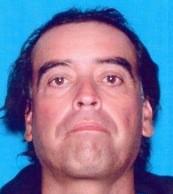
On October 4, 1975, Earl S. Reed, a 58-year-old White male, was found dead in his motel room at the Caravan Inn in Anaheim, California. Reed had checked into room 227 the night before. In the early hours of the morning, a neighboring guest reported hearing cries of “Help. They are killing me. This is murder,” which continued for several minutes but were not investigated at the time. The next morning, a maid discovered Reed's body lying face down on the bed, wrapped in bedding.
His face was bruised, bleeding, and several teeth had been dislodged. Bloodstains were found on the pillowcase and a towel, and the room had been ransacked. Reed's wallet was missing.
An autopsy revealed that Earl Reed died from aspiration of blood due to extensive bleeding from his mouth and nose. The investigation quickly focused on Gregory John Teron Jr., who had been staying in room 229, adjacent to Reed's. Teron, who had a history of violent crimes, later confessed to the murder. According to his taped confession, Teron had spoken with Reed in the motel parking lot and decided to rob and kill him. After Reed invited him to his room for drinks, Teron demanded money. When Reed refused, Teron struck him repeatedly, attempted to strangle him, and ultimately smothered him with a pillow. He then stole Reed's wallet, which contained only $1.75 and a few credit cards.
Teron was not immediately arrested. He fled California and was later apprehended in Michigan after committing additional murders. He was extradited back to California and indicted by the Orange County Grand Jury in January 1978 for the murder of Earl Reed. Teron chose to represent himself during the trial, declined to present a defense, and was ultimately convicted of first-degree murder. The court found special circumstances due to his prior murder convictions, making him eligible for the death penalty under California law at the time. However, the death sentence was later overturned because the statute used to impose it had not been in effect at the time of Reed's murder.