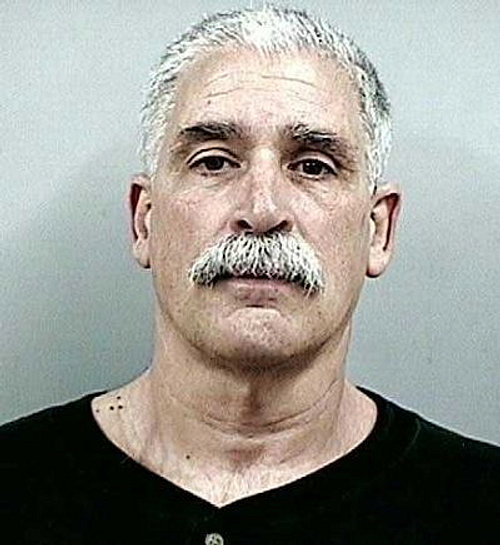
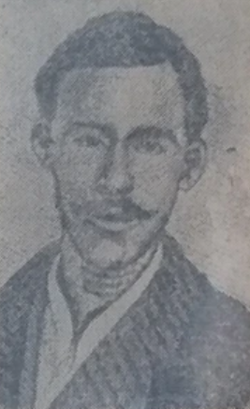
George Jefferson Hassell: The Family Annihilator of California and Texas
George Jefferson Hassell was an American murderer responsible for the deaths of thirteen people in two separate family massacres. His known crimes occurred in Whittier, California, in 1917 and near Farwell, Texas, in December 1926. Nearly all of his victims were women and children who lived with him as members of his household.
Hassell is frequently described as both a serial killer and a mass murderer. More precisely, he was a repeat family annihilator. He murdered one household in California, concealed the bodies for nearly a decade, and later destroyed a second household in Texas. The earlier killings remained unknown until Hassell confessed after his arrest for the Texas murders.
Early Life
George Jefferson Hassell was born on July 5, 1888, in Smithville, Texas. He was the youngest of seven children. Accounts of his early life describe a troubled man who moved frequently, drank heavily, committed financial crimes, and served time for military desertion.
Hassell worked at different times as a farm laborer, railroad worker, oilfield worker, and tenant farmer. He also used different names while traveling. During the period connected to the California murders, he and the people living with him were reportedly known by the surname Baker.
His personal history included several relationships and marriages. Hassell later attempted to blame his violent behavior on earlier romantic rejection and family conflict. These explanations came from Hassell himself and did not excuse or adequately explain the deliberate nature of his crimes.
The 1917 Whittier Murders
Hassell's first known group of victims was a woman named Marie Vogel and three young children living with her. The household lived near Whittier, California, under circumstances that were not fully understood by authorities until many years later.
Marie was commonly described as Hassell's common-law wife. The three children were reported to have been her children or adopted children. Some contemporary reports identified the children as Gerald Vogel, Rita Baker, and Anthony Baker. Because the family was living under assumed or inconsistent surnames, records concerning the children differ.
The murders occurred during June 1917. The exact day of the killings has not been reliably preserved in the available historical record. Hassell later claimed that an argument began over his possible military service during the First World War. According to his confession, he killed Marie and the children and buried their bodies near the residence.
The disappearances did not immediately result in Hassell being charged with murder. He left the area, and the victims remained buried for approximately ten years. Their fate was discovered only after Hassell confessed while being held for the later Texas killings.
In early 1927, California investigators followed Hassell's directions to the former property near Whittier. Human remains believed to belong to Marie and the three children were recovered. The discovery supported his confession and established that the Texas massacre was not his first act of family murder.
Victims of the Whittier Murders
- Marie Vogel — Approximately 32 years old. Killed in June 1917 near Whittier, California. The precise day of her death is not confirmed in surviving public records.
- Gerald Vogel — Approximately seven or eight years old. Killed in June 1917 near Whittier, California. He was described in reports as Marie Vogel's son or adopted son.
- Rita Baker — Approximately two years old. Killed in June 1917 near Whittier, California. Her surname and relationship to the household were reported inconsistently.
- Anthony Baker — Approximately one year old. Killed in June 1917 near Whittier, California. His surname and exact relationship to Marie Vogel were also reported inconsistently.
Marriage to Susan Ferguson Hassell
Years after the California murders, Hassell became closely involved with the family of his brother, Thomas Virgil Hassell. Thomas was married to Susan Frances Ferguson Hassell, commonly called Susie, and the couple had several children.
Thomas died in Oklahoma on July 3, 1924. George Hassell subsequently married his brother's widow. This made him both the uncle and stepfather of Susan's children. The family eventually moved to a tenant farm outside Farwell, Texas, close to the New Mexico state line.
The household included Susan, seven younger children, and her eldest son, Arthur Alton Hassell. Samuel, the youngest child, was reportedly George Hassell's biological son. The other children were his nieces and nephews as well as his stepchildren.
Abuse Within the Hassell Household
Before the murders, the household was reportedly marked by alcohol abuse, intimidation, and sexual violence. Hassell sexually abused Susan's teenage daughter Maudie. Contemporary accounts and later historical research indicate that Maudie became pregnant as a result of that abuse.
The confrontation between Susan and Hassell on the night of the massacre reportedly involved his drinking and his abuse of Maudie. Hassell later gave several statements about the killings. Although details varied, his confessions showed that he moved through the house and attacked one family member after another.
The Farwell Family Massacre
The primary attack occurred on December 2, 1926, at the family's farm near Farwell in Parmer County, Texas. Some later retellings place the massacre on December 5, but cemetery records and individual memorial records identify December 2 as the death date of Susan and the seven children who were home during the first attack.
Hassell began by attacking Susan with a ball-peen hammer. He then killed the children who were inside the house. His methods included strangulation, cutting, bludgeoning, and the use of an axe or firearm against some of the older children.
Hassell did not kill the victims during a single uncontrolled blow or brief confrontation. He moved from one person to another, selected different weapons, and continued until everyone then present in the house was dead. He later placed the bodies in a large pit or unfinished root cellar behind the house.
After concealing the bodies, Hassell attempted to remove evidence of the violence from the residence. He cleaned portions of the house and developed stories to explain why the family had suddenly disappeared.
The Murder of Arthur Alton Hassell
Arthur Alton Hassell, the oldest son in the household, was away from the farm when his mother and siblings were killed. Alton was working with a threshing crew in the Clovis, New Mexico, area.
When Alton returned several days later, Hassell told him that Susan and the younger children had traveled to visit relatives. Hassell remained alone with Alton, ate a meal with him, and waited until the young man had gone to bed.
Hassell then shot Alton while he was sleeping. Alton's death is generally recorded as December 5, 1926, although some secondary records give December 9. The December 5 date is consistent with the established sequence in which Alton returned approximately three days after the initial massacre.
Alton's murder was especially important during the prosecution. Texas authorities ultimately tried Hassell for killing Alton rather than attempting to conduct a separate trial for every member of the family.
Victims of the Farwell Murders
- Susan Frances “Susie” Ferguson Hassell — Born December 24, 1885. Age 40. Killed on December 2, 1926, at the Hassell farm near Farwell, Parmer County, Texas.
- Samuel “Sammie” Hassell — Age one. Killed on December 2, 1926, at the family home near Farwell, Texas.
- Nannie Martha Hassell — Age four. Killed on December 2, 1926, at the family home near Farwell, Texas.
- Johnnie Hassell — Age six. Killed on December 2, 1926, at the family home near Farwell, Texas.
- David Hassell — Age seven. Killed on December 2, 1926, at the family home near Farwell, Texas.
- Russell Hassell — Age 11. Killed on December 2, 1926, at the family home near Farwell, Texas.
- Maudie Hassell — Age 13. Killed on December 2, 1926, at the family home near Farwell, Texas. She had reportedly been sexually abused and impregnated by Hassell.
- Virgil Hassell — Born March 23, 1911. Age 15. Killed on December 2, 1926, at the family home near Farwell, Texas.
- Arthur Alton Hassell — Born in 1905. Age 21. Shot and killed on December 5, 1926, after returning to the farm from work near Clovis, New Mexico.
Hassell's Attempt to Conceal the Family's Disappearance
Following the murders, Hassell told neighbors several different stories about the family's whereabouts. He claimed that Susan and the children had gone to Oklahoma or had traveled to visit relatives. He also began disposing of the family's possessions.
Hassell arranged a public sale at the farm, offering household goods, clothing, farm equipment, and other property. His behavior caused increasing suspicion because he was selling possessions belonging to people who had supposedly left only temporarily.
Neighbors noticed that his explanations were inconsistent. Some became concerned when no letters or messages arrived from Susan. Questions also arose over Alton's disappearance after he had been seen returning to the area.
Discovery of the Bodies
Law-enforcement officers questioned Hassell shortly before Christmas 1926. As pressure increased, he attempted suicide by cutting himself but survived. He then admitted that the family was dead.
Investigators searched the property and opened the pit behind the house. They discovered the bodies of Susan and her eight children buried together. The condition and arrangement of the remains demonstrated that the deaths were not accidental and that Hassell had deliberately concealed the victims.
The discovery shocked Farwell and nearby Texico, New Mexico. Crowds gathered around the farm, the jail, and later the courthouse. Newspapers across the United States reported on the killing of an entire household and on Hassell's calm descriptions of what he had done.
Confession to Thirteen Murders
After admitting the Texas murders, Hassell revealed that he had killed another family in California nearly ten years earlier. He described the Whittier property and told investigators where the bodies had been buried.
California authorities searched the location and recovered the skeletal remains of one woman and three children. This discovery raised Hassell's known victim count to thirteen.
Hassell said that he confessed to the California murders because he did not want another person blamed for them. His claim presented the confession as an act of conscience, but it came only after he had already been exposed as the killer of nine people in Texas.
Trial in Texas
Hassell was tried in Farwell for the murder of Arthur Alton Hassell. Prosecutors did not need to try all nine Texas killings because a single murder conviction could result in a death sentence.
The trial began in January 1927. Hassell pleaded not guilty and attempted to rely on claims concerning his mental condition. He also described the killings as a violent impulse that he had been unable to stop once the first attack began.
A psychiatrist examined Hassell and concluded that he was legally sane. His detailed efforts to bury the bodies, clean the house, invent explanations, sell the family's belongings, and deceive Alton supported the prosecution's argument that he understood what he had done.
On January 11, 1927, the jury convicted Hassell of murder with malice. He was sentenced to death in the electric chair.
Behavior After Conviction
Following his conviction, Hassell spoke extensively with reporters. He discussed his marriages, military history, criminal record, relationships, and murders. His willingness to talk contributed to the national attention surrounding the case.
Hassell sometimes portrayed himself as remorseful and at other times spoke with emotional detachment. He offered personal grievances as explanations for his life of violence, but his statements also revealed preparation, concealment, and repeated decisions to continue killing.
The murders were not the result of one isolated confrontation. Hassell had already killed four people in California. In Texas, he killed eight people during the first attack, concealed their bodies, waited for Alton to return, deceived him, and then committed another murder.
Execution
George Jefferson Hassell was executed in the electric chair at the Texas State Penitentiary in Huntsville on February 10, 1928. He was 39 years old.
His execution occurred approximately fourteen months after the discovery of the Farwell victims. Hassell was buried at the prison cemetery now known as Captain Joe Byrd Cemetery in Huntsville, Texas.
Burial and Memorials for the Farwell Victims
Susan Hassell and her eight children were buried together at Mount Olivet Cemetery south of Farwell, Texas. Their family grave became a lasting reminder of one of the most devastating crimes in the region's history.
A newer memorial stone was later placed near the original marker to preserve the victims' names and recognize them individually. The memorial emphasizes that Susan and her children should be remembered as people whose lives were taken, rather than merely as members of a murderer's household.
Classification and Legacy
Hassell is often included on lists of American serial killers because he murdered separate groups of victims in different states approximately nine years apart. He is also classified as a mass murderer because each incident involved the destruction of nearly an entire household.
The term family annihilator most directly describes his pattern. Hassell formed or entered domestic households, exercised authority over vulnerable family members, and then killed them when conflict threatened his control or exposed his abuse.
The case also demonstrates the difficulties faced by investigators during the early twentieth century. Families could move between states, adopt different surnames, and disappear without the centralized records and communication systems available to modern law enforcement. Hassell was able to leave California after four murders and remain unidentified as their killer until his confession a decade later.
George Jefferson Hassell murdered thirteen known victims: two adult women and eleven children or young adults. His crimes extended from Whittier, California, in June 1917 to Farwell, Texas, in December 1926. Although Hassell received extensive attention during his prosecution and execution, the names of Marie Vogel, Susan Hassell, and the eleven young victims remain the most important part of the case's history.