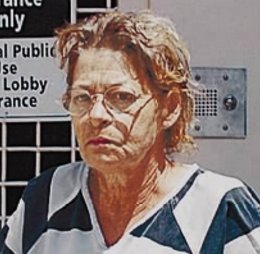
Jesse Sumner: The Illinois Killer Who Murdered After Parole
Early Life and Criminal Background
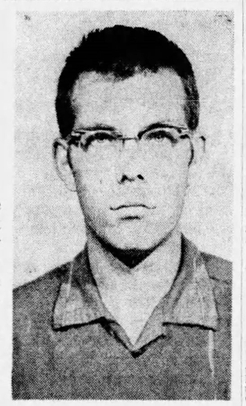
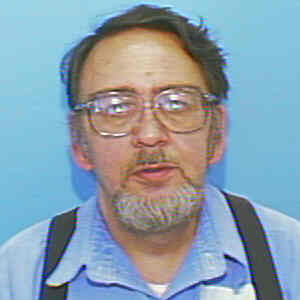
Jesse Donald Sumner was born on January 9, 1937, in McLean County, Illinois. He became involved in serious criminal activity as a young adult and developed a history of robbery, violence, deception, and repeated attempts to escape custody. Sumner eventually became responsible for the deaths of four people between 1963 and 1973, including three young women connected to the Illinois State University community.
His first known victim was a criminal associate named Herschel Williams Jr. Sumner and Williams had reportedly participated in robberies together, including attacks on financial institutions in central Illinois. Their relationship deteriorated after Sumner claimed that Williams had threatened his wife and children. The conflict ended in a carefully concealed killing that demonstrated Sumner's willingness to use extreme violence and hide evidence.
The Murder of Herschel Williams Jr.
On March 25, 1963, 40-year-old Herschel Williams Jr. went to Sumner's barber shop. According to the prosecution's reconstruction of the crime, the men argued after Williams attempted to persuade Sumner to participate in another robbery. Williams then reportedly asked Sumner to cut his hair.
While Williams was seated in the barber chair, Sumner used a razor to slash his throat. After the killing, Sumner placed Williams's body inside a 55-gallon barrel, surrounded or covered it with concrete, and disposed of the barrel at a landfill in the Bloomington area. The concealment kept the murder undiscovered for more than a year.
Authorities recovered the barrel containing Williams's remains on June 1, 1964. Investigators connected Sumner to the crime through evidence that he had purchased barrels, the identification of Williams's personal property, and statements Sumner allegedly made to other inmates. Sumner denied responsibility but was convicted of murder in November 1964 and later sentenced to 35 to 75 years in prison.
Conviction Overturned and Release on Parole
Sumner appealed his murder conviction, and in 1969 the Supreme Court of Illinois overturned it. Rather than face another murder trial, he pleaded guilty to voluntary manslaughter. His punishment was reduced to a term of 10 to 15 years, and the time he had already served made him eligible for release much sooner than under his original sentence.
Sumner was paroled in January 1972 after serving approximately six and a half years. He found employment and enrolled as a student at Illinois State University. To parole officials, he appeared to be complying with the conditions of his release. He submitted reports, maintained employment, and presented himself as a man attempting to rebuild his life. In reality, another series of killings began only a few months after his release.
The Murder of Corene Marie Burchie
Corene Marie Burchie was a 19-year-old Illinois State University student. She disappeared on April 19, 1972, approximately three months after Sumner was paroled. Her body was discovered the following day in a shallow grave near Maroa, Illinois, in Macon County.
Evidence indicated that Burchie had been strangled. Unlike Sumner's later victims, whose bodies remained concealed for months, Burchie was found almost immediately. However, investigators did not initially have enough evidence to identify her killer. Her homicide remained unresolved while Sumner continued living in the university community.
After Sumner was arrested in 1973, authorities connected him to Burchie's death. He was formally charged with her murder after investigators developed evidence linking him to all three young women. Sumner was eventually convicted and received a sentence of 50 to 100 years for killing Burchie.
The Disappearance and Murder of Rae Ann Schneider
Rae Ann Schneider was a 20-year-old woman who worked the night shift as a waitress at a Steak 'n Shake restaurant in Normal, Illinois. She disappeared after leaving work on December 22, 1972. Her sudden disappearance produced few immediate clues, and neither her family nor investigators knew where she had gone.
Schneider had been beaten to death and secretly buried beneath or near the garage at Sumner's family residence in Stanford, Illinois. Her remains stayed hidden for more than seven months. Without a body or clear crime scene, investigators initially treated her case as a mysterious disappearance.
Her fate was finally revealed in August 1973, when Sumner agreed to lead authorities to the burial locations of Schneider and another missing young woman. Schneider's remains were recovered from the property and identified through dental records. Examination of the remains showed evidence of severe blunt-force injuries.
The Disappearance and Murder of Dawn Marie Huwe
Dawn Marie Huwe was an 18-year-old Illinois State University student. She disappeared on May 28, 1973, after she was last seen near a bus stop close to the university campus in Normal. Her disappearance followed Schneider's by approximately five months and heightened concern that young women in the area were being targeted.
Sumner killed Huwe and buried her body in a ditch west of Danvers, Illinois. Like Schneider, she had suffered blunt-force trauma. Her grave was shallow and located in a rural area where Sumner apparently believed the remains would not be discovered.
For several weeks, investigators had little information about what had happened to Huwe. Her disappearance eventually became one of the cases that focused police attention on Sumner. Authorities questioned him after his arrest on unrelated charges, and his evasive statements increased their suspicions.
Known Victims
- Herschel Williams Jr., 40 — Killed on March 25, 1963, inside Sumner's barber shop in Illinois. His throat was cut with a razor, and his body was sealed inside a barrel containing concrete and discarded near Bloomington. His remains were recovered on June 1, 1964.
- Corene Marie Burchie, 19 — Disappeared on April 19, 1972, and was killed on or about that date. Her strangled body was found on April 20, 1972, in a shallow grave near Maroa, Illinois.
- Rae Ann Schneider, 20 — Disappeared after leaving her workplace in Normal, Illinois, on December 22, 1972, and was killed on or about that date. Her body was buried beneath or near Sumner's garage in Stanford, Illinois, and recovered in August 1973.
- Dawn Marie Huwe, 18 — Disappeared near an Illinois State University bus stop in Normal on May 28, 1973, and was killed on or about that date. Her body was buried in a rural ditch west of Danvers, Illinois, and recovered in August 1973.
Arrest and Discovery of the Bodies
Sumner was arrested on July 19, 1973, for violating the conditions of his parole after his wife reported that he had severely beaten her. While he was being held, McLean County Sheriff John W. King questioned him about the recent disappearances of young women in the area. Investigators became increasingly suspicious because Sumner gave inconsistent and evasive answers.
Authorities also charged Sumner with an unrelated offense involving the sexual abuse of his daughter. On August 4, 1973, shortly after that charge was filed, Sumner contacted investigators and offered to show them where Schneider and Huwe were buried. His initial directions did not immediately lead police to the bodies, but he eventually guided them to the correct locations.
One body was recovered from Sumner's property in Stanford, while the other was found west of Danvers. Dental records confirmed that the remains belonged to Schneider and Huwe. Both had suffered violent injuries consistent with blunt-force attacks. The discoveries transformed two missing-person investigations into murder cases and gave authorities the evidence needed to charge Sumner.
Charges, Guilty Pleas and Sentences
Sumner was charged with the murders of Schneider and Huwe in August 1973. He was also charged with Burchie's murder after investigators connected him to her death. Jurisdictional questions caused some delays because authorities believed parts of the crimes may have occurred outside McLean County.
In September 1974, Sumner pleaded guilty to murdering Schneider and Huwe. He received two consecutive sentences of 100 to 200 years in prison. He was later sentenced to an additional 50 to 100 years for the murder of Burchie. The combined terms ensured that he had virtually no realistic possibility of release.
Although Sumner was convicted of killing four people in total, the legal outcomes differed. He had initially been convicted of murdering Williams, but that conviction was overturned and replaced by a voluntary manslaughter plea. His later convictions involved the three young women killed after his release on parole.
Repeated Escape Attempts
Sumner repeatedly attempted to escape while awaiting trial and during his later imprisonment. He tried to saw through jail bars, participated in an effort to dig through a jail wall, attempted to seize a deputy's firearm, and later attacked a correctional officer while trying to break out of custody.
During one escape attempt at the Tazewell County Jail, Sumner used a sharpened piece of metal to saw at his cell door. When Deputy Ronald Parker intervened, Sumner cut him several times around the throat. Parker survived, and Sumner was charged with attempted murder, aggravated battery, criminal damage to property, and attempted escape.
His most dramatic escape occurred in September 1988 while he was being transported to a medical appointment in Joliet. Using a homemade weapon resembling a pistol, Sumner took guards and civilians hostage and fled through northern Illinois. He stole a vehicle and forced hostages to accompany him before being captured near Sycamore. The incident reinforced concerns that Sumner remained highly dangerous even after years of incarceration.
Life in Prison and Death
Sumner spent the remainder of his life in the Illinois prison system. In February 1981, while incarcerated at Menard Correctional Center, he was attacked and stabbed by another convicted murderer. Sumner required hospitalization and numerous stitches but survived.
Relatives of his victims consistently opposed any possibility of parole. They argued that his history demonstrated that he could not be rehabilitated. Sumner had already been released once after killing Williams, only to murder three young women within approximately 16 months of gaining his freedom.
Jesse Sumner died from an undisclosed illness on December 4, 2005, at Stateville Correctional Center in Crest Hill, Illinois. He was 68 years old. He had remained imprisoned for more than three decades following his final arrest.
Legacy of the Case
Sumner's crimes became a disturbing example of the consequences that can follow when a violent offender is released despite an established history of lethal behavior. His first homicide involved the calculated concealment of a body in concrete. After his conviction was overturned and his sentence reduced, he returned to society and began targeting young women near a university campus.
The murders of Corene Burchie, Rae Ann Schneider, and Dawn Huwe occurred while Sumner was presenting himself to parole authorities as compliant and rehabilitated. His ability to maintain that appearance while committing new crimes exposed weaknesses in the supervision of parolees and left lasting questions about whether the later deaths could have been prevented.
Sumner's repeated violence, concealment of bodies, attacks on family members and correctional officers, and persistent escape attempts showed a continuing disregard for human life and legal authority. His victims were remembered not merely as names connected to a notorious offender, but as individuals whose lives were ended during a period when their killer had been given another opportunity to live outside prison.