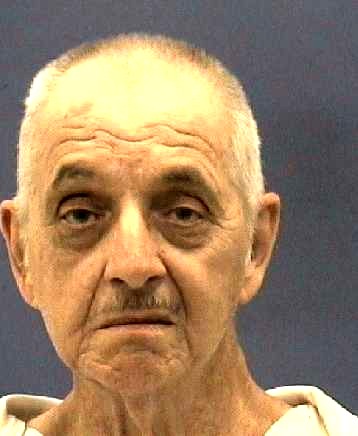
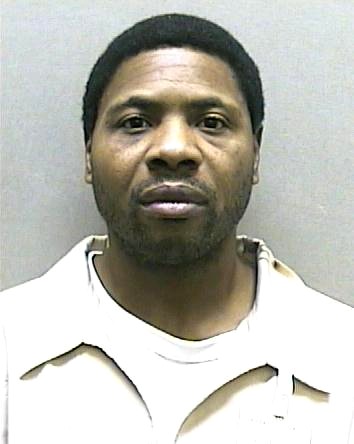
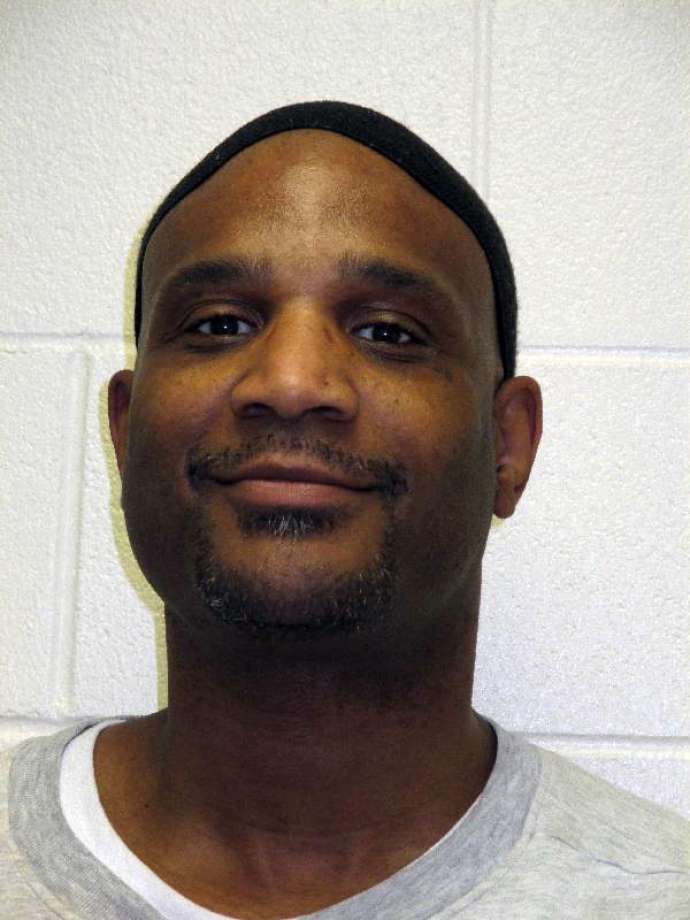
Chester Dewayne Turner: The South Los Angeles Serial Killer
Overview
Chester Dewayne Turner is an American serial killer and rapist convicted of murdering 14 women in Los Angeles, California. His known crimes occurred between 1987 and 1998, primarily in disadvantaged neighborhoods of South Los Angeles. Most of the victims were sexually assaulted and strangled before their bodies were abandoned in alleys, vacant buildings, school grounds, roadside areas, and other isolated locations.
Turner operated during a period when numerous women were being murdered in South Los Angeles by several unrelated offenders. Because many victims were homeless, experiencing substance dependency, engaged in sex work, or living with mental illness, the killings did not initially receive the attention or investigative coordination that might have revealed the pattern sooner. Several perpetrators active during this period were collectively and inaccurately described in the press as the “Southside Slayer.”
DNA evidence eventually established Turner as one of the most prolific serial killers identified in Los Angeles. He was convicted of 10 murders in 2007 and four additional murders in 2014. He received separate death sentences for the two groups of killings.
Early Life and Background
Chester Dewayne Turner was born on November 5, 1966, in Warren, Arkansas. He moved to Los Angeles with his mother while he was still a child and later dropped out of high school. As an adult, he lived at several addresses near the Figueroa Street corridor where many of the murders occurred. He supported himself through temporary or low-paying employment, including work as a pizza delivery driver and security guard.
Turner accumulated a criminal record involving theft, narcotics offenses, assault, and sexual violence. His movements frequently placed him near the locations where victims were last seen or discovered. Investigators later reconstructed his addresses and found that many of the crime scenes were only a few blocks from places where he lived.
Pattern of the Murders
Turner generally targeted women who were vulnerable and unlikely to be immediately reported missing. The victims ranged in age from their early twenties to their mid-forties. Many had experienced homelessness, addiction, poverty, or mental-health difficulties. Their circumstances made them accessible to a predator and, in some cases, delayed intensive investigation of their deaths.
The women were typically sexually assaulted and killed by manual or ligature strangulation. Turner frequently left victims partially undressed, particularly below the waist. Their bodies were concealed or discarded in locations such as vacant lots, alleys, abandoned properties, stairwells, garages, freeway embankments, and portable toilets.
Eleven of the murders initially connected to Turner occurred within a narrow corridor surrounding Figueroa Street, generally between Gage Avenue and 108th Street. Other victims were found in downtown Los Angeles or nearby areas. The geographic concentration allowed Turner to select victims, commit attacks, and return to familiar neighborhoods without attracting immediate suspicion.
Confirmed Victims
- Diane Johnson, 21 — March 9, 1987 — 10217 South Grand Avenue, Los Angeles: Two motorists discovered Johnson’s partially nude body in a roadway construction area west of the Harbor Freeway. Drag marks led investigators to her body. She had been sexually assaulted and strangled.
- Elandra Joyce Bunn, 33 — June 5, 1987 — South Los Angeles: Bunn was found nude in a trash-filled area. She had suffered injuries to her face, head, neck, and torso before being strangled. DNA evidence later connected Turner to her killing, and he was convicted of her murder in 2014.
- Annette Ernest, 26 — October 29, 1987 — Grand Avenue and 106th Street, Los Angeles: A motorist found Ernest lying face down on the dirt shoulder of the roadway shortly after 1:00 a.m. Her clothing had been disturbed, and investigators observed evidence of sexual violence. She died from strangulation.
- Anita Fishman, 31 — January 20, 1989 — 9819 South Figueroa Street, Los Angeles: Fishman’s partially decomposed body was discovered behind a wooden panel leaning against a detached garage in an alley. Her clothing had been pulled down, and she had been manually strangled.
- Regina Nadine Washington, 27 — September 23, 1989 — 8858 South Figueroa Street, Los Angeles: Washington was found on a mattress inside the detached garage of a vacant house. A cable had been wrapped around her neck and attached to an electrical fixture. She was approximately six months pregnant. She died from ligature strangulation, and her unborn daughter died from oxygen deprivation caused by the attack.
- Debra Williams, 32 — November 16, 1992 — 97th Street Elementary School, Los Angeles: A school custodian found Williams at the bottom of a stairwell leading to the campus boiler room. She was partially nude and had been strangled. Another man, David Allen Jones, was initially convicted of her murder before DNA evidence identified Turner as the killer.
- Mary Edwards, 42 — December 16, 1992 — 9714 South Figueroa Street, Los Angeles: An employee of the Figueroa Motel discovered Edwards inside a carport adjoining an alley near 97th Street Elementary School. She had been sexually assaulted and strangled. David Allen Jones was also wrongfully convicted of this murder before later DNA testing implicated Turner.
- Andrea Tripplett, 29 — April 2, 1993 — 7812 South Figueroa Street, Los Angeles: A construction worker found Tripplett behind an abandoned building. Her skirt had been raised, and she was unclothed below the waist. She was approximately five months pregnant when Turner manually strangled her. Her fetus was not legally considered viable at that stage of development.
- Desarae Jones, 29 — May 16, 1993 — 6821 South Estrella Avenue, Los Angeles: Jones, who was also known as Tracy Williams, was found beside a vacant, fire-damaged residence. She was unclothed below the waist and had been manually strangled.
- Natalie Joan Price, 31 — February 12, 1995 — 532 West 80th Street, Los Angeles: A friend discovered Price’s nude body beside a vacant residence. She had been sexually assaulted and strangled. The location was within the area where Turner lived and regularly traveled.
- Mildred Williams Beasley, 45 — November 6, 1996 — 9611 South Broadway, Los Angeles: Beasley’s partially nude body was found among bushes on a trash-strewn embankment beside the Harbor Freeway. She had been strangled. DNA recovered in this case later became one of the matches that helped investigators identify Turner.
- Cynthia Annette Johnson, 30 — February 22, 1997 — South Los Angeles: Johnson was found partially nude in the Green Meadows area of South Los Angeles. She had been sexually assaulted and strangled. Turner was convicted of her murder during his second trial in 2014.
- Paula Donnell Vance, 38 — February 3, 1998 — 630 West 6th Street, Los Angeles: A security guard discovered Vance’s partially nude body behind a vacant commercial property. She had been sexually assaulted and strangled. Nearby surveillance cameras recorded portions of the attack, but the images were too dark and indistinct to identify the killer. DNA from the crime scene eventually produced the first database match to Turner.
- Brenda Bries, 37 — April 6, 1998 — 500 Gladys Avenue, Los Angeles: Police officers found Bries inside a portable toilet after being alerted by a passerby. She was partially nude and had been strangled. The crime scene was near a downtown hotel where Turner was staying at the time.
The Wrongful Conviction of David Allen Jones
One of the most damaging consequences of the investigation was the wrongful conviction of another man. In 1995, David Allen Jones was convicted of murdering Debra Williams, Mary Edwards, and Tammie Christmas. The prosecution relied largely on older forensic testing and statements Jones allegedly made during police questioning.
When detectives later reviewed the cases using modern DNA techniques, biological evidence from Williams and Edwards matched Turner rather than Jones. Evidence from the Christmas case had been destroyed after the original trial, preventing equivalent DNA testing. Investigators nevertheless concluded that Jones had not committed the murders for which he had been convicted.
Jones spent approximately 11 years incarcerated before his murder convictions were overturned. He was released in March 2004 after prosecutors, detectives, and his attorneys worked to correct the wrongful convictions. Turner was later convicted of murdering Williams and Edwards. He was not prosecuted for the death of Tammie Christmas because the physical evidence necessary to establish a DNA connection was no longer available, although investigators publicly described Turner as the likely killer.
The Attack That Led to Turner’s Identification
Turner was not initially arrested for the serial murders. On March 16, 2002, while working as a security guard at a downtown Los Angeles homeless shelter, he encountered a 47-year-old woman on Los Angeles Street between Sixth and Seventh streets. He grabbed her by the neck, sexually assaulted her for approximately two hours, and threatened to kill her if she reported him.
The survivor went to police, allowing authorities to arrest Turner. He pleaded no contest to rape and received an eight-year prison sentence. California law required him to provide a DNA sample for inclusion in the state’s offender database.
That sample became the key to solving the murders. On September 8, 2003, cold-case detectives were notified that Turner’s DNA matched evidence recovered from Paula Vance. A second match connected him to Mildred Beasley. Investigators then examined Turner’s residences, employment, criminal history, and movements before comparing his DNA with evidence preserved from other unsolved murders.
The Cold-Case Investigation
Los Angeles Police Department detectives Cliff Shepard and Jose Ramirez led the investigation that exposed the full extent of Turner’s crimes. Working with forensic scientists, they reviewed both unsolved murders and cases authorities believed had already been solved.
DNA testing connected Turner to numerous crime scenes stretching from 1987 through 1998. Many of the murders shared a distinctive pattern: sexual assault, strangulation, disturbed clothing, and disposal of the victim in an isolated location near the Figueroa corridor.
The evidence revealed that Turner had continued killing while investigators treated the deaths as separate crimes. The long span of the murders also demonstrated the importance of preserving biological evidence. Samples collected years earlier, when DNA technology was less advanced, eventually allowed detectives to identify Turner and exonerate an innocent man.
First Murder Trial
Turner first went on trial for 10 murders and the death of Regina Washington’s unborn child. Prosecutors presented DNA evidence linking him to the victims, testimony concerning his proximity to the crime scenes, and evidence showing the consistent manner in which the women were assaulted and killed.
On April 30, 2007, a Los Angeles jury convicted Turner of all 10 women’s murders. The jury also convicted him of second-degree murder in connection with Washington’s fetus and found special circumstances involving multiple murders and murder committed during rape.
On July 10, 2007, Turner was sentenced to death. In November 2020, the California Supreme Court upheld the 10 murder convictions and the death sentence but reversed the fetal-murder conviction. The court ruled that inadmissible hearsay had been used to establish whether the fetus was legally viable. The reversal did not disturb Turner’s convictions for the murders of Regina Washington and the other nine women tried in that proceeding.
Four Additional Murder Convictions
Further forensic work connected Turner to four additional victims: Elandra Bunn, Debra Williams, Mary Edwards, and Cynthia Annette Johnson. Turner was tried separately for those killings.
On June 19, 2014, jurors found him guilty of four additional counts of first-degree murder. They also found true the special-circumstance allegations involving multiple murders and his prior murder convictions. On August 1, 2014, a judge imposed another death sentence.
The second trial brought the number of women Turner was legally convicted of murdering to 14. All four victims in the later case had been strangled, and DNA evidence played a central role in establishing Turner’s responsibility.
Investigative Failures and Vulnerable Victims
Turner’s ability to remain unidentified for years reflected more than his effort to conceal the crimes. The victims belonged largely to communities that received limited public attention and strained law-enforcement resources. Some had criminal records or histories of addiction, homelessness, or sex work. Those circumstances sometimes influenced how urgently their disappearances and deaths were investigated.
Authorities were also dealing with murders committed by several different serial offenders in overlapping parts of Los Angeles. Similar victim profiles and body-disposal methods created confusion over whether one person or multiple people were responsible. Limited communication between investigative units and the less sophisticated forensic technology of the period further delayed identification.
The Turner investigation eventually became an important example of how DNA databases and dedicated cold-case units can connect crimes separated by many years. It also exposed the catastrophic consequences of relying on weak forensic evidence and questionable confessions, as demonstrated by the wrongful imprisonment of David Allen Jones.
Legacy of the Case
Chester Dewayne Turner’s crimes left at least 14 families grieving while an innocent man spent years imprisoned for murders he did not commit. The case illustrated how a predator could exploit marginalized women and operate within a small geographic area for more than a decade without being recognized as a serial offender.
The eventual convictions were built on preserved biological evidence, advances in DNA profiling, and a methodical review of old homicide files. Turner remains one of the most prolific convicted serial killers in Los Angeles history. His case continues to be cited in discussions of cold-case investigations, forensic reform, wrongful convictions, and the unequal attention historically given to crimes against vulnerable victims.