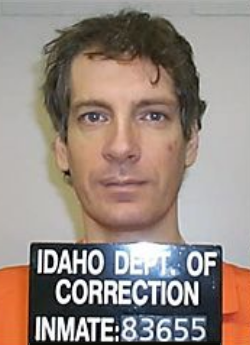
Altemio Sanchez: The Bike Path Killer
Overview
Altemio C. Sanchez was an American serial killer and serial rapist who terrorized women in and around Buffalo, New York, for decades. Known as the “Bike Path Rapist” and later the “Bike Path Killer,” Sanchez repeatedly targeted women who were jogging, walking, bicycling or traveling alone near parks, recreational trails and other isolated areas. His known crimes extended from at least 1981 through 2006, although investigators believed his pattern of sexual violence may have begun as early as the mid-1970s.
Sanchez was convicted of murdering three women: Linda Yalem, Majane Mazur and Joan Diver. He was also conclusively linked by DNA evidence to numerous sexual assaults. Estimates of the number of women and girls he attacked vary, partly because several survivors remained anonymous and because the legal time limit for prosecuting many of the older assaults had expired before he was identified. Authorities believed he may have raped or attempted to rape at least nine to fifteen victims, some of whom were teenagers.
Early Life and Public Image
Sanchez was born on January 19, 1958, in San Sebastián, Puerto Rico. He later settled in Western New York and lived in the Buffalo area with his wife and children. He worked steadily, maintained friendships and participated in ordinary community activities. Neighbors reportedly regarded him as friendly and dependable, sometimes referring to him affectionately as “Uncle Al.” This outwardly conventional life allowed him to escape suspicion while investigators searched for the unidentified attacker haunting the region’s recreational paths.
His ability to appear ordinary became one of the most disturbing features of the case. Sanchez held employment, played golf, gardened and interacted comfortably with people in his neighborhood. He was even reported to have registered for a safety run established in memory of Linda Yalem, one of the women he had murdered. For years, those around him had no apparent reason to believe that he was responsible for a long sequence of violent attacks.
Pattern of Attacks
Sanchez generally selected women who were alone in places where there were few witnesses. He approached victims on bike paths, jogging trails, in parks or near railroad corridors. Many of the attacks involved strangulation with a rope, cord, wire or similar ligature. Survivors described being assaulted with sudden and overwhelming force, often in locations that appeared safe until the attacker isolated them.
The victims ranged widely in age. Some were teenagers, while others were adult women with careers and families. The attacks did not follow one narrow victim profile, but the locations and methods were similar enough that investigators eventually recognized the work of a serial offender. Because several crimes occurred near bicycle and jogging paths, the unidentified assailant became widely known as the Bike Path Rapist.
Evidence from separate crime scenes was gradually connected through forensic testing. Investigators determined that biological evidence from multiple attacks belonged to the same unidentified man. Before DNA databases and testing methods became sufficiently advanced, however, authorities had no name to attach to the genetic profile. The evidence demonstrated that one offender was responsible, but identifying him remained a challenge for years.
Confirmed Murder Victims
- Linda Susan Yalem — September 29, 1990 — Amherst, New York: Linda Yalem was a 22-year-old University at Buffalo sophomore studying communications. She was also a dedicated runner who was training for the New York City Marathon. On September 29, 1990, she left her dormitory for an afternoon run along the Ellicott Creek Bike Path near the university’s Amherst campus. When she failed to return, her roommates reported her missing. Her body was discovered the following day in a wooded area near the path. She had been sexually assaulted and strangled. DNA evidence recovered during the investigation was eventually linked to Sanchez.
- Majane Elizabeth Mazur — November 22, 1992 — Buffalo, New York: Majane Mazur was 32 years old when she was murdered. Her body was found near railroad property in downtown Buffalo, close to the Amtrak rail corridor. She had been sexually assaulted and strangled. Biological evidence connected her killing to the same offender responsible for Linda Yalem’s murder and several other attacks. Mazur’s case remained unresolved until Sanchez was identified through DNA and confessed to killing her.
- Joan Diver — September 29, 2006 — Clarence-Newstead Bike Path, Erie County, New York: Joan Diver was a 45-year-old nurse, wife and mother of four. She disappeared on the morning of September 29, 2006, after leaving for a bicycle ride near her home in Clarence. Her vehicle was later found near the Clarence-Newstead Bike Path. Searchers discovered her body in a wooded area beside the trail on October 1, 2006. An autopsy determined that she had been strangled and had suffered blunt-force injuries. Unlike the other confirmed murder victims, Diver was not sexually assaulted. She was killed exactly sixteen years after Linda Yalem.
The Murder of Linda Yalem
The death of Linda Yalem became one of Western New York’s most prominent unsolved murders. On the day she disappeared, the weather was mild, and the Ellicott Creek Bike Path was a familiar route used by runners and cyclists. Yalem left her dorm shortly after noon and was expected to return later that afternoon. When she did not come back, concern quickly grew among her friends.
Searchers found Yalem’s body off the path the next morning. Investigators collected biological material and other evidence, but the offender’s identity remained unknown. The killing alarmed students and residents because it occurred near a university campus and along a public trail commonly considered a place for exercise and recreation.
Yalem’s murder became closely associated with later community efforts to promote runner safety. A memorial run was established in her honor, keeping her name and the unsolved investigation in public view. For years, detectives continued examining the case while tracking similar assaults throughout the Buffalo area.
The Murder of Majane Mazur
Majane Mazur was killed a little more than two years after Linda Yalem. Her body was discovered in an area near the railroad tracks in Buffalo. Although the location differed from the recreational path where Yalem had been attacked, the physical evidence and method of killing revealed important similarities.
DNA analysis eventually demonstrated that the same man had killed both women. This connection proved that investigators were not dealing with unrelated crimes. They were searching for a serial offender who moved between suburban paths, city streets and secluded transportation corridors while leaving behind evidence that would one day expose him.
Mazur’s circumstances sometimes caused her case to receive less public attention than Yalem’s, but detectives continued to preserve and retest the evidence. Her identification as a victim of the same killer became an essential part of the case that ultimately led to Sanchez’s prosecution.
The Murder of Joan Diver
Joan Diver’s disappearance in 2006 brought renewed urgency to the investigation. She left home for a morning bicycle ride but failed to return. Her sport utility vehicle was found parked near the Clarence-Newstead Bike Path, prompting an extensive search by police officers, relatives, friends and community volunteers.
Diver’s body was located two days later in woods near the trail. The discovery shocked the Clarence and Newstead communities. Investigators immediately examined whether her death could be connected to the long-dormant Bike Path Rapist investigation. Forensic testing soon showed that evidence associated with Diver’s murder was connected to the DNA profile from the Yalem case and earlier sexual assaults.
The date of Diver’s murder was especially haunting. She was killed on September 29, 2006, exactly sixteen years after Linda Yalem was attacked and murdered. The renewed public attention, improved forensic technology and coordinated police response created the conditions that finally brought the decades-long investigation to a conclusion.
Other Attacks and Surviving Victims
Investigators linked Sanchez to a series of rapes and attempted rapes committed between the early 1980s and the 1990s. Many survivors were attacked while exercising or walking alone. Several were strangled or threatened with ligatures during the assaults. Their descriptions and the physical evidence helped detectives understand the offender’s methods, even though the attacker’s name remained unknown.
One of the most significant missed opportunities occurred after a 1981 attack. A survivor reportedly observed a vehicle connected to her assailant and recorded its license plate number. Police traced the car to one of Sanchez’s relatives, who provided an alibi because he had not been driving it at the time. The investigation stalled without establishing who had borrowed the vehicle. More than two decades later, the relative told investigators that he had loaned the car to his nephew, Altemio Sanchez, on the day of the assault.
Two assaults were wrongly attributed to another man, Anthony Capozzi. Capozzi was convicted during the 1980s and spent more than twenty years in prison. After Sanchez was arrested, DNA evidence established that Sanchez, not Capozzi, had committed the attacks. Capozzi was exonerated and released in 2007, demonstrating how the failure to identify Sanchez had harmed not only his direct victims but also an innocent man.
Possible Connection to Katherine Herold
Authorities examined whether Sanchez might have been responsible for the unsolved murder of 15-year-old Katherine Herold. Her body was found on July 1, 1985, near railroad tracks in Kenmore, New York, not far from a location associated with Sanchez’s employment. Certain aspects of her death were considered similar to the later Bike Path crimes.
Investigators did not obtain sufficient evidence to charge Sanchez with Herold’s murder, and he never confessed to killing her. Her case therefore remains separate from the three murders for which he accepted legal responsibility. Although detectives considered him a possible suspect, Katherine Herold should not be described as a confirmed Sanchez victim.
The DNA Investigation
Following Joan Diver’s murder, authorities formed a multiagency Bike Path Task Force. The investigation included the Erie County Sheriff’s Office, Amherst Police Department, Buffalo Police Department, New York State Police, forensic specialists and assistance from the Federal Bureau of Investigation. Detectives reviewed decades of reports, survivor statements, evidence records and potential suspects.
By late 2006, investigators had begun focusing on Sanchez. They needed a sample of his DNA that could be legally compared with the genetic profile from the crime scenes. On January 13, 2007, investigators followed him to a restaurant in Amherst. After he finished eating, authorities collected items he had used, including a drinking glass, napkin and utensils.
Testing produced a match between Sanchez’s DNA and evidence preserved from the attacks. The match gave investigators the identification they had been seeking for decades. It connected the respected factory worker and family man to a series of crimes that had frightened Western New York since the early 1980s.
Arrest and Confession
Altemio Sanchez was arrested on January 15, 2007, after completing an overnight work shift. He was initially charged in connection with the murders of Linda Yalem and Majane Mazur. Additional forensic evidence linked him to Joan Diver’s murder and to multiple sexual assaults.
On May 16, 2007, Sanchez pleaded guilty to murdering Yalem, Mazur and Diver. During the court proceeding, he admitted strangling each woman. His plea eliminated the need for three separate murder trials and formally established him as the Bike Path Killer.
Sanchez did not face prosecution for every rape attributed to him. At the time many of the assaults occurred, New York law imposed a statute of limitations that prevented prosecutors from filing charges after a certain number of years. Although the law was later changed for serious sexual offenses, the newer provisions could not be applied retroactively to many of Sanchez’s older crimes.
Sentencing
On August 15, 2007, Sanchez was sentenced to three consecutive prison terms of 25 years to life, creating a combined sentence of 75 years to life. Family members of the victims and survivors addressed the court, describing the lasting damage caused by his actions. Sanchez apologized, acknowledged responsibility and stated that he deserved punishment.
The sentence ensured that he would remain imprisoned for the rest of his natural life. His conviction resolved three murders and formally identified the offender responsible for numerous sexual assaults, but it could not restore the decades lost by survivors, grieving families or Anthony Capozzi.
Death in Prison
Sanchez remained incarcerated in the New York state prison system for approximately sixteen years. On September 22, 2023, he was found unresponsive after suffering a self-inflicted injury while imprisoned at Wende Correctional Facility. He was transported to Millard Fillmore Suburban Hospital in Amherst, where he was pronounced dead at the age of 65.
His death ended the possibility of further questioning that might have clarified whether he committed additional murders or assaults. Investigators had long suspected that the full number of his victims might never be known, especially because his criminal activity extended across more than two decades and many assaults were reported before modern DNA testing became available.
Legacy of the Case
The Altemio Sanchez investigation demonstrated both the power and the limitations of forensic evidence. DNA connected crimes committed years apart, cleared an innocent man and ultimately identified an offender who had hidden behind an ordinary public identity. At the same time, the case showed how investigative errors, outdated legal restrictions and technological limitations allowed a violent predator to remain free for decades.
The murders of Linda Yalem, Majane Mazur and Joan Diver remain at the center of Sanchez’s criminal history. Their lives were far more significant than the circumstances of their deaths: Yalem was a university student and dedicated athlete, Mazur was a woman whose case deserved persistence and justice, and Diver was a nurse and mother deeply loved by her family. Their names continue to represent the personal loss behind a case often remembered by the killer’s nickname.
Sanchez was not identified because of a single clue. His capture resulted from the preserved evidence collected from victims, the testimony of survivors, advances in DNA technology and the cooperation of numerous law-enforcement agencies. Together, those efforts ended one of the longest and most frightening serial crime investigations in Western New York history.