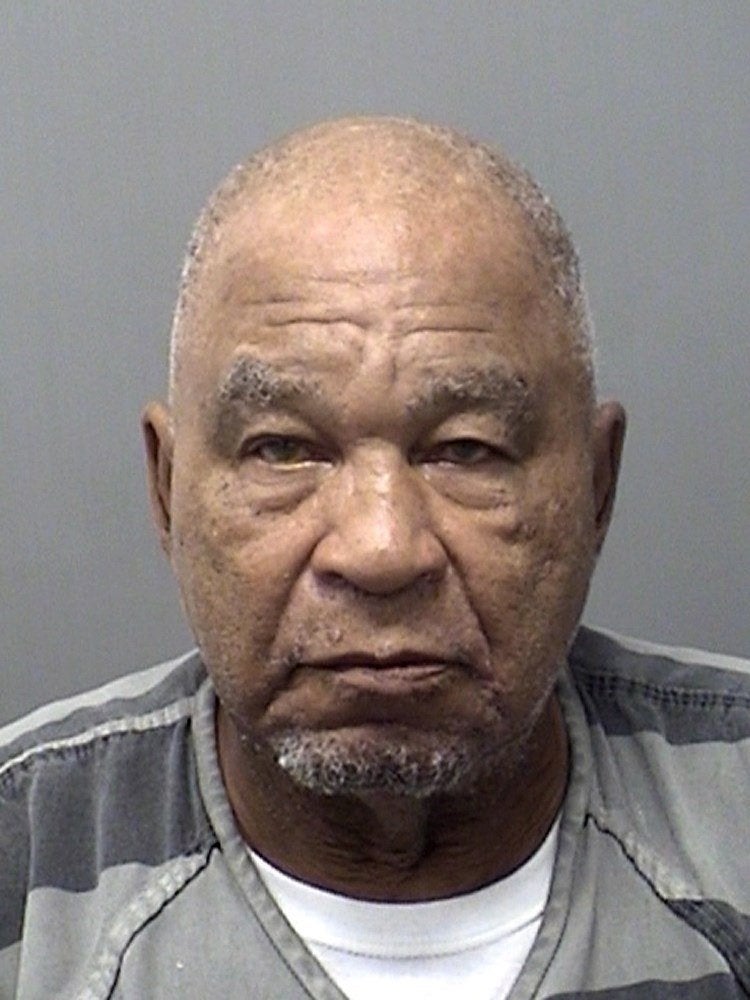
John Norman Collins – The Michigan Murders
Overview
John Norman Collins, later known legally as John Norman Chapman, is the convicted murderer most closely associated with the series of killings known as the Michigan Murders or Co-Ed Murders. The crimes terrorized the Ann Arbor and Ypsilanti area of southeastern Michigan between 1967 and 1969. Young women and teenage girls disappeared while walking, hitchhiking, attending school or otherwise going about ordinary activities, and their bodies were later discovered in secluded locations around Washtenaw County and neighboring areas.
Although Collins has frequently been described as a serial killer responsible for seven murders, an important distinction must be made between crimes established against him in court and murders investigators attributed to him. Collins was convicted of only one murder: the July 23, 1969 killing of Karen Sue Beineman. Five other Michigan murders were attributed to him but never prosecuted, and he was indicted in California for the murder of Roxie Ann Phillips but was never tried in that case.
Some historical accounts also include University of Michigan law student Jane Louise Mixer among Collins's victims. Mixer was indeed investigated as part of the Michigan Murders at the time, but she should not be classified as a confirmed or current suspected victim of Collins. Decades later, Gary Earl Leiterman was convicted of Mixer's murder. His conviction was subsequently affirmed on appeal. Although questions about possible laboratory contamination have generated controversy surrounding that conviction, Mixer's case is legally attributed to Leiterman rather than Collins.
John Norman Collins
Collins was born June 17, 1947, in Windsor, Ontario, Canada, and was raised primarily in Michigan. During the period of the murders he attended Eastern Michigan University in Ypsilanti and was studying education. He was physically fit, rode motorcycles and was familiar with the roads and communities surrounding Eastern Michigan University and the University of Michigan.
Those characteristics became important when investigators began examining the disappearances. Several victims had been hitchhiking or were otherwise in circumstances in which they might have accepted transportation from a stranger. Witnesses in the final case described Karen Sue Beineman leaving with a young man on a motorcycle, ultimately giving police the direct lead they had lacked in the earlier murders.
Confirmed Victim
- Karen Sue Beineman, 18 – July 23, 1969 – Ypsilanti/Ann Arbor Township, Michigan. Beineman was an Eastern Michigan University freshman from Grand Rapids. On July 23 she went into downtown Ypsilanti to visit a wig shop. Employees remembered seeing her leave with a young man riding a motorcycle. When she failed to return to her dormitory, she was reported missing. Her body was discovered on July 26 in a wooded gully near Huron River Drive in Ann Arbor Township. She had been severely beaten and strangled and had suffered additional injuries. Witnesses identified Collins as the motorcycle rider seen with her shortly before she disappeared. Physical and circumstantial evidence developed during the investigation led to Collins's prosecution. On August 19, 1970, a jury found him guilty of first-degree murder. Beineman is the only victim whose murder was proven against Collins in court.
Suspected and Attributed Victims
- Mary Terese Fleszar, 19 – disappeared July 9, 1967 and believed murdered that night – Ypsilanti/Superior Township, Michigan. Fleszar was an Eastern Michigan University accounting student. She was last seen during the evening of July 9 walking near her Ypsilanti residence. A witness reported seeing a man in a vehicle approach her more than once. She disappeared that evening. Her badly decomposed body was discovered on August 7 near an abandoned farmhouse in Superior Township. Examination showed that she had suffered approximately 30 stab wounds and extensive mutilation. Fleszar's murder became the first of the core Michigan cases later attributed to Collins, but he was never charged with killing her.
- Joan Elspeth Schell, 20 – disappeared June 30, 1968 and believed murdered shortly afterward – Ann Arbor, Michigan. Schell was an Eastern Michigan University art student. She was last seen on June 30 near the university student union after intending to travel toward Ann Arbor and apparently considering hitchhiking when she missed transportation. Her body was discovered on July 5 along an Ann Arbor roadside. She had been stabbed repeatedly and her throat had been cut. Investigators found indications that her body had been kept somewhere else before it was placed at the discovery location. Witness information concerning Schell's movements eventually drew attention to Collins, but no prosecution was brought against him for her murder.
- Maralynn Skelton, 16 – disappeared March 24, 1969 and believed murdered that day or night – Ann Arbor, Michigan. Skelton, a teenager from Romulus, was last seen hitchhiking near Arborland Shopping Center on March 24. She had planned to meet a friend near Eastern Michigan University but never arrived. Her body was discovered the following morning in a wooded area near Glazier Way and Earhart Road on the northeast side of Ann Arbor. She had been subjected to a severe beating, particularly around the head and face, and a garter belt had been placed around her neck. Police publicly connected her death with the developing series of murders. Collins was later considered responsible by investigators but was never charged in Skelton's case.
- Dawn Louise Basom, 13 – killed during the night of April 15-16, 1969 – Ypsilanti/Superior Township, Michigan. Basom was a 13-year-old junior high school student from Ypsilanti and the youngest of the core victims attributed to Collins. She disappeared while walking home on the evening before her body was discovered. On April 16 her body was found along Gale Road in Superior Township. She had been strangled with electrical cord and stabbed or slashed. Investigators subsequently recovered items associated with her near an abandoned farmhouse and came to believe the farmhouse property had been connected with her murder. Collins was never prosecuted for Basom's death.
- Alice Elizabeth Kalom, 21 – believed killed during the weekend of June 7-8, 1969 – Ann Arbor/Northfield Township, Michigan. Kalom was a University of Michigan student from Portage. She disappeared after spending time with friends in Ann Arbor. Her body was discovered on June 9 near an abandoned farm in the vicinity of North Territorial Road and U.S. 23. Kalom had been shot in the head and stabbed, and investigators determined that she had likely been attacked at another location before her body was abandoned. Bloodstains, clothing evidence and other items were later located at a gravel pit believed to have been associated with the killing. Her murder was attributed to the same offender responsible for the other Co-Ed Murders, but Collins was never charged.
- Roxie Ann Phillips, 17 – disappeared and believed killed June 30, 1969 – Salinas/Carmel area, California. Phillips was from Milwaukie, Oregon, and was visiting family friends in Salinas when she disappeared on June 30. Her body was found July 13 in a wooded ravine near Carmel. She had been strangled, and a cloth belt was found wrapped around her neck. Collins had traveled from Michigan to California and was in the Salinas-Monterey area at the time. Investigators learned that Phillips and her acquaintances had encountered a young Michigan man named John whose description and circumstances closely resembled Collins. California authorities developed a case sufficiently strong for a Monterey County grand jury to indict Collins for Phillips's murder in April 1970. Despite the indictment, Collins was never brought to trial for Phillips's death, so she remains an attributed or suspected victim rather than a legally confirmed victim.
Jane Louise Mixer – Historically Linked but Not a Collins Victim
Jane Louise Mixer, 23, should not be included among Collins's confirmed victims. Her inclusion on some older lists results from the way her murder was originally investigated during the Michigan Murders. Mixer was a University of Michigan law student who disappeared on the evening of March 20, 1969, while attempting to arrange transportation home to Muskegon. Her body was discovered the following morning, March 21, in Denton Cemetery in Wayne County, several miles east of Ann Arbor. She had been shot twice in the head with a .22-caliber firearm and strangled with a nylon stocking.
Because Mixer was a young female university student killed during the same period and general geographic area as the other victims, investigators initially examined the possibility that she had been killed by the same murderer. There were, however, significant differences between her death and several of the other murders. Her body was fully clothed and deliberately arranged in the cemetery, and the method of attack differed from the repeated stabbing, beating and sexual violence found in several of the other cases.
Decades later, advances in DNA testing produced evidence pointing to Gary Earl Leiterman. Leiterman was tried and convicted of first-degree murder in 2005 and sentenced to life imprisonment without the possibility of parole. His conviction was affirmed by the Michigan Court of Appeals in 2007. The DNA evidence used against Leiterman has since been criticized by some forensic specialists and innocence advocates because another DNA profile recovered during the testing matched a person who had been only four years old when Mixer was killed, raising allegations of laboratory contamination. Nevertheless, Leiterman's conviction remained the legal resolution of the case. For that reason, Mixer should be described as a woman whose murder was historically investigated with the Michigan Murders, not as a confirmed or current suspected victim of Collins.
The Pattern of the Michigan Murders
The five unprosecuted Michigan murders attributed to Collins shared enough circumstances to convince investigators that they were dealing with a series. The victims were young women or teenage girls, several had connections to the universities in Ann Arbor and Ypsilanti, and many disappeared while alone. Several were known or believed to have been hitchhiking, creating opportunities for an offender with a vehicle to approach them without immediately attracting attention.
The bodies were generally found in isolated or semi-rural locations outside the centers of Ann Arbor and Ypsilanti. Investigators concluded in several cases that the place where a body was discovered was not necessarily the location where the victim had been murdered. Clothing was sometimes removed, cut or arranged around the victim. Strangulation appeared in several attacks, while stabbing and severe blunt-force trauma were also repeatedly encountered.
As the murders continued, police from Ann Arbor, Ypsilanti, the Washtenaw County Sheriff's Department and the Michigan State Police increasingly shared information. The killings generated enormous fear in the university communities, particularly because investigators could not determine how the murderer selected or initially approached his victims.
The Karen Sue Beineman Investigation
The disappearance of Karen Sue Beineman finally gave investigators the eyewitness evidence they needed. Employees at the Ypsilanti wig shop remembered the man with whom Beineman left and provided investigators with descriptions of both the rider and his motorcycle. Attention soon focused on Collins.
Witnesses subsequently identified Collins as the young man they had seen with Beineman. Investigators also began examining a house belonging to Collins's uncle, Michigan State Police Corporal David Leik. Collins had access to the house while Leik and his family were away on vacation because Collins had agreed to care for the family dog.
After the family returned, unusual conditions in the basement drew attention. Police found areas of the basement floor that appeared to have been freshly painted. Evidence beneath or near the paint included a bloodstain consistent with Beineman's blood type. Investigators also compared numerous clipped hairs recovered from Beineman's clothing with hair from the basement, where members of the Leik family routinely received haircuts.
The forensic techniques available in 1969 could not provide the individualized certainty of modern DNA analysis. The prosecution therefore constructed its case from the combined weight of eyewitness testimony, hair evidence, blood typing, Collins's access to the Leik residence and evidence concerning his activities after Beineman disappeared.
Arrest
Collins was taken into custody at the end of July 1969. He was formally arraigned on August 1 for Karen Sue Beineman's murder. His arrest came only days after Beineman's body was discovered and effectively ended the sequence of killings historically attributed to the Michigan Murderer.
Police immediately began investigating Collins in connection with the earlier murders. Detectives reviewed his movements, associates, vehicles and possible contacts with the victims. Although investigators believed they could connect him circumstantially to several of the cases, only the Beineman investigation produced evidence prosecutors considered sufficient to place before a jury in Michigan.
The California Case
The Roxie Ann Phillips investigation became the strongest case against Collins outside Michigan. Collins had traveled to California shortly before Phillips disappeared. Witnesses described Phillips becoming acquainted with a young man named John from Michigan who was an Eastern Michigan University student and hoped to become a teacher. Those details closely matched Collins.
California investigators worked with Michigan authorities and eventually obtained a murder indictment against Collins. The indictment was kept from interfering with the pending Beineman prosecution. After Collins received a life sentence in Michigan, however, California officials ultimately decided not to pursue extradition and trial. The decision meant the evidence in Phillips's murder was never tested before a trial jury.
Trial for the Murder of Karen Sue Beineman
Collins's murder trial began in Washtenaw County in 1970 after an unusually lengthy jury-selection process caused by the enormous publicity surrounding the Michigan Murders. Prosecutors focused specifically on Beineman rather than attempting to prove that Collins had committed the entire series.
Witnesses from the wig shop placed Collins with Beineman shortly before she disappeared. His friend Arnold Davis also became an important prosecution witness. Davis testified about Collins's conduct following the disappearance, including the disposal of a box and blanket and Collins giving him a knife for safekeeping.
The prosecution combined those accounts with forensic evidence from the Leik basement. Blood typing, microscopic hair comparison and the circumstances surrounding the freshly painted portion of the basement were presented as evidence that Beineman had been inside the residence while Collins had access to it.
The defense challenged the reliability of the witnesses and forensic comparisons and argued that the extraordinary publicity surrounding the murders had made it impossible for Collins to receive a fair trial. Collins maintained his innocence.
Conviction
On August 19, 1970, the jury found John Norman Collins guilty of first-degree murder in the death of Karen Sue Beineman. On August 28 he received the mandatory sentence of life imprisonment. Collins continued to deny killing Beineman and pursued appeals, but his conviction remained intact.
The distinction created by that verdict remains important when describing Collins's victims. Karen Sue Beineman is his one confirmed victim in the legal sense because a jury convicted him of her murder. Mary Fleszar, Joan Schell, Maralynn Skelton, Dawn Basom and Alice Kalom are attributed or suspected Michigan victims because investigators believed Collins was responsible but never prosecuted him for their deaths. Roxie Ann Phillips is also an attributed victim; her case went further because Collins was actually indicted for her murder, but without a trial and verdict she cannot accurately be described as a confirmed victim.
Why the Other Cases Were Never Tried
The earlier murders presented prosecutors with substantial evidentiary problems. Bodies had sometimes remained undiscovered for days or weeks, forensic science was far more limited than it is today, and investigators frequently lacked eyewitnesses capable of placing Collins directly with a victim. Blood typing and microscopic hair comparison could establish similarities but could not identify an individual with the precision later made possible by DNA analysis.
Once prosecutors secured a first-degree murder conviction and mandatory life sentence in the Beineman case, the immediate practical need for additional Michigan trials diminished. As a result, no jury ever determined Collins's guilt or innocence in the murders of Fleszar, Schell, Skelton, Basom or Kalom.
Correct Classification of the Victims
The most accurate modern classification is therefore one confirmed victim and six suspected or attributed victims. The confirmed victim is Karen Sue Beineman. The suspected or attributed victims are Mary Terese Fleszar, Joan Elspeth Schell, Maralynn Skelton, Dawn Louise Basom, Alice Elizabeth Kalom and Roxie Ann Phillips.
Jane Louise Mixer should be kept separate. She was historically investigated as part of the Michigan Murder series, which explains why she continues to appear on some older victim lists, but she should not be counted as one of Collins's confirmed victims. Gary Earl Leiterman was convicted of her murder decades later, making her case legally separate from Collins and the six Michigan and California murders currently attributed to him.
Legacy
The Michigan Murders remain one of the most notorious criminal investigations in the history of southeastern Michigan. For two years the killings transformed daily life around Ann Arbor and Ypsilanti, frightening students and families and forcing local law-enforcement agencies to confront the possibility that a single offender was repeatedly hunting young women.
John Norman Collins became permanently associated with that period when he was convicted of Karen Sue Beineman's murder in 1970. Investigators continued to believe that Beineman's death was the final crime in a much larger series, but the historical record requires a careful distinction between what was proven and what was suspected. Collins is a convicted murderer of one woman and the principal historical suspect in six additional murders, including the California murder for which he was formally indicted but never tried.