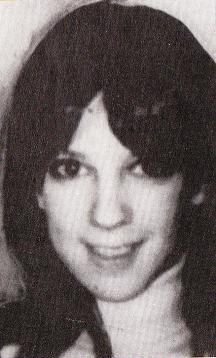
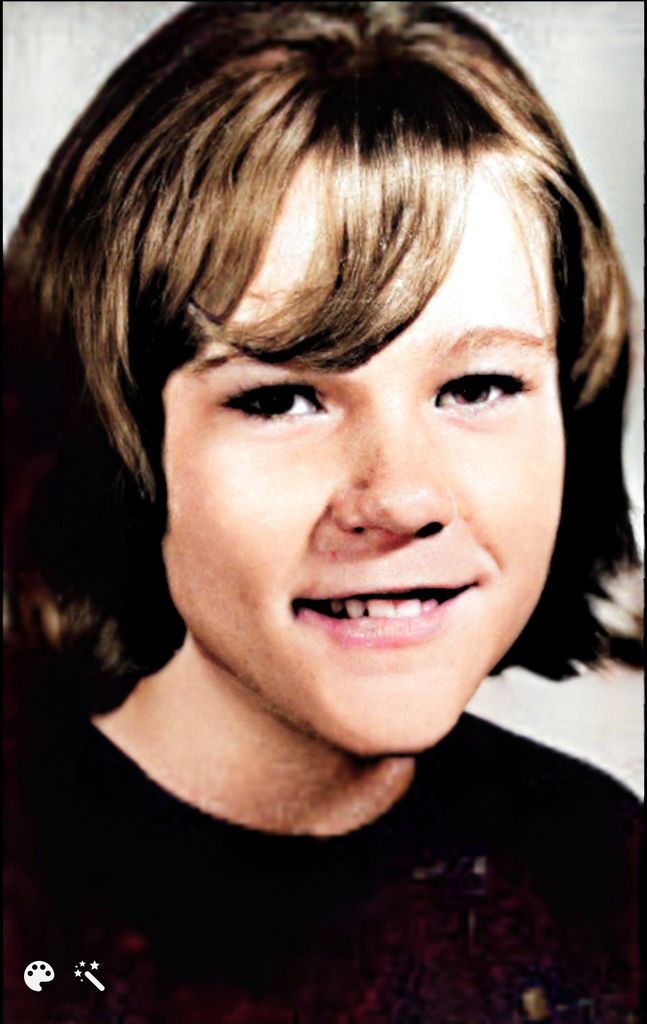
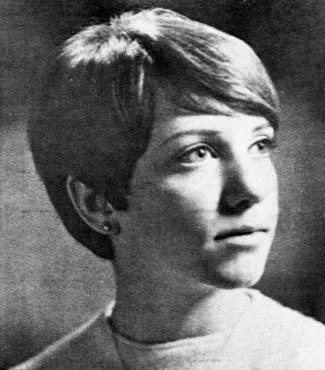
In the summer of 1968, a palpable sense of fear began to creep into the idyllic college town of Ann Arbor, Michigan, a fear that would escalate and grip the community for the next year. This growing anxiety was tragically underscored by the death of Joan Schell, a 20-year-old art student at Eastern Michigan University. On the evening of June 30, 1968, Joan, a young white female, found herself hitchhiking after missing a bus that was meant to take her to her boyfriend's house in Ann Arbor.
Her roommate had accompanied her to the bus stop and was the last person to see her alive. Witnesses later reported seeing Joan getting into a red and white car with three young men inside. When she failed to return, her roommate reported her missing the following day.
A week later, on July 5th, construction workers made a grim discovery on a roadside in a developing Ann Arbor subdivision near Glacier Way and Earhart Road. It was the partially decomposed body of Joan Schell. The scene was one of horrific violence; she had been sexually assaulted and stabbed numerous times. An autopsy would later reveal she had sustained twenty-five stab wounds from a small knife, with several puncturing vital organs. Her throat had also been slashed, and her own miniskirt was found tied around her neck. The brutality of the crime sent shockwaves through the community and left investigators with a deeply disturbing case.
The investigation into Joan Schell’s murder quickly revealed alarming similarities to the death of another young woman, Mary Fleszar, who had been killed a year prior. This connection led authorities to believe a serial killer was preying on young women in the Ann Arbor and Ypsilanti area. The series of killings would come to be known as the 'Michigan Murders' or the 'Co-Ed Murders.' Police questioned a number of individuals, including Joan's boyfriend who was found to be AWOL from the Army, but he was quickly cleared as a suspect. Investigators released a composite sketch of one of the men seen in the car with Joan and issued a statewide alert for the vehicle.
The prime suspect in the string of murders, including Joan Schell's, was identified as John Norman Collins, a student at Eastern Michigan University. Investigators established that Collins had been a neighbor to both Joan Schell and the first victim, Mary Fleszar. Despite the strong suspicion and the connections investigators made, John Norman Collins was never formally charged with or tried for the murder of Joan Schell. He was, however, arrested one week after the final murder in the series and was ultimately convicted and sentenced to life in prison on August 19, 1970, for the murder of Karen Sue Beineman, the last of the seven victims attributed to the 'Michigan Murderer.' While investigators remain confident that Collins was responsible for all seven deaths, the case of Joan Schell officially remains one of the unsolved murders in that terrifying chapter of Michigan's history.