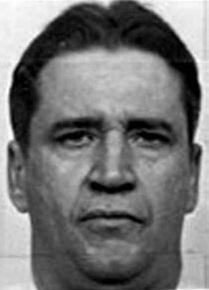
Gary Addison Taylor: The Royal Oak Sniper
Early Life and Escalating Violence
Gary Addison Taylor was an American serial killer, rapist and repeat violent offender whose attacks against women extended across several states and more than two decades. Born in Michigan in March 1936, Taylor spent part of his childhood in Howell before his family relocated to St. Petersburg, Florida. His documented pattern of violence began during his teenage years, long before the murders for which he was eventually convicted.
In Florida, Taylor reportedly lingered near bus stops and attacked women who were walking alone. He used blunt objects, including hammers and wrenches, striking victims suddenly and without any apparent personal connection. On December 24, 1954, when he was 18, he was arrested after nearly beating a 39-year-old woman to death with a wrench as she stepped from a bus in St. Petersburg. Investigators suspected him in numerous similar assaults, but he was acquitted of the charge brought against him.
After returning to Michigan, Taylor’s violence took another form. In 1957, he drove through communities in the Detroit metropolitan area and fired a gun at women walking outside after dark. Two women were wounded. Newspapers called the unidentified attacker the “Phantom Sniper” and the “Royal Oak Sniper.” Taylor was eventually arrested and found not guilty by reason of insanity. A psychiatrist warned that his intense hostility toward women made it possible that he would eventually kill someone.
Psychiatric Confinement and Repeated Releases
Taylor spent years moving through Michigan psychiatric institutions, including Ionia State Hospital and the Lafayette Clinic in Detroit. His confinement did not prevent further offenses. While temporarily released to attend a welding class, Taylor talked his way into a Detroit woman’s home, raped her and robbed her. During another authorized absence, he threatened a rooming-house manager and her daughter with a large butcher knife.
Rather than being prosecuted separately for those crimes, Taylor was returned to psychiatric custody. He openly described experiencing a compulsion to hurt women, yet psychiatrists disagreed over whether his behavior resulted from a treatable mental illness or a deeply ingrained personality disorder. In 1972, authorities released him from the Michigan Center for Forensic Psychiatry in Ypsilanti under outpatient supervision. He was expected to continue taking medication and reporting for treatment.
Taylor soon married a secretary named Helen and moved with her to the Loch Erin area near Onsted, Michigan. By late 1973, he had stopped appearing for psychiatric appointments. Authorities did not immediately locate him or place his name into a nationwide fugitive system. During the period in which he remained outside institutional control, Taylor began committing the murders later established through confessions and the recovery of his victims’ bodies.
The Michigan Murders
In March 1974, 25-year-old Lee Fletcher and 23-year-old Deborah Heneman disappeared from the Toledo, Ohio, area. The two women had reportedly arranged to meet someone in the parking lot of a Toledo restaurant. They were never seen alive again. Although the exact day of their deaths has not been consistently documented, investigators concluded that they were killed shortly after their disappearance in March 1974.
Taylor transported or lured Fletcher and Heneman to his isolated Michigan residence. After killing them, he wrapped their bodies in plastic, secured them with rope and electrical cords, and buried them in shallow graves in the yard. The graves were located just outside a bedroom window, allowing Taylor to continue living at the property while the victims remained concealed only a short distance from the house.
When investigators finally searched the former Taylor residence on May 22, 1975, they uncovered the women’s remains. Police initially believed additional bodies might be buried on the property and conducted an expanded search, but no further remains were recovered there.
The Murder of Vonnie Stuth
After leaving Michigan, Taylor traveled west and lived for a time in Washington. On November 27, 1974, he abducted and murdered Vonnie Joyce Van Driel Stuth in Burien, Washington. Stuth was a young married woman who was alone in her basement apartment while her husband worked a swing shift on the evening before Thanksgiving.
Stuth had spoken with her sister and was preparing food for the family’s Thanksgiving gathering. When her husband returned after midnight, the television and lights were still on, but Stuth had vanished. There were no indications that she had planned to leave, and her disappearance immediately raised fears that she had been taken against her will.
Taylor became a suspect because he had been living in the region and had access to the area. He was questioned, but authorities did not initially have enough evidence to hold him. He refused to take a polygraph examination and soon left Washington. After his later confession, investigators searched behind a residence where he had lived near Enumclaw. Stuth’s body was recovered from a grave on the property in May 1975.
The Houston Crimes and Susan Jackson
Following his separation from Helen, Taylor moved to Houston, Texas, in December 1974. His attacks on women continued. Houston authorities connected him to a series of sexual assaults, including aggravated sexual abuse, attempted aggravated rape and the rape of a pregnant 16-year-old girl.
One of Taylor’s final known victims was 21-year-old Susan Jackson, a Houston waitress and dancer. Jackson’s nude body was discovered in Houston on May 18, 1975. Taylor was arrested two days later, on May 20, on sexual-assault charges. During questioning, he confessed to Jackson’s murder and admitted responsibility for three other killings.
Taylor later attempted to withdraw or discredit his statements by alleging that police had beaten the confessions out of him. Officers denied the accusation. His confessions contained enough information to direct investigators to buried bodies in Michigan and Washington, providing strong corroboration of his involvement.
Confirmed Victims
- Lee Fletcher, 25 — March 1974, Onsted area, Michigan: Fletcher disappeared from Toledo, Ohio, after arranging to meet someone at a restaurant parking lot. Taylor killed her and buried her in a shallow grave outside his Michigan residence. Her body was recovered on May 22, 1975. The precise date of death remains undocumented, but investigators placed the killing in March 1974.
- Deborah Heneman, 23 — March 1974, Onsted area, Michigan: Heneman disappeared with Fletcher from Toledo. Her body was found buried beside Fletcher’s remains, wrapped in plastic and bound with rope and electrical cords. The exact date of death has not been firmly established, although the murder occurred after her March 1974 disappearance.
- Vonnie Joyce Van Driel Stuth — November 27, 1974, Burien and Enumclaw area, Washington: Stuth was abducted from her home while her husband was at work. Taylor killed her and buried her behind a residence where he had lived near Enumclaw. Investigators recovered her remains in May 1975.
- Susan Jackson, 21 — May 18, 1975, Houston, Texas: Jackson was a Houston waitress and dancer whose nude body was discovered shortly before Taylor’s arrest. Taylor signed a confession admitting that he murdered her.
Suspected Additional Victims
Taylor claimed at different times that he had killed additional people. His estranged wife told investigators that he had once spoken of killing four people in Michigan, raising the possibility that Fletcher and Heneman were not his only victims in the state. Police searched his former property for two additional bodies but found none.
Authorities in Michigan, Texas, Washington and California examined Taylor as a possible suspect in numerous unresolved disappearances and murders. Estimates of his possible victim count have ranged as high as 20, but only four murders were conclusively tied to him through confessions, physical evidence and the recovery of remains.
Taylor was also investigated in connection with the disappearance of Sandra “Sandy” Horwath, a 33-year-old mother who vanished from Ann Arbor, Michigan, in 1973. Taylor admitted knowing her but denied killing her. Horwath’s body has never been found, and Taylor was never charged in her case.
Washington investigators initially considered whether Taylor might have been responsible for other missing or murdered women in the Pacific Northwest. He was ultimately eliminated from several Washington cases that were later attributed to Ted Bundy. The overlapping presence of Taylor and Bundy in Washington during the same period complicated early investigations into disappearances of young women.
Conviction and Imprisonment
Taylor was extradited to Washington to face prosecution for the murder of Vonnie Stuth. He ultimately pleaded guilty to second-degree murder and received a life sentence. Accounts differ concerning the precise procedural dates of every plea and conviction, but Taylor was imprisoned in Washington following the case and remained under a life sentence.
Although he confessed to four murders, the Washington prosecution ensured that he would remain confined while authorities in Michigan and Texas retained evidence linking him to the other killings. His imprisonment ended a violent career that had begun with assaults at bus stops, progressed to random shootings and sexual attacks, and culminated in the murders and secret burials of women across the country.
A Pattern of Institutional Failure
The Gary Addison Taylor case became a disturbing example of how gaps between criminal courts, psychiatric hospitals and law-enforcement agencies could allow a demonstrably violent offender to remain free. Multiple victims survived attacks in which Taylor used guns, blunt instruments, knives and sexual violence. Mental-health professionals repeatedly documented his hostility toward women and the possibility that he could kill, yet legal restrictions and conflicting psychiatric opinions led to his release.
After Taylor stopped attending outpatient treatment, authorities waited months before initiating an effective nationwide effort to locate him. By the time investigators connected the warnings from Michigan with his movements across the country, Fletcher, Heneman, Stuth and Jackson were dead.
Taylor’s four confirmed murders represent only the portion of his crimes that investigators were able to prove. His long history of assaults, his movement between states, his own statements and his possible connections to unresolved cases left authorities concerned that other victims may never have been identified. He remains remembered as the “Royal Oak Sniper,” but the shootings that produced that nickname were only an early stage in a much broader pattern of predatory violence against women.