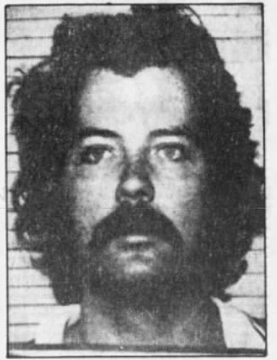
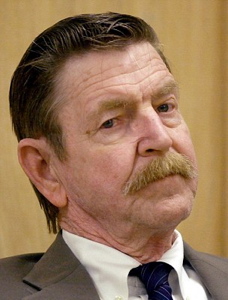
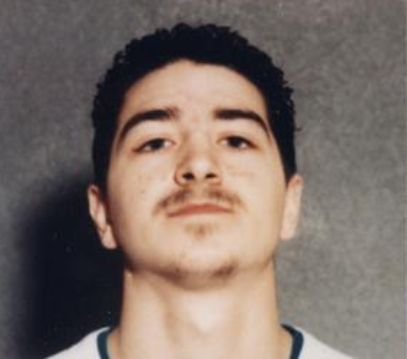
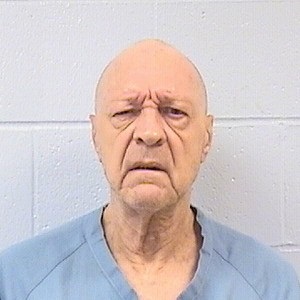
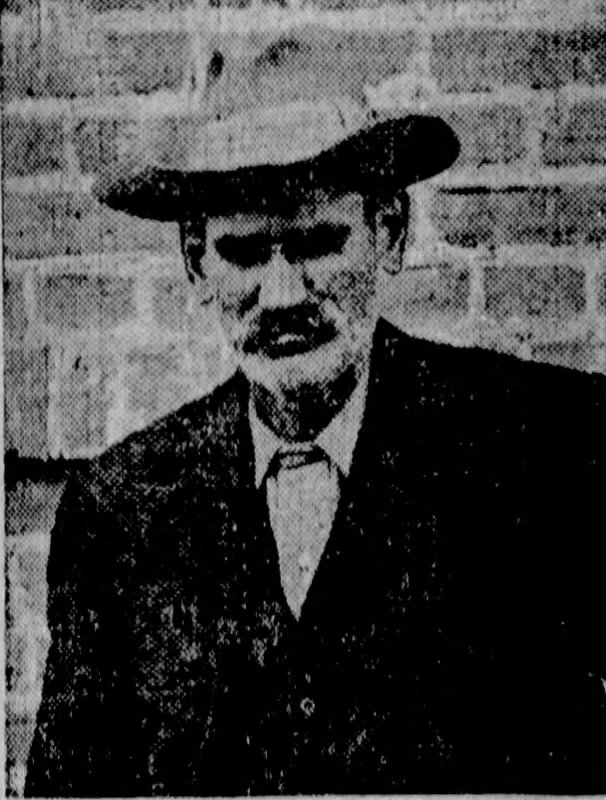
David Martin Long: The Texas Drifter Who Confessed to Multiple Murders
Early Life and Years of Instability
David Martin Long was born on July 15, 1953, in Tom Green County, Texas. Although he was born in Texas, much of his childhood was spent in California. His early years were marked by instability, neglect and the death of his mother when he was about ten years old. Long was subsequently placed in foster homes and reform institutions, beginning a pattern of confinement, substance abuse and troubled behavior that continued throughout his life.
Long began drinking heavily at a young age and later used drugs including heroin, cocaine and methamphetamine. As an adult, he moved frequently, worked temporary jobs and repeatedly entered alcohol-treatment programs. People who encountered him sometimes described him as intelligent, charming and capable of making a favorable first impression. Others recalled that he could become demanding, threatening and unpredictable when intoxicated.
The 1978 Killing of James Carnell
Long later confessed that his first known murder occurred in San Bernardino, California, in 1978. The victim was James Carnell, a service-station attendant. According to Long, an argument began after he believed Carnell had charged him too much for repairing a tire. Long claimed that he attacked Carnell with a tire iron and then forced a broom handle down the victim's throat.
Long was not tried for Carnell's death. His account was given years later while he was being questioned about the murders that ultimately sent him to death row. Investigators reportedly connected him to the California case, but the absence of a separate trial meant that the murder remained an admitted or attributed crime rather than one established through a conviction against Long.
The Death of Bob Neal Rogers
In 1983, a fire destroyed the mobile home of Bob Neal Rogers in Bay City, Texas. Rogers, who had previously employed Long, died in the blaze. Long had reportedly become angry after Rogers accused him of misusing a company vehicle. Authorities arrested Long shortly after the fire, but a grand jury concluded that there was not enough evidence to indict him.
After his later arrest for the Lancaster murders, Long confessed that he had deliberately set the fire that killed Rogers. No separate murder prosecution followed. The case nevertheless became significant because it suggested that Long used different methods of killing and that his violence had extended across several years and more than one state.
Arrival at the Jester Home
On September 19, 1986, Long was hitchhiking after being discharged from an alcohol-rehabilitation program in Little Rock, Arkansas. Donna Sue Jester, a 37-year-old woman from Lancaster, Texas, stopped and gave him a ride. Learning that he had no permanent home, Donna allowed Long to stay at her residence in exchange for performing repairs around the property.
Donna shared the home with her 64-year-old adoptive mother, Dalpha Lorene Jester, who was blind, physically disabled and dependent on others for assistance. Also living there was 20-year-old Laura Lee Owens, whose surname was reported as Owen in some contemporary accounts. Owens had also experienced homelessness and had been given shelter in the Jester residence.
During his brief stay, Long performed work around the house, drank alcohol and developed a relationship with Owens. Tension reportedly grew between him and the women over his drinking and behavior. Long later said that he believed they were talking about him and interfering with his relationship with Owens. He described feeling increasingly suspicious and claimed that something inside his mind would suddenly “click.”
The Lancaster Triple Murder
On September 27, 1986, Long armed himself with a hatchet and a knife. The precise sequence of the killings was reconstructed from the condition of the house, the locations of the bodies and Long's later statements. Investigators believed Donna and Dalpha Jester were attacked inside the residence. Laura Owens was apparently attacked after returning home or encountering the scene and attempting to escape.
The three women were beaten, stabbed and struck repeatedly with the hatchet. Defensive injuries showed that at least some of the victims attempted to protect themselves. Dalpha Jester was especially vulnerable because of her blindness and limited mobility. After the killings, Long washed or wiped the hatchet, wrapped it in a towel and left it near the bathroom sink. He then fled in Donna Jester's station wagon.
The bodies were not discovered until September 29, two days after the murders. Investigators found extensive blood evidence throughout the home. Donna's diary contained an entry describing how she had met Long and permitted him to stay at the residence, giving police an immediate lead concerning the identity of the man who had recently entered the victims' lives.
Victims Connected to David Martin Long
- James Carnell — Killed in 1978 at or near a service station in San Bernardino, California. Long confessed that he beat Carnell with a tire iron following a dispute over a tire repair. Long was not tried for the killing.
- Bob Neal Rogers — Died in 1983 when his mobile home burned in Bay City, Texas. Rogers had previously employed Long. Long later confessed that he deliberately started the fire, although he was never convicted in the case.
- Donna Sue Jester, 37 — Murdered on September 27, 1986, inside her home in Lancaster, Texas. She had given Long a ride and allowed him to stay at the residence. She was attacked with a knife and hatchet.
- Dalpha Lorene Jester, 64 — Murdered on September 27, 1986, at the Lancaster home. She was Donna Jester's blind and physically disabled adoptive mother and had limited ability to defend herself.
- Laura Lee Owens, 20 — Murdered on September 27, 1986, at the Jester residence in Lancaster, Texas. Her surname was also reported as Owen in some records. Investigators believed she encountered the killings and attempted to flee before Long attacked her.
Confession Ignored and Release from Jail
On the night of the Lancaster murders, police arrested Long for drunken driving in Leon County, approximately 100 miles south of Lancaster. He was driving Donna Jester's station wagon in the wrong direction on Interstate 45 and had reportedly forced other motorists off the road. After being taken into custody, he behaved erratically, injured himself by striking his head against a police vehicle and made statements about religion and murder.
While jailed, Long reportedly told officers or jail employees that he had killed three women in Lancaster. Because the bodies had not yet been discovered and Long was visibly intoxicated and incoherent, his statements were not treated as credible. He was released on September 29, the same day Lancaster police found the victims.
The failure to act on Long's statements allowed him to remain free for nearly another month. Police issued warrants and circulated his description. On October 24, 1986, he was arrested in Austin for public intoxication after passing out in a vehicle. Long initially used an alias, but fingerprint records confirmed his identity.
Admissions to Investigators
After his recapture, Long confessed to the murders of Donna Jester, Dalpha Jester and Laura Owens. He claimed that the women had complained about his drinking and that he had become tired of what he called their bickering. His statements showed little immediate remorse. He described the killings as though he had been watching events take place in a motion picture rather than personally committing them.
Long also admitted killing James Carnell in California and setting the fire that killed Bob Neal Rogers in Bay City. These confessions expanded the suspected scope of his crimes from a single triple murder to a series of killings committed between 1978 and 1986.
Long eventually claimed responsibility for as many as seven deaths. Among the additional crimes he confessed to was a 1986 house fire in Iraan, Texas, that killed two women. However, investigators and later legal authorities questioned the reliability of that confession. Modern reviews concluded that the Iraan fire may have been accidental, and Long's claim was never adequately corroborated. For that reason, the two women killed in the fire are not generally treated as confirmed victims of Long.
Trial and Mental-Health Defense
A Dallas County grand jury indicted Long for the Lancaster murders in November 1986. His defense attorneys entered a plea of not guilty by reason of insanity and presented evidence of his long history of alcohol abuse, drug addiction, institutionalization, head injuries and psychiatric problems. Long claimed that he had become convinced the women were conspiring against him and that some of his behavior was connected to demonic possession.
A defense psychologist testified that Long may have been psychotic or hallucinating because of alcohol withdrawal. A psychiatrist for the prosecution disagreed, diagnosing Long with antisocial personality disorder and stating that he could distinguish right from wrong at the time of the killings.
During the proceedings, Long disrupted the trial by announcing in front of the jury that he was guilty and had not wanted his lawyers to present an insanity defense. He attempted to change his plea despite the advice of his attorneys. The jury convicted him of capital murder on February 7, 1987. On February 10, he was sentenced to death.
Years on Death Row
Long remained on Texas death row for more than twelve years. His conviction and sentence were affirmed on appeal, and repeated efforts to obtain relief in state and federal courts were unsuccessful. During this period, he continued to discuss his violent history and provided the questionable confession concerning the fatal Iraan fire.
His case became entangled with that of Ernest Willis, who had been sentenced to death for the Iraan fire. Long's confession prompted lawyers to reexamine the evidence against Willis. Later fire investigators found no reliable physical evidence that the blaze had been deliberately set. Willis's conviction was eventually overturned, and he was released in 2004. Long's confession was considered unreliable, but it helped trigger the investigation that exposed serious weaknesses in the original prosecution.
Overdose Before His Execution
Long's execution was scheduled for December 8, 1999. Two days earlier, prison employees found him unconscious after he overdosed on prescription medication that he had apparently accumulated. He was transported to a hospital in Galveston, placed on a ventilator and treated in an intensive-care unit.
The unusual situation attracted national attention because medical personnel were required to restore Long's health so that the state could execute him. His condition improved, although a physician warned that he would normally have remained hospitalized. Texas officials arranged for Long to be flown back to Huntsville under medical supervision on the day of his execution.
Execution and Legacy
David Martin Long was executed by lethal injection at the Huntsville Unit on December 8, 1999. He was 46 years old. In his final statement, he apologized to the victims' relatives and blamed part of his violent development on the years he had spent in California reform schools and prisons. He said that those institutions had helped create what he had become.
Long was convicted only of the three Lancaster murders, but he confessed to at least two other killings that investigators regarded as credible. His confirmed and strongly attributed victim total is therefore generally listed as five. Claims that he killed seven people include the two deaths in the disputed Iraan fire, a confession that was never proven and was later considered doubtful.
The crimes of David Martin Long illustrate the difficulty of evaluating confessions made by violent offenders who seek attention, attempt to manipulate investigations or possess detailed knowledge of unrelated crimes. His responsibility for the Lancaster triple murder was established in court, while the Carnell and Rogers killings rested primarily on his admissions and investigative links. The broader claims surrounding him require caution, making it important to separate his convicted crimes from murders he confessed to and deaths for which his involvement was never substantiated.