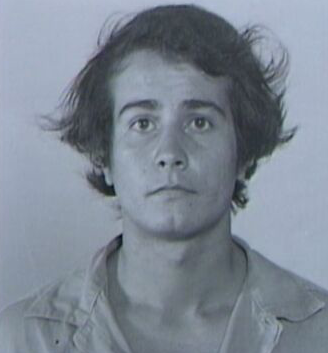
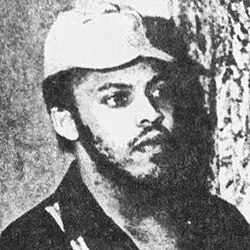
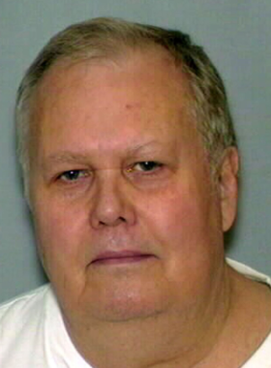
Steven Brian Pennell: The Route 40 Killer
Overview
Steven Brian Pennell was an American serial killer who abducted women from highways in New Castle County, Delaware, during 1987 and 1988. Known as the “Route 40 Killer,” Pennell targeted women traveling or working along the commercial highway corridor between Wilmington and Bear. He used a blue Ford Econoline van to approach his victims, offering them transportation before taking them to another location.
Pennell was convicted of murdering Shirley Anna Ellis and Catherine Anne DiMauro. He later entered no-contest pleas to the murders of Michelle Gordon and Kathleen Anne Meyer. Investigators also considered him the leading suspect in the death of Margaret Lynn Finner, although prosecutors concluded that the available evidence was insufficient to charge him with her murder.
The crimes were connected by their geography, the backgrounds of several victims, the injuries inflicted upon them and microscopic fibers recovered from their bodies. The investigation became one of Delaware’s most extensive murder inquiries and included undercover officers, surveillance teams, forensic specialists and assistance from the Federal Bureau of Investigation.
Background
Steven Brian Pennell was born on November 22, 1957. He lived in Delaware with his wife and children and worked as an electrician. Before the murder investigation, he did not have the kind of serious criminal history that would ordinarily have drawn attention from detectives investigating multiple homicides.
Pennell’s work provided him with practical knowledge of tools, wiring and mechanical equipment. His van contained carpeting, electrical supplies and numerous implements that initially could have appeared related to his occupation. Investigators later alleged that he transformed the vehicle into a controlled environment in which women could be restrained and abused without being easily seen from outside.
The blue Ford van had few side windows and was repeatedly observed traveling along Route 40. The same vehicle eventually became the central link between Pennell, an undercover police operation and the women who disappeared from the highway corridor.
The Murder of Shirley Anna Ellis
Shirley Anna Ellis, 23, was the first victim whose murder was conclusively connected to Pennell. Ellis was last known to be traveling along Route 40 near Wilmington on November 29, 1987. She had reportedly been attempting to obtain transportation after leaving the Wilmington Hospital area.
Ellis was found dead beside the road on November 29, 1987. Her wrists showed evidence that she had been bound, and duct tape was discovered in her hair. The medical examiner documented ligature injuries around her neck, extensive trauma to her head and patterned injuries indicating that she had been deliberately assaulted.
The cause of death was determined to be strangulation combined with blunt-force trauma to the head. The nature of the injuries led investigators to believe that Ellis had been kept under the killer’s control and subjected to prolonged violence before her body was abandoned.
The Murder of Catherine Anne DiMauro
Catherine Anne DiMauro, 31, was last seen walking along Route 40 late on June 28, 1988. During the early morning of June 29, construction workers found her body at a building site near Bear, Delaware.
DiMauro had suffered injuries closely resembling those inflicted upon Shirley Ellis. The medical examiner determined that she died from strangulation and multiple blunt-force injuries. Duct tape was found in her hair, and numerous blue fibers were recovered from her body.
The similarities between the two deaths were too substantial to dismiss. Both victims had been encountered near Route 40, restrained and subjected to comparable methods of violence. Investigators concluded that the same offender was probably responsible and began treating the cases as the work of a serial killer.
The Disappearance and Death of Margaret Lynn Finner
Margaret Lynn Finner, 27, disappeared on August 22, 1988. Witnesses reported seeing her enter a blue van near the Route 13 and Route 40 area. The vehicle was described as having rounded headlights and no side window, details that became important after police began examining Pennell’s van.
Finner’s remains were discovered by a hunter near the Chesapeake and Delaware Canal in November 1988, approximately three months after she disappeared. Decomposition prevented the medical examiner from establishing a precise date or cause of death.
Although investigators believed Finner may have been another Route 40 victim, the forensic evidence was not strong enough to support a murder charge against Pennell. Her death therefore remained officially separate from the four murder cases that produced Pennell’s convictions and no-contest pleas.
The Murder of Michelle Gordon
Michelle Gordon, 22, was last seen on September 18, 1988, entering a blue van along the Route 40 corridor. Her body was found on September 20 on rocks beside the Chesapeake and Delaware Canal.
Examiners found evidence that Gordon had been subjected to violence and restraint. A large amount of cocaine was present in her body, creating a complicated medical question about whether the drug or the physical abuse was the immediate cause of death. Prosecutors argued that the cocaine had been administered as part of the fatal attack and that Pennell was responsible for her death.
Gordon’s case was included in Pennell’s first trial, but the jury was unable to reach a unanimous verdict on that charge. He was later indicted again and entered a no-contest plea to her murder in 1991.
The Disappearance of Kathleen Anne Meyer
Kathleen Anne Meyer, 26, disappeared from the Route 40 area on September 23, 1988. A police officer saw Meyer enter a blue Ford van at approximately 9:30 p.m. The officer recorded the vehicle’s license plate number, which was later traced to Steven Pennell.
Meyer was never seen again, and her body has never been recovered. Despite the absence of her remains, prosecutors developed a circumstantial case based on the officer’s observation, the van’s registration and the established pattern of women disappearing after entering a similar vehicle.
Pennell entered a no-contest plea to Meyer’s murder in 1991. He never disclosed where her body had been left, and the location of her remains remained unknown at the time of his execution.
Known and Suspected Victims
- Shirley Anna Ellis, 23: Died on November 29, 1987. Her body was discovered beside a roadway near Wilmington, Delaware. She had been strangled and struck repeatedly in the head. Pennell was convicted of her murder.
- Catherine Anne DiMauro, 31: Died during the night of June 28-29, 1988. Her body was found on June 29 at a construction site near Bear, Delaware. She had been strangled and killed by multiple blunt-force injuries. Pennell was convicted of her murder.
- Margaret Lynn Finner, 27: Disappeared on August 22, 1988, after reportedly entering a blue van near the Route 13 and Route 40 area. Her remains were found near the Chesapeake and Delaware Canal in November 1988. The exact date and cause of death could not be determined. Pennell was suspected but never charged.
- Michelle Gordon, 22: Last seen entering a blue van on September 18, 1988. Her body was found beside the Chesapeake and Delaware Canal on September 20, 1988. Pennell later entered a no-contest plea to her murder.
- Kathleen Anne Meyer, 26: Disappeared on September 23, 1988, after a police officer saw her enter Pennell’s van on Route 40. Her body was never recovered, and an exact date of death could not be medically established. Pennell entered a no-contest plea to her murder.
The Route 40 Task Force
After the murders of Ellis and DiMauro, Delaware authorities formed a large task force to identify the person targeting women along Route 40. Investigators consulted the FBI’s Behavioral Science Unit, which concluded that the crimes showed the characteristics of an organized serial offender who probably had access to a private vehicle.
Female police officers began posing as sex workers along the highway. They wore concealed recording equipment while other officers watched from nearby locations. The undercover officers were instructed to speak with drivers but not to enter their vehicles.
On September 14, 1988, undercover officer Renée Lano noticed a blue Ford van repeatedly driving past her. The van passed her approximately seven times within a short period. After she moved to a darker section of the highway, its driver stopped and motioned for her to enter.
Lano approached the open door and spoke with the driver, whom she later identified as Pennell. She observed blue carpeting inside the van and secretly removed a small sample. She also recorded the license plate number, allowing investigators to identify Pennell as the vehicle’s registered owner.
Forensic Evidence in the Van
Investigators obtained a warrant to search Pennell’s van. The search revealed blue carpeting that was consistent with fibers recovered from Catherine DiMauro and other victims. Red fibers found during the investigation were also compared with materials associated with the vehicle.
Police discovered duct tape, restraints, knives, needles, pliers, handcuffs and other implements. Prosecutors characterized the collection as evidence that Pennell had prepared the van for restraining and abusing victims. Biological evidence recovered from the vehicle was connected to women in the Route 40 investigation.
The case became especially significant because of its use of DNA profiling, which was still a comparatively new forensic technique. Extensive court hearings were held to determine whether the scientific testing was sufficiently reliable to be presented to a jury. The DNA evidence, fiber comparisons and similarities among the murders became the foundation of the prosecution’s case.
Arrest and First Trial
Pennell was arrested on November 29, 1988, exactly one year after the discovery of Shirley Ellis. He was initially charged with the murders of Ellis, DiMauro and Gordon.
His attorneys challenged the manner in which the carpet sample had been obtained by the undercover officer. The court ruled that the officer had been lawfully standing outside the van and that the carpet was plainly visible when Pennell opened the door and invited her to enter. The fiber and subsequent search evidence were therefore admitted at trial.
On November 23, 1989, the jury convicted Pennell of murdering Shirley Ellis and Catherine DiMauro. Jurors did not reach a unanimous verdict concerning Michelle Gordon. Pennell received two life sentences after the jury declined to recommend capital punishment.
Second Prosecution and Death Sentences
Prosecutors later brought new murder charges involving Michelle Gordon and Kathleen Meyer. Pennell dismissed his regular attorneys and was allowed to represent himself with standby counsel available to assist him.
In 1991, Pennell entered pleas of no contest to both first-degree murder charges. A no-contest plea did not require him to make a detailed confession, but it permitted the court to treat the charges as established for purposes of conviction and sentencing.
Pennell refused to present mitigating evidence and personally argued that he should receive the death penalty. On October 31, 1991, the court sentenced him to death for the murders of Gordon and Meyer. Delaware law required the state Supreme Court to review the sentences even though Pennell attempted to abandon further appeals.
The Delaware Supreme Court determined that Pennell understood the consequences of his decisions and had knowingly waived his right to continued legal challenges. The court affirmed both death sentences on February 18, 1992.
Execution
Steven Brian Pennell was executed by lethal injection at the Delaware Correctional Center near Smyrna on March 14, 1992. He was 34 years old. His execution was Delaware’s first since 1946.
Before his death, investigators and reporters hoped that Pennell would reveal the location of Kathleen Meyer’s body or provide information about other possible victims. He refused to give a meaningful account of the crimes and did not identify where Meyer had been left.
Pennell’s execution ended the criminal proceedings, but it did not answer every question surrounding the Route 40 murders. Margaret Finner’s death was never prosecuted, Kathleen Meyer’s remains were never recovered and investigators could not conclusively determine whether Pennell had committed additional unidentified crimes.
Legacy of the Case
The Pennell investigation demonstrated the increasing importance of combining behavioral analysis with microscopic fiber comparison, undercover surveillance and DNA profiling. A seemingly ordinary piece of blue carpet helped connect a previously unknown electrician to a series of violent deaths.
The case also exposed the risks faced by women living or working along highway corridors. Several victims had been marginalized because of prostitution or substance use, but detectives recognized that their circumstances did not diminish the seriousness of their deaths. The coordinated task force treated the developing pattern as the work of a single predator and devoted substantial resources to stopping him.
Steven Brian Pennell remains one of Delaware’s most notorious murderers. His crimes were concentrated within approximately ten months, yet they left four women legally recognized as his victims, another woman strongly suspected of having been killed by him and families that continued to live without complete explanations of what happened.