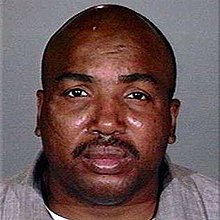
Dayton Leroy Rogers: The Molalla Forest Killer
Overview
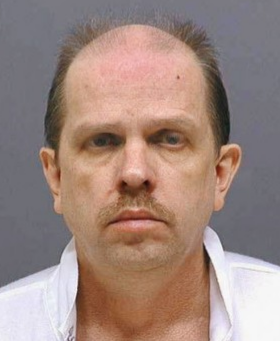
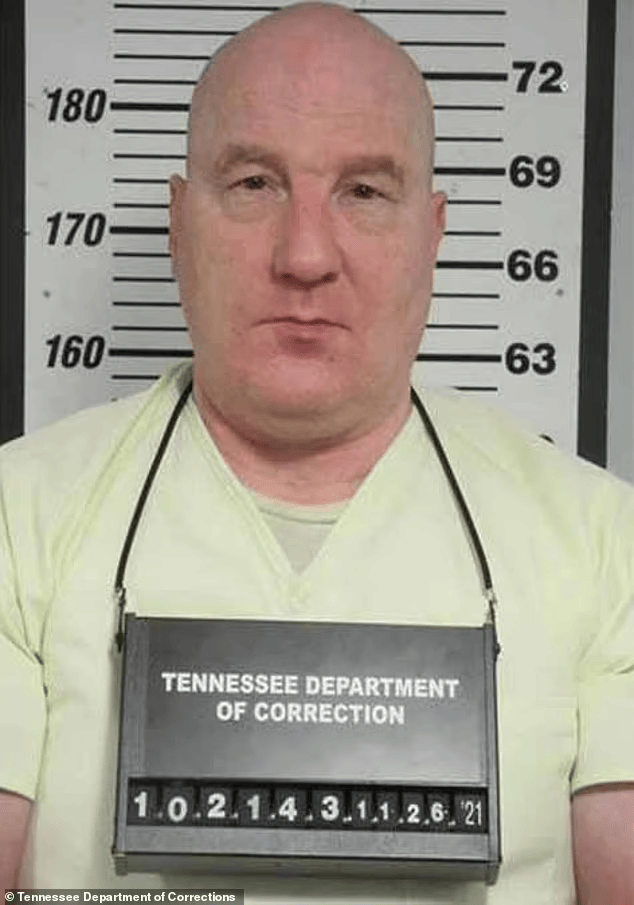
Dayton Leroy Rogers is an American serial killer who murdered women in Oregon during the 1980s. Known as the “Molalla Forest Killer,” Rogers was convicted of killing seven women and admitted responsibility for an eighth. Six victims were found in a wooded dumping ground on privately owned land near Molalla, Oregon, southeast of Portland. The isolated location concealed the crimes until the summer of 1987, when a man shooting targets in the area discovered human remains.
Rogers targeted vulnerable women, including teenagers, runaways, women struggling with drug addiction, and women involved in sex work. He generally approached victims in Portland before driving them to secluded locations. Evidence presented in court showed that several women were restrained, tortured, stabbed, and left in the forest. The injuries inflicted on the victims demonstrated that the killings were deliberate and prolonged rather than spontaneous acts of violence.
Early Violence and Escalation
Rogers was born on September 30, 1953, in Moscow, Idaho. He later lived in Oregon, married, became a father, and worked as a small-engine mechanic. Behind that outwardly ordinary life was a history of violence against girls and women. As a teenager, he attacked a 15-year-old girl with a knife after luring her to an isolated place. She survived and helped authorities identify him.
In 1972, Rogers abducted another young woman and drove her into the countryside. He struck her, threatened her with a knife, and attempted to restrain her. The victim escaped and reported the attack. Rogers was convicted of second-degree assault and spent time in the Oregon State Hospital and the state prison system. After his release, his behavior continued to escalate.
Another woman survived an encounter with Rogers in 1982. She said he picked her up in Portland, drove her to a remote area, tied her up, and assaulted her. She managed to survive after persuading him to release her. Accounts from surviving women later became important in showing that Rogers had developed a repeated method of isolating, binding, and attacking his victims.
The Molalla Forest Murder Site
The forest killings became known to investigators in August 1987, when skeletal remains were discovered near Molalla in Clackamas County. Police searching the surrounding property found additional remains scattered through the woods. Ultimately, seven women were associated with the location, although only six of them formed the basis of Rogers’s 1989 murder trial.
The condition of the bodies showed that the victims had been left in the forest at different times. Some had disappeared only weeks before the discoveries, while others had been missing for months or years. Investigators recovered restraints, personal property, liquor containers, and other objects from the area. Prosecutors later used evidence from the scene, Rogers’s vehicles, witness testimony, and similarities among the attacks to connect him to the killings.
One seemingly ordinary detail also attracted attention. Rogers was known to mix small bottles of vodka with orange juice, and containers connected with that habit were found around the forest site. Although no single piece of evidence established the entire case, the combination of forensic findings, victim histories, witness accounts, and Rogers’s known movements allowed investigators to construct a detailed case against him.
Confirmed and Admitted Victims
- Tawnia Jarie Johnston, 18: Johnston disappeared from Portland in 1983. Her remains were found at the Molalla forest site in 1987, but she was not identified until August 2013 through renewed forensic testing. Her exact date of death remains unknown. Rogers later admitted killing her.
- Maureen Ann Hodges, 26: Hodges disappeared from the Portland area during the summer of 1987. Her remains were recovered from the wooded site near Molalla. Available records place her death in July 1987, although an exact day has not been conclusively established.
- Lisa Marie Mock, 23: Mock disappeared in July 1987 and was killed that same month. Her remains were found near Molalla. Public records do not consistently establish an exact date of death, so her death is most reliably described as occurring in July 1987.
- Christine Lotus Adams, 35: Adams died on July 12, 1987. Her remains were among those discovered in the forest outside Molalla. Prosecutors established that Rogers had taken her to the secluded site and murdered her.
- Riatha Marie Gyles, 16: Gyles was a teenage runaway when she encountered Rogers. She was killed during the summer of 1987 and left at the Molalla site. Although some records assign specific days to her death, the surviving public documentation is inconsistent, and the exact date has not been firmly verified.
- Nondace “Noni” Cervantes, 26: Cervantes was killed in 1987 and left in the Molalla forest. Her death is commonly placed in August 1987, but the precise day remains uncertain.
- Cynthia Diane “Dee Dee” DeVore, 20: DeVore was killed in 1987, and her remains were found at the forest dumping ground. Records commonly list September 1, 1987, as her date of death, although the advanced condition of the remains made the precise timing of the killing difficult to determine.
- Jennifer Lisa Smith, 25: Smith was attacked on August 7, 1987, in the parking lot of a restaurant near Southeast McLoughlin Boulevard in Oak Grove, Clackamas County. Rogers stabbed her repeatedly inside his truck. She fell from the vehicle, received assistance from witnesses, and later died at a hospital.
The Public Murder of Jennifer Lisa Smith
The killing of Jennifer Lisa Smith differed from the forest murders because it happened within sight of witnesses. On August 7, 1987, Smith was inside Rogers’s truck in a restaurant parking lot in Oak Grove. Witnesses saw a violent struggle and watched as Rogers stabbed her repeatedly in the chest, abdomen, and back. Smith managed to get out of the truck before collapsing on the pavement.
Several people rushed to help her. Others attempted to block Rogers’s escape with their vehicles, but he drove over landscaping and fled south on McLoughlin Boulevard. A witness followed him through several communities, at times reaching extremely high speeds. The witness recorded the location where Rogers eventually stopped and relayed that information to law enforcement.
Police arrested Rogers shortly afterward. Investigators found injuries on his hands and blood evidence associated with the attack. Because the crime had been witnessed and the pursuit led directly to him, the case against Rogers for Smith’s murder was especially strong. He was convicted of her murder in 1988 and sentenced to life imprisonment.
Connecting Rogers to the Forest Victims
While Rogers awaited trial for Smith’s murder, investigators examined his possible connection to the bodies found near Molalla. Detectives learned that he had used the forest property and knew the remote roads in the area. They also discovered similarities between the condition of the victims and the accounts given by women who had survived earlier attacks.
Several victims had been bound, and many suffered repeated stab wounds. Evidence indicated that Rogers exercised control over them for a period of time before killing them. Prosecutors argued that the forest was not simply a place where bodies were abandoned; it was also a location where Rogers carried out acts of imprisonment, torture, and murder away from witnesses.
The investigation was complicated by decomposition and the difficulty of identifying the remains. Authorities relied on dental records, personal belongings, medical information, and later DNA analysis. Tawnia Johnston remained unidentified for more than 25 years before forensic advances finally restored her name in 2013.
Trial and Convictions
In May 1989, Rogers was convicted of aggravated murder for the deaths of Lisa Marie Mock, Maureen Ann Hodges, Christine Lotus Adams, Cynthia DeVore, Nondace Cervantes, and Riatha Gyles. The prosecution presented the murders as a related series committed against vulnerable women whom Rogers believed would not immediately be missed or whose disappearances might not receive sustained attention.
Jurors heard extensive evidence about the victims’ injuries and the circumstances in which their bodies were discovered. They also heard testimony concerning Rogers’s earlier attacks and the women who had escaped him. The jury found him guilty and imposed death sentences for the six forest murders.
Rogers was not originally tried for Tawnia Johnston’s murder because her remains had not yet been identified. During a later sentencing proceeding, however, he acknowledged killing an eighth woman. The admission, combined with the identification of Johnston’s remains and the location where they were found, publicly connected him to her death.
Repeated Death Sentences
Rogers’s convictions remained intact, but his punishment became the subject of decades of appeals. The Oregon Supreme Court repeatedly overturned his death sentences because of legal errors during the penalty phases of his trials. Each reversal required a new jury to decide whether he should be executed or sentenced to life imprisonment.
Rogers received death sentences in 1989 and again during later proceedings. In November 2015, a Clackamas County jury sentenced him to death for a fourth time. During that proceeding, surviving women described their encounters with him, and relatives spoke about the lives of the murdered women and the lasting damage caused by their deaths.
In November 2021, the Oregon Supreme Court again reversed the death sentences after changes in state law narrowed the circumstances under which aggravated murder could result in execution. On December 13, 2022, Oregon Governor Kate Brown commuted every remaining death sentence in the state to life imprisonment without the possibility of parole. Rogers therefore remains imprisoned for life rather than awaiting execution.
Legacy of the Case
The crimes of Dayton Leroy Rogers exposed how easily vulnerable women could disappear without receiving immediate public attention. Many of his victims were initially described primarily through addiction, homelessness, sex work, or unstable living conditions. Those circumstances made them easier for Rogers to approach, but they did not diminish the seriousness of their disappearances or the value of their lives.
The identification of Tawnia Johnston decades after her death demonstrated the importance of preserving unidentified remains and revisiting old cases as forensic technology improves. For more than 25 years, she was known only as an unidentified victim recovered from the forest. The eventual identification allowed her family to learn what had happened and gave investigators a fuller understanding of Rogers’s crimes.
Rogers was convicted of seven murders and acknowledged an eighth, but investigators have long considered the possibility that additional victims may exist. His known violence extended across many years, and several women survived attacks that resembled the methods used in the murders. The full number of people harmed or killed by him may never be known.
The Molalla forest killings remain among Oregon’s most disturbing serial-murder cases. Rogers deliberately selected women he believed he could isolate and control, transported them away from public view, and subjected them to extreme violence. His arrest after the murder of Jennifer Lisa Smith ended the known series, while the discovery and identification of the forest victims ensured that the women he attempted to hide were eventually named and remembered.