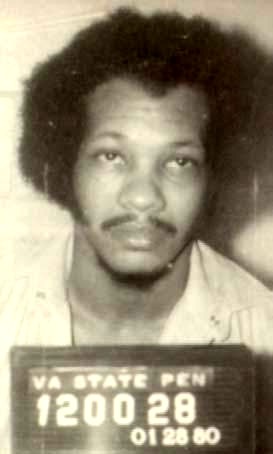
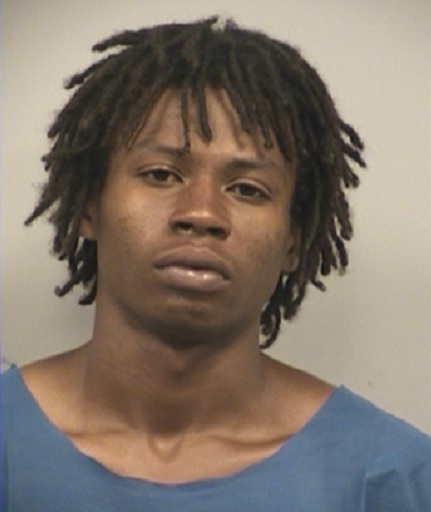
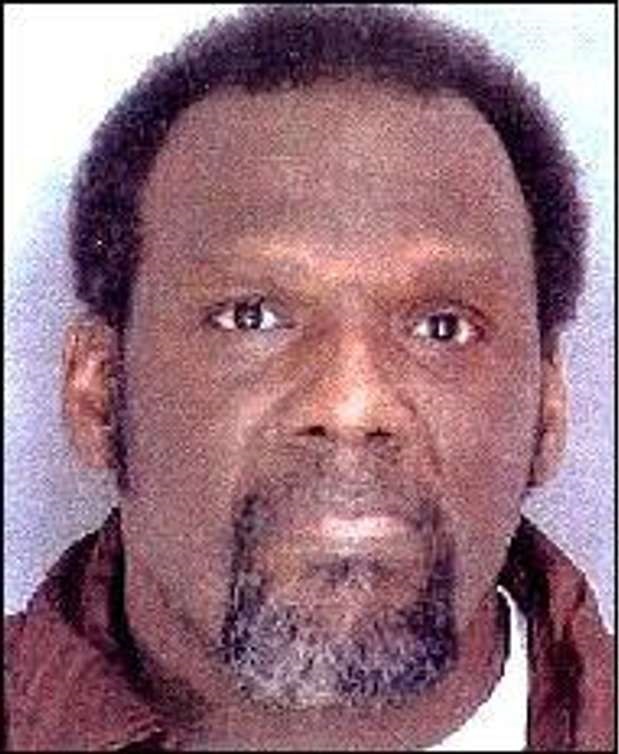
Anthony Michael Knoppa Jr : Texas Murderer and Suspected Serial Killer
Background and Criminal History
Anthony Michael “Tony” Knoppa Jr. was a convicted rapist and murderer who became a central figure in an investigation involving the disappearances and violent deaths of several young women and girls in southeastern Texas. Authorities believed Knoppa and his associate, Harry Andrew Lanham, were connected to as many as six victims between June and November 1971. The cases stretched across Houston and the surrounding areas of Harris, Brazoria and Montgomery counties.
Knoppa is often described as a suspected serial killer because only one homicide resulted in his conviction. His responsibility for the remaining deaths was never established by completed trials. Much of the broader case against him depended on statements made by Lanham, an offender with a history of rape, assault and dishonesty. Lanham repeatedly confessed to crimes or claimed to know where victims had been buried, only to admit that some of his stories were false when searches failed to locate the remains.
Despite those problems, investigators believed that Knoppa and Lanham had operated together during a period in which young women disappeared from Houston-area streets, were found shot in remote locations or were never recovered at all. Several victims were teenagers or young women living in vulnerable circumstances. Some were runaways, while others simply vanished during ordinary activities.
The 1971 Investigation
The suspected series began during the summer of 1971. Investigators later examined whether Knoppa and Lanham were responsible for the June disappearance of Pamela Huebner and the abduction and killing of 13-year-old Colette Anise Wilson. Additional victims disappeared or were murdered during the autumn, including Gloria Ann Gonzales, Adele “Gypsy” Crabtree and Linda Faye Sutherlin.
The cases were not identical. Some victims suffered gunshot wounds, while others were killed through blunt-force violence or disappeared without their bodies ever being found. The variety of methods and the unreliability of Lanham’s statements made it difficult for police and prosecutors to prove that every case was committed by the same offenders. Nevertheless, the concentration of crimes within the same region and period caused investigators to examine the men as possible partners in a series of murders.
Knoppa and Lanham were ultimately convicted in connection with the murder of Linda Faye Sutherlin. Knoppa received a 50-year prison sentence, while Lanham was sentenced to 25 years. The convictions represented the only completed murder prosecution arising from the larger investigation.
Known and Suspected Victims
- Pamela Huebner — Last seen June 9, 1971, Houston, Texas: Huebner was a 22-year-old housewife who disappeared from Houston and was never seen again. Lanham confessed in 1972 to raping and killing her. He twice directed investigators to supposed locations of her remains, but both searches were unsuccessful. Lanham later admitted that he had lied about the burial sites. Huebner’s body has never been recovered, and neither Knoppa nor Lanham was tried for her presumed murder.
- Colette Anise Wilson — Disappeared June 17, 1971; remains found November 26, 1971, near Addicks Reservoir in Harris County, Texas: Wilson was 13 years old when she vanished from the Alvin area. Her remains were discovered more than five months later near the Addicks Reservoir west of Houston. Her case was among the deaths investigated in connection with Knoppa and Lanham, but no completed prosecution established their responsibility.
- Gloria Ann Gonzales — Disappeared October 28, 1971; remains found November 23, 1971, near Addicks Reservoir, Houston, Texas: Gonzales was 19 when she disappeared from her Houston neighborhood. Her skeletal remains were found several weeks later in the same general reservoir area where another young victim had been recovered. Her death was attributed to blunt-force trauma. Investigators considered her case during the broader examination of Knoppa and Lanham, although no conviction was obtained for her killing.
- Adele Margaret “Gypsy” Crabtree — Killed in early November 1971; body found November 3, 1971, Montgomery County, Texas: Crabtree was a 16-year-old runaway from Cincinnati who had been living in Houston-area communes and supporting herself through various jobs. Her body was discovered in a remote area north of Houston near Conroe. She had been shot with multiple shotgun blasts, including buckshot and birdshot. Evidence also raised the possibility that she had been sexually assaulted before her death. Her murder was investigated as one of the crimes potentially connected to Knoppa and Lanham.
- Linda Faye Sutherlin — Killed in early November 1971, Brazoria County, Texas: Sutherlin was a 21-year-old woman whose murder became the central prosecutable case against Knoppa and Lanham. She suffered an extraordinary number of gunshot wounds, with reports describing dozens of wounds across her back, shoulders and legs. Knoppa and Lanham were convicted in connection with her killing. Available historical summaries conflict over whether her official date of death was November 4 or November 7, 1971, but they consistently place the murder in Brazoria County during the first week of November.
Conviction and Sentencing
The prosecution of the Sutherlin case resulted in a 50-year sentence for Knoppa. Lanham received a shorter sentence of 25 years. Authorities continued preparing other cases, with Lanham expected to provide crucial testimony linking Knoppa to additional murders. This arrangement meant that much of the remaining prosecution depended on Lanham remaining alive and cooperating with the state.
The case changed dramatically on December 30, 1973. While still being held in the Harris County Jail, Lanham attempted to escape and was shot and killed by police. His death eliminated the state’s primary witness against Knoppa in the untried murder cases. Prosecutors subsequently dropped the remaining charges because they believed they could not prove them without Lanham’s testimony.
Lanham’s death also ensured that many of his claims would never be tested in court. Investigators were left with a mixture of confessions, retractions, unsuccessful searches and circumstantial connections. Knoppa remained convicted of one murder, but the allegation that he participated in several additional killings was never resolved through verdicts.
Release From Prison
Knoppa did not serve the full 50-year sentence. He was released from prison in 1989 after serving approximately 15 years. His release attracted concern because of the brutality of the Sutherlin murder and the unresolved accusations surrounding the other victims. By that time, the cases were nearly two decades old, Lanham was dead and much of the evidence needed for further prosecutions had weakened or disappeared.
Knoppa’s confirmed criminal record supports describing him as a convicted murderer and rapist. Describing him as a serial killer requires greater caution. Investigators believed that he and Lanham were involved in a series of up to six murders, but only Sutherlin’s death produced a murder conviction. Knoppa was never convicted of killing Huebner, Wilson, Gonzales or Crabtree.
An Unresolved Series of Crimes
The investigation surrounding Anthony Michael Knoppa remains disturbing because it combines one proven murder with several unresolved disappearances and killings. The victims vanished within a period of only a few months, and many were later found in isolated areas around Houston. Others, including Pamela Huebner, were never located.
The case was weakened by the behavior of Harry Lanham, whose admissions initially appeared capable of explaining several murders. His false statements about burial locations damaged his credibility, while his death during the jail escape ended any opportunity for prosecutors to question him at future trials. Without his testimony, the government abandoned the remaining cases against Knoppa.
Anthony Michael Knoppa therefore occupies an uncertain place in American criminal history. He was unquestionably convicted of participating in a savage murder, and law-enforcement authorities regarded him as a suspect in a much larger series. However, the deaths of the other young women remain legally unresolved, leaving unanswered questions about the full extent of Knoppa’s crimes and whether every victim connected to the investigation has ever been identified.