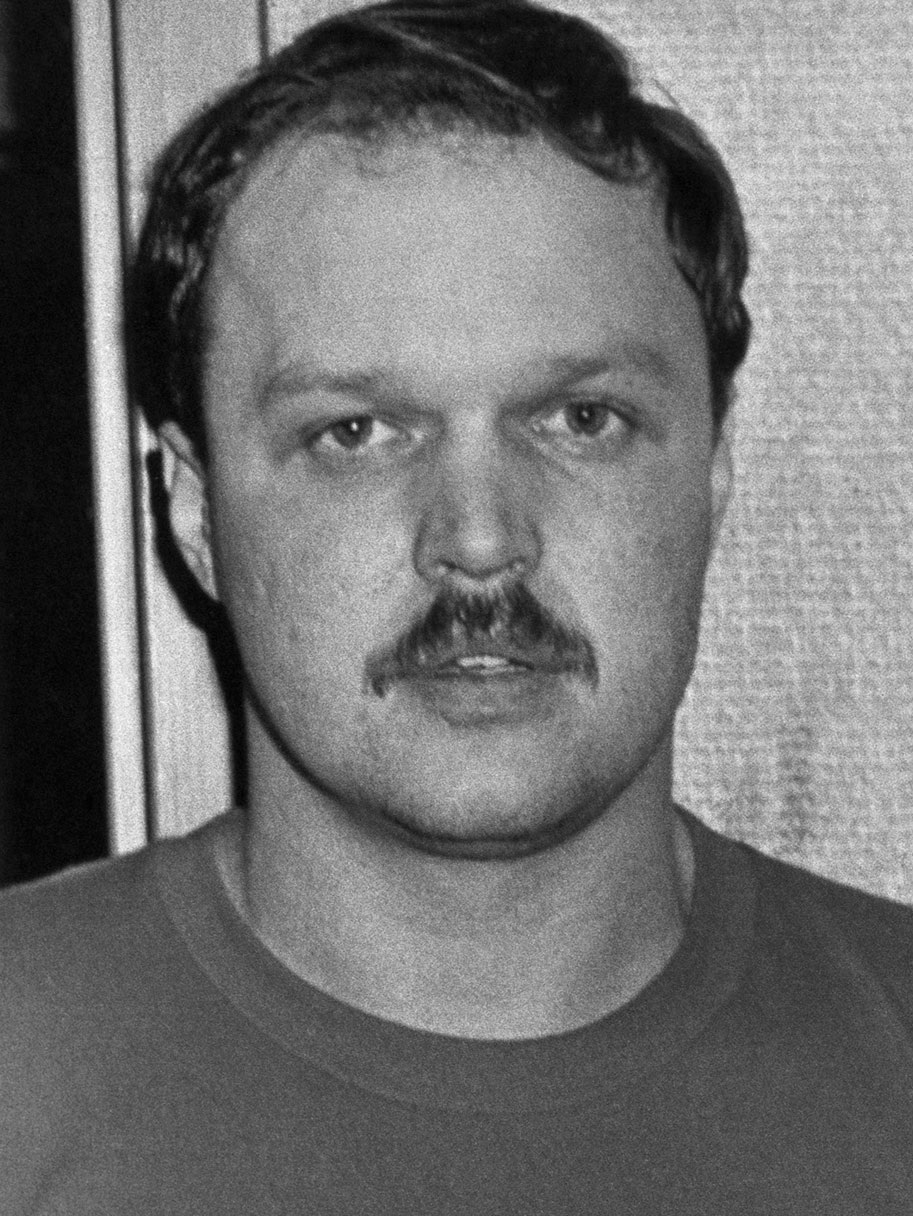
Girvies L. Davis – The .22 Caliber Killers
Early Life and Background
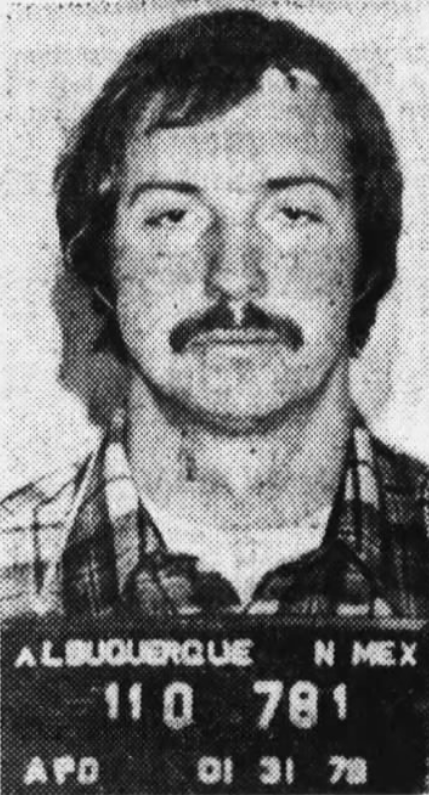
Girvies L. Davis was born on January 20, 1958, in East St. Louis, Illinois. He grew up in a large family under impoverished circumstances and received very little formal education. Accounts from people who knew him as a child described him as withdrawn and struggling academically. By adulthood, Davis had accumulated a reputation with local police for theft and dealing in stolen property.
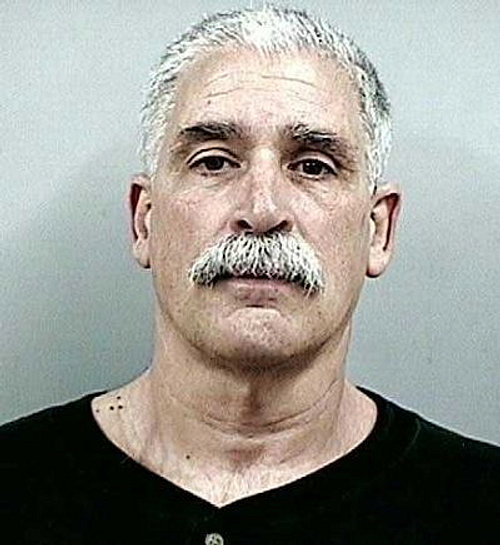
During the late 1970s, Davis became closely associated with Richard "Ricky" Holman, a teenager from East St. Louis. Holman was only 17 during much of the murder series. Together, the men were implicated in a succession of burglaries, armed robberies, shootings, and murders in St. Clair and Madison Counties in southwestern Illinois. Because .22-caliber firearms appeared in several of the crimes, Davis and Holman became known as the ".22 Caliber Killers."
A Pattern of Robbery and Murder
The crimes attributed to Davis and Holman frequently began as robberies. Several victims were elderly people living alone in houses or mobile homes. Property such as televisions, firearms, radios, watches, and other household possessions was taken. Witnesses were sometimes shot even after apparently offering little or no resistance.
Investigators eventually connected Davis and Holman to a much larger series of robberies and shootings than the murders for which they were actually prosecuted. Authorities said the overall crime spree involved approximately ten robberies, nine deaths, and seven wounded victims. Davis was ultimately convicted of four murders: those of Charles Biebel, John Oertel, Esther Sepmeyer, and Frank Cash. The murder of Frieda Mueller was also attributed to Davis and Holman and was introduced as evidence in Davis's prosecution, although neither man was tried specifically for her death.
Victims with Verified Dates of Death
- Frieda Mueller – December 8, 1978 – near Millstadt, St. Clair County, Illinois: Mueller was 78 years old and lived in a farmhouse off Route 163. She was found shot to death on the afternoon of December 8. A television, billfold, and checkbook were missing from her residence. Prosecutors later introduced evidence concerning her murder during Davis's trial to demonstrate the similarity between the Mueller robbery and other crimes attributed to Davis and Holman. Davis and Holman were not separately tried for Mueller's murder.
- Charles Biebel – December 22, 1978 – near Belleville, St. Clair County, Illinois: Biebel was an 89-year-old man who used a wheelchair and lived in a mobile home. He was shot twice during a burglary. His daughter discovered his body later that evening when she came to his home. Property including a television, watches, a billfold, and firearms was stolen. Davis's statement to investigators placed himself and Holman inside Biebel's home during the burglary but identified Holman as the person who fired the fatal shots. Davis was nevertheless convicted of Biebel's murder under Illinois law because of his participation in the underlying crime.
- John Oertel – May 12, 1979 – St. Clair County, Illinois: Oertel was 84 years old and was killed inside his trailer. He had been shot and stabbed during the robbery. Davis and Holman were prosecuted for the killing, and Davis was convicted of Oertel's murder. Later accounts of the prosecution identified Davis as the triggerman, although Holman subsequently offered a different account of his own involvement.
- Esther Sepmeyer – July 13, 1979 – near Maryville, Madison County, Illinois: Sepmeyer was 83 years old and lived in a rural farmhouse off Route 162 with her grandson. Her grandson returned home at approximately 1:50 p.m. and discovered her body in a bedroom, kneeling or slumped beside the bed. She had been shot in the head. The house had been ransacked, and a television, radio, stereo or turntable, lawnmower, and a .22-caliber rifle were missing. Investigators later recovered some of Sepmeyer's property from Davis's residence. Both Davis and Holman were convicted in connection with her murder, although each accused the other of firing the fatal shot.
- Frank Cash – August 30, 1979 – East St. Louis area, Illinois: Cash was a 21-year-old employee at an auto parts business that Davis and Holman attempted to rob. The store owner, James Ostman, was shot and wounded. Cash fled toward the rear of the business, where Davis followed him and fatally shot him. Davis was convicted of Cash's murder as well as the attempted murder of Ostman. The confrontation directly contributed to Davis's capture.
The Frieda Mueller Murder
Frieda Mueller's killing was significant because prosecutors later used it to establish what they characterized as a recurring method. Mueller lived in an isolated farmhouse off Route 163 on the Centreville side of Millstadt. She was found shot to death on Friday, December 8, 1978. Investigators determined that her television, billfold, and checkbook had been taken.
A statement attributed to Davis described traveling to the farmhouse with Holman in Davis's blue 1970 Buick. According to that statement, the men entered the residence and began removing property. Davis claimed that while he was carrying a television toward the automobile, he heard a shot and was subsequently told by Holman that Mueller had been shot. Davis later challenged the reliability of statements he made to investigators and maintained that some of his confessions had been coerced.
The Murder of Charles Biebel
Two weeks after Mueller's death, Charles Biebel was murdered on December 22, 1978. Biebel was 89 and confined to a wheelchair. He was inside his mobile home in St. Clair County when intruders entered and demanded money. Biebel was shot twice, and property was removed from the residence.
The prosecution's case included a statement attributed to Davis in which he admitted accompanying Holman into Biebel's trailer and participating in the burglary. Davis said he carried a television and firearm outside and heard a gunshot before Holman came out and said he had shot Biebel. A firearm stolen from Biebel was later traced through a person who had purchased stolen property from Holman.
Davis was convicted of Biebel's murder even though the prosecution did not establish that Davis personally fired the shots. Under the legal theory used in the case, his participation in the burglary and knowledge of the violent nature of the criminal partnership made him accountable for the murder committed during the crime.
The Murder of John Oertel
On May 12, 1979, 84-year-old John Oertel was murdered inside his trailer. His killing was particularly violent because evidence indicated that he had been both shot and stabbed. Davis and Holman were later convicted in connection with Oertel's death.
Later descriptions of the crime identified Davis as the person responsible for the fatal attack. Decades afterward, Holman gave testimony in which he claimed that he had been outside in a vehicle and did not discover Oertel had been killed until he entered the trailer. Whatever the precise division of responsibility between the two men, the murder became one of the four killings for which Davis was formally convicted.
The Murder of Esther Sepmeyer
Esther Sepmeyer's murder became one of the most thoroughly documented cases in the series. On July 13, 1979, her grandson Rodney returned to their rural Madison County farmhouse and discovered the 83-year-old woman dead in their bedroom. She had suffered a gunshot wound to the head, and the house had been searched extensively by the intruders.
Several valuable household items were missing, along with a .22-caliber rifle stored in the house. Investigators subsequently recovered property belonging to Sepmeyer, including a lawnmower and radio, from Davis's home. A fingerprint attributed to Holman was also recovered from the residence.
Davis and Holman each gave investigators statements placing themselves in connection with the burglary but blamed one another for Sepmeyer's shooting. The conflicting accounts remained important throughout later court proceedings. Both men were nevertheless convicted of her murder.
The Frank Cash Murder and Davis's Capture
The crime spree effectively ended on August 30, 1979, when Davis and Holman targeted an auto parts business. Store owner James Ostman was shot in the arm during the attempted robbery. Frank Cash, a 21-year-old employee, moved toward the rear portion of the business after the shooting began.
Davis followed Cash and fatally shot him. Ostman, although wounded, managed to obtain his own firearm and shoot at the fleeing robbers. One of his bullets struck Davis in the back. Davis required medical treatment, and his gunshot wound helped police identify and arrest him. Holman was arrested shortly afterward.
Davis was subsequently convicted of murdering Cash and attempting to murder Ostman. The incident provided prosecutors with particularly strong evidence because Davis had been wounded by the surviving victim while escaping from the scene.
Other Shootings and Suspected Murders
Investigators believed the five killings described above represented only part of Davis and Holman's activities. Police and prosecutors associated the men with a broader series of homicides, robberies, and shootings throughout the East St. Louis region. Contemporary accounts eventually described nine deaths connected to the overall robbery series. Because Davis and Holman had already received extremely severe sentences, prosecutors did not bring them to trial for every homicide attributed to them.
One particularly important nonfatal case occurred on December 4, 1978, when gas station clerk Mark Resmann was shot repeatedly during a robbery after turning over approximately $200. Resmann survived. Two other men, Bryan Lawrence and Keith Harris, were originally convicted of the attack. Evidence later emerged connecting Davis and Holman to the shooting, including statements concerning the crime and ballistic evidence. The wrongful convictions became an additional controversial chapter in the history surrounding the .22 Caliber Killers investigation.
Confessions and Controversy
Following his arrest, Davis was questioned about numerous unsolved crimes. Investigators said that he provided information concerning a long series of robberies, shootings, and homicides. Written statements attributed to Davis became major evidence in his prosecutions.
Davis later claimed that the confessions had been obtained through threats and coercion. He alleged that officers took him from jail during the night and threatened him with violence if he refused to sign prepared statements. Police denied his accusations. His attorneys also raised questions about his extremely limited education and literacy and challenged whether all of the written material attributed to him could reliably be treated as voluntary confessions.
Davis did not maintain that he had been completely uninvolved in the crime spree. He acknowledged participating in robberies during which people were killed, but he denied personally murdering anyone and specifically denied responsibility for shooting Charles Biebel. Prosecutors rejected that version of events and maintained that evidence connected Davis to numerous violent crimes beyond the four murders resulting in convictions.
Trials and Murder Convictions
Davis was convicted of four murders: Charles Biebel, John Oertel, Frank Cash, and Esther Sepmeyer. He was also convicted of attempting to murder James Ostman. His various cases were prosecuted in St. Clair and Madison Counties rather than in a single trial.
For the murders of Oertel and Cash, Davis received lengthy prison sentences. He received a death sentence in connection with the murder of Charles Biebel. The Sepmeyer prosecution also produced extensive capital litigation, including appeals concerning whether the evidence and sentencing procedures legally justified a death sentence.
Richard Holman was also convicted of multiple murders, including the killings of Oertel, Cash, and Sepmeyer. Because Holman had been 17 at the time of the crimes, he was not sentenced to death and instead received lengthy imprisonment and a natural-life sentence.
The Fight Against Davis's Execution
As Davis's execution approached, his case attracted increasing attention from attorneys, death-penalty opponents, religious organizations, and people concerned about the reliability of his confessions. His supporters emphasized his limited education, questions surrounding the interrogations, and the absence of eyewitness or physical evidence directly placing him at the scene of Biebel's murder.
Relatives of the victims strongly opposed clemency. For them, the legal controversy did not erase the succession of robberies, shootings, and deaths connected with Davis and Holman. Frank Cash's family and Charles Biebel's daughter were among those who publicly described the lasting consequences of the murders.
Davis's clemency campaign also became notable because information concerning his case was distributed through the emerging Internet. Thousands of people learned about the case electronically, and Illinois Governor Jim Edgar received numerous messages urging him to stop the execution. The governor declined to grant clemency.
Execution
Girvies L. Davis was executed by lethal injection at Stateville Correctional Center in Crest Hill, Illinois, on May 17, 1995. He was 37 years old. The execution occurred more than sixteen years after Charles Biebel's murder.
Davis continued to dispute the claim that he had personally committed murder. During his years in prison he learned to read more proficiently, became an ordained minister, and served as a spiritual adviser to other prisoners. His appeals and clemency requests were ultimately unsuccessful.
Legacy of the .22 Caliber Killers
The crimes associated with Girvies Davis and Richard Holman remain a complicated chapter in Illinois criminal history. There is no dispute that Davis participated in a serious series of armed robberies and that juries and judges convicted him of four murders and an attempted murder. At the same time, questions concerning his confessions, the identity of the actual shooter in individual killings, and the wrongful convictions arising from one associated shooting continued long after the original trials.
The verified murder cases demonstrate the rapid escalation of the robbery series: Frieda Mueller was killed on December 8, 1978; Charles Biebel on December 22, 1978; John Oertel on May 12, 1979; Esther Sepmeyer on July 13, 1979; and Frank Cash on August 30, 1979. Davis was formally convicted of four of those five deaths, while Mueller's murder was attributed to the same criminal partnership but never separately prosecuted against him.
Davis's execution closed the criminal case against him but did not end discussion of the evidence or the fairness of his death sentence. The murders left multiple families grieving, while the later litigation surrounding Davis and Holman created a lasting record of contested confessions, accomplice liability, wrongful conviction, and the difficult task of determining individual responsibility within a violent criminal partnership.