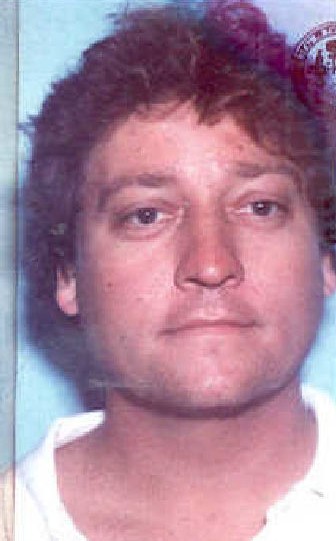
Carolyn McCrary and the McCrary-Taylor Family Murders
Role in the Criminal Family
Carolyn Elizabeth McCrary was a member of the nomadic McCrary-Taylor crime family, a group suspected of committing a series of robberies, kidnappings, sexual assaults, and murders across the United States during the early 1970s. Although Carolyn is sometimes described in crime databases as a serial killer, the known court record more accurately identifies her as an accomplice and accessory. Sherman Ramon McCrary, Carolyn’s husband, and their son-in-law, Carl Raymond Taylor, were regarded as the principal attackers. Other members of the group included Carolyn’s son, Danny McCrary, and her daughter, Ginger McCrary Taylor.
The family traveled from state to state while supporting itself through robberies, fraudulent checks, and other crimes. Their most notorious offenses involved late-night restaurants, convenience stores, and doughnut shops. Sherman McCrary and Carl Taylor would enter a business, steal money, and sometimes abduct a young female employee. The victim was then taken to an isolated location, where she was sexually assaulted and murdered. Because several victims disappeared from doughnut shops, the crimes became known as the “Donut Shop Murders.” Newspapers also called them the “Full Moon Murders,” although the suggestion that the killings were deliberately timed to coincide with a full moon was never conclusively established.
Carolyn’s Alleged Participation
Carolyn was not simply an unrelated person who learned about the crimes after they occurred. She traveled with the family during the period in which the murders were committed, shared motel rooms and vehicles with the principal offenders, and was accused of helping the group remain together while it moved across the country. Accounts of the murder of Leeora Rose Looney alleged that Carolyn, Ginger, and Danny were present while Sherman McCrary terrorized and killed the abducted waitress.
However, the available evidence does not establish that Carolyn personally carried out the family’s murders. Historical accounts differ concerning how willingly she participated and how much control Sherman exercised over her. Some relatives later claimed that Carolyn and Ginger knew what the men were doing but were frightened of Sherman and feared that they could also be killed. Prosecutors nevertheless maintained that Carolyn knowingly assisted the criminal group. She was ultimately convicted of an offense connected to the Looney case and received a much shorter sentence than Sherman McCrary and Carl Taylor.
Verified and Suspected Victims
- Sheri Lee Martin, 17 — abducted August 12, 1971, in Salt Lake City, Utah: Martin was working a summer job at a Winchell’s Donut Shop on South State Street when she disappeared. Her body was found near Wendover, close to the Utah-Nevada border, on September 6, 1971. She had suffered fatal gunshot wounds. The precise date on which she was killed was not conclusively established, so August 12 should be treated as the date of her abduction rather than a verified date of death. Sherman McCrary and Carl Taylor were charged with kidnapping Martin but were not tried for her murder.
- Leeora Rose Looney, 20 — killed August 20, 1971, after being abducted from Lakewood, Colorado: Looney was working alone at a doughnut shop when customers discovered that the business was unattended. Her purse and automobile remained at the shop, the cash register was open, and approximately $100 had been taken. Her body was discovered three days later in an isolated area. She had been restrained, sexually assaulted, strangled, and repeatedly shot. Sherman McCrary was convicted of first-degree murder and kidnapping in her case, while Carl Taylor pleaded guilty and received a life sentence.
- Elizabeth Josephine Steffens Perryman, 26 — abducted September 28, 1971, near Lubbock, Texas: Perryman, who was also identified in records by her maiden name, Elizabeth Steffens, disappeared from a restaurant near the Texas Tech campus. Her remains were found on December 19, 1971, on a ranch near Amarillo in Potter County. Her exact date of death could not be independently established, although she is believed to have been killed soon after her abduction. Sherman McCrary and Carl Taylor reportedly confessed during questioning, but legal complications prevented the statements from producing murder convictions in Texas.
- Forrest Covey, 24, and Jena Covey, 19 — disappeared October 17, 1971, from Mesquite, Texas: The married couple vanished from a drive-in grocery store managed by Jena in the Dallas suburb of Mesquite. Their disappearance was investigated in connection with the McCrary-Taylor family’s multistate crime spree. Publicly available accounts do not provide firmly verified dates of death, and the exact circumstances surrounding their fate remain less clearly documented than the Looney murder.
- Additional unidentified or disputed victims — 1970 through 1972: Investigators examined more than twenty murders and disappearances in Colorado, Texas, Utah, Nevada, Florida, Missouri, Oregon, and other states. Ballistics evidence reportedly connected the same firearms to several killings, but many suspected cases never resulted in charges. Because numerous names and dates appearing in later crime lists cannot be reliably verified, they should not be presented as confirmed victims of Carolyn or the McCrary-Taylor family.
The Murder of Leeora Looney
The Looney case became the strongest legal case against the family. On the evening of August 20, 1971, Looney disappeared from the Lakewood doughnut shop where she worked. The circumstances immediately suggested a robbery and abduction. Money was missing, but her personal possessions and vehicle remained behind, indicating that she had not left voluntarily.
Investigators later determined that Looney had been driven away from the shop and taken to a remote area. She was bound with articles of her own clothing, sexually assaulted, strangled, and shot numerous times with a small-caliber handgun. The excessive violence was consistent with the behavior later attributed to Sherman McCrary and Carl Taylor. Witness identifications, statements made by family members, physical evidence, and similarities to other crimes eventually allowed Colorado authorities to prosecute the men.
Carolyn’s presence during the offense became an important part of the case against her. Reports alleged that she remained nearby while Looney was abused and murdered and that she failed to intervene or seek help. Carolyn was not convicted as the person who physically killed Looney, but prosecutors treated her actions as assistance to the offenders. Her daughter Ginger cooperated with investigators, and both women received substantially shorter prison terms than the principal attackers.
Arrests and Investigation
The family’s criminal activity began to collapse in 1972 after Carl Taylor became involved in a failed robbery in Santa Barbara, California. Taylor shot and wounded a police officer during the incident before fleeing. Authorities arrested members of the extended family in California and Texas, bringing together investigators from several states who had been examining similar robberies, abductions, and murders.
Police noticed that many of the crimes followed a recognizable pattern. A small business was robbed late at night, a female employee vanished, and her body was later found in a remote location. Investigators compared bullets and firearms evidence, finding connections among killings that had initially been treated as unrelated local cases. By late 1972, the family was being questioned about approximately twenty-two murders, although only a small number could be supported strongly enough for prosecution.
Carolyn resisted immediate extradition while authorities attempted to determine which jurisdiction would prosecute her. At one point, she was serving a sentence for harboring her husband and son following a California supermarket robbery. She was later returned to Colorado and prosecuted in connection with the events surrounding Looney’s kidnapping and murder.
Convictions and Sentences
Sherman McCrary was convicted in Colorado of kidnapping and first-degree murder in the death of Leeora Looney. He received life imprisonment for murder and an additional consecutive sentence for kidnapping. Carl Taylor pleaded guilty and was also sentenced to life in prison. Danny McCrary was later sentenced to life for a separate Texas murder connected to the family’s crime spree.
Carolyn and Ginger received comparatively short prison sentences after being convicted on lesser charges connected to the family’s activities. Carolyn was described in contemporary reporting as an accessory rather than the principal killer. This distinction is important because claims that she personally murdered twenty or more people are not supported by the known convictions. The larger number represents murders that investigators suspected may have involved one or more members of the entire family.
Questions About Responsibility
Carolyn’s exact level of responsibility remains debated. The prosecution’s position was that she knowingly accompanied violent criminals, helped maintain their transient lifestyle, concealed information, and remained present during at least one murder. Even if she did not fire the weapon, her continued assistance allowed the family to travel, evade police, and commit additional crimes.
Later statements from family members offered a more complicated description. They portrayed Sherman as an abusive and controlling patriarch who kept his wife, children, and grandchildren in fear. According to that interpretation, Carolyn may have believed that resisting Sherman or reporting him would place her own life in danger. That possibility does not erase her criminal conviction or her failure to protect the victims, but it helps explain why her legal treatment differed from that of Sherman and Taylor.
Later Years and Legacy
After serving her sentence, Carolyn was reunited with some members of her family. She died in California in 1986. Sherman McCrary remained imprisoned until October 1988, when he died by suicide at the Fremont Correctional Facility in Colorado. Carl Taylor continued serving his life sentence, while Danny McCrary died in prison in 2007.
The full number of people murdered by the McCrary-Taylor family has never been conclusively determined. Investigators believed that the group could have been involved in more than twenty killings, but evidence was sufficient to obtain convictions in only a few cases. Some confessions were ruled legally unusable, while other cases lacked surviving witnesses or adequate physical evidence. As the family constantly crossed jurisdictional boundaries, police departments often did not realize that their local cases were connected until months or years later.
Carolyn McCrary remains associated with one of the most disturbing family crime sprees in American history. She should be described carefully as a convicted accomplice and participant in the McCrary-Taylor criminal group rather than automatically identified as the proven hands-on killer of every suspected victim. Her case demonstrates how assistance, silence, concealment, and continued association can contribute to repeated violence even when another person carries out the physical attack.