David Murray and the Unresolved Murders of Elderly Residents in Columbus, Mississippi
A Suspected Serial Killer
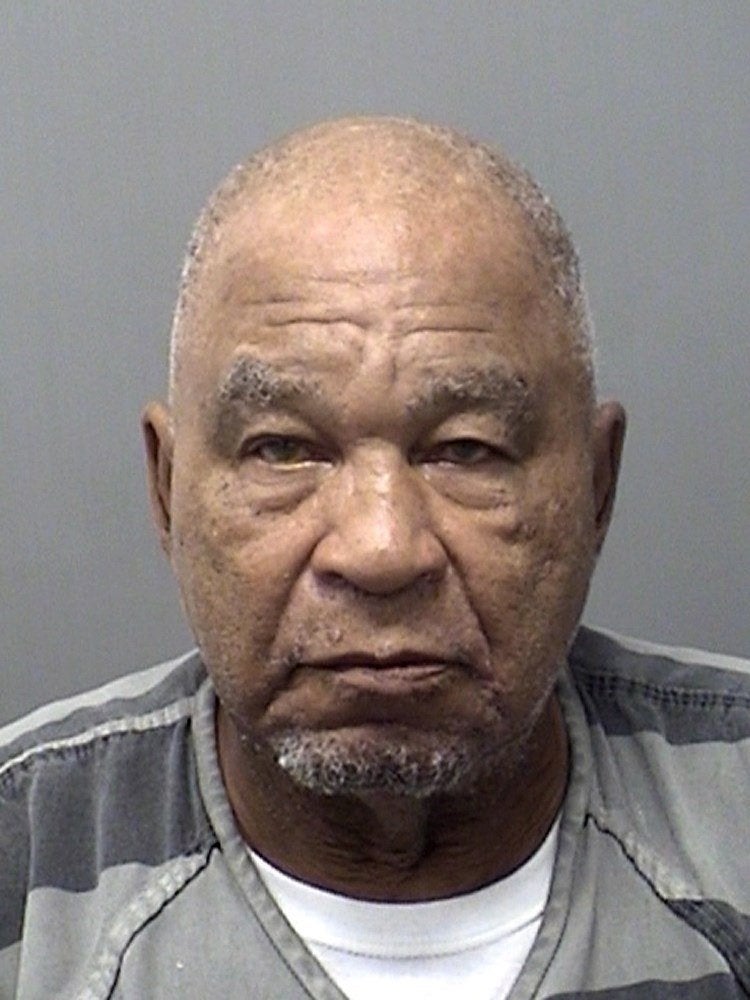
David Solomon Murray has been described as a suspected serial killer because of his possible connection to a disturbing series of murders committed against elderly residents of Columbus, Mississippi, between 1996 and 1998. However, Murray has been convicted in only one of those cases: the murder of Mack Fowler. Authorities have not publicly established that Murray killed the other four victims, and those deaths should be regarded as separate, unresolved investigations rather than confirmed crimes committed by him.
The five victims lived within a relatively small area of Columbus, with their homes reportedly located within approximately three miles of one another. Each victim was older, most lived alone, and each was attacked inside a private residence. Several victims were bound, gagged, strangled, or stabbed. The similarities frightened local residents and led investigators to consider whether one person might have been targeting elderly people who could be overpowered inside their homes.
The Murder of Mack Fowler
Mack Fowler, a retired farmer, was killed inside his home near Propst Park in Columbus on July 8, 1996. Fowler was beaten and stabbed during an attack that appeared to move through several rooms of the residence. Investigators believed the struggle began near the front of the house and continued toward the rear, where Fowler was found.
Evidence inside the home indicated that Fowler had fought desperately against his attacker. Blood was discovered throughout portions of the residence, and investigators recovered a bloody towel and other physical evidence that would eventually become crucial to the case. Property was also believed to have been removed from the house, causing authorities to treat the killing as a murder committed during a robbery.
Murray was reportedly an invited guest in Fowler’s home on the night of the killing. Despite the evidence preserved at the scene, investigators did not initially have a DNA profile in law-enforcement databases that could identify the person responsible. Fowler’s murder therefore remained unsolved for more than twenty years.
The DNA Breakthrough
The investigation changed after Murray was arrested in Jackson, Mississippi, in October 2016 on an unrelated aggravated-assault allegation. Although that charge was later dropped, a DNA sample collected from Murray was entered into the Combined DNA Index System, commonly known as CODIS.
Investigators in Columbus had carefully preserved biological evidence from Fowler’s home. As DNA technology improved, the evidence was tested again and a stronger genetic profile was developed. In May 2017, authorities reported that Murray’s DNA matched evidence associated with the Fowler crime scene.
An arrest warrant charging Murray with capital murder was issued on May 22, 2017. Members of a United States Marshals fugitive task force arrested him in Jackson on May 23. Murray was transported to Lowndes County, where a judge denied him bond. The capital-murder accusation was based on the allegation that Fowler had been killed while a robbery was being committed.
Conviction and Punishment
Murray was ultimately prosecuted for Fowler’s murder. The DNA evidence placed him at the violent scene, while the prosecution maintained that he had entered the home as a guest, attacked Fowler, and removed property after the killing. Murray was convicted of murder and sentenced to life imprisonment.
The conviction resolved the oldest killing in the group, but it did not establish who committed the four later murders. Police publicly declined to identify Murray as the perpetrator in those cases, emphasizing that each homicide had to be evaluated according to its own evidence. His proximity to the victims and his conviction in the Fowler case created suspicion, but suspicion alone did not prove that he was responsible for an organized killing series.
The Columbus Victims
- Mack Fowler — July 8, 1996 — Columbus, Mississippi: Fowler was an elderly retired farmer who lived near Propst Park. He was beaten and stabbed inside his home after a violent struggle. Evidence indicated that property had been taken from the residence. DNA preserved from the scene was matched to David Murray in 2017, leading to Murray’s arrest and eventual murder conviction.
- George Laurin Wilbanks — November 2, 1997 — Columbus, Mississippi: Wilbanks was found dead inside his residence after being stabbed and strangled. His murder was initially discussed as part of the same series of attacks against elderly Columbus residents. Other men were arrested years later in connection with Wilbanks’ death, but the evidence did not produce a lasting prosecution, and Murray has not been charged with killing him.
- Robert Hannah — October 13, 1998 — Columbus, Mississippi: Hannah, a 61-year-old retired cafeteria worker, was found bound, gagged, and strangled inside his home. A fire or gas-related incident at the residence was believed to have been intended to conceal the killing or destroy evidence. His death remains one of the most disturbing unresolved cases in the group.
- Louise Randall — October 21, 1998 — Columbus, Mississippi: Randall, 80, was killed inside her home only eight days after Robert Hannah’s death. She was reportedly bound, gagged, and strangled. The close timing and similarities between the two attacks intensified fears that the same offender was deliberately selecting vulnerable elderly residents.
- Betty Everett — November 17, 1998 — Columbus, Mississippi: Everett, who was in her late sixties, was found bound, gagged, and strangled inside her residence. Her killing occurred less than a month after Randall’s murder and closely resembled the attacks on Hannah and Randall. Murray has never been charged with Everett’s murder.
A Community Living in Fear
The murders produced intense fear among older residents of Columbus. The victims had been attacked where they should have felt safest, and the apparent concentration of the crimes within a small geographic area made the danger seem immediate. Residents strengthened locks, checked on elderly relatives, and became suspicious of strangers or unexpected visitors.
The victims were not connected by an obvious public dispute, criminal organization, or shared activity. What appeared to connect them was their age, their vulnerability, their location, and the fact that they were attacked inside their homes. The offender or offenders may have gained entry through familiarity, deception, or the victims’ willingness to admit someone they recognized.
Questions About a Serial Pattern
The murders displayed enough similarities to support a theory that a serial offender may have been active in Columbus. All five victims were elderly or older adults, and the crimes occurred over approximately twenty-eight months. Strangulation was reported in several of the killings, and multiple victims were restrained or gagged. The homes were located within a limited area, suggesting that the killer may have known the neighborhood well.
There were also differences. Fowler was beaten and stabbed during an apparent robbery, while Hannah, Randall, and Everett were bound and strangled. Wilbanks was reportedly both stabbed and strangled. Such variations do not rule out a single offender, but they also leave open the possibility that unrelated killers committed some of the crimes and that the similarities were coincidental or connected to robbery rather than a single psychological motive.
Murray lived in Columbus during the period when all five murders occurred. His known addresses were reportedly near the area where the victims lived, and his DNA established his responsibility for Fowler’s murder. Those circumstances explain why his name became associated with the entire sequence. Nevertheless, no publicly disclosed DNA, fingerprint, eyewitness, or confession evidence has conclusively tied him to the deaths of Wilbanks, Hannah, Randall, or Everett.
The Importance of Distinguishing Fact From Suspicion
David Murray is a convicted murderer, but describing him as the confirmed killer of all five Columbus victims would go beyond the available evidence. The only homicide legally attributed to him is the murder of Mack Fowler. The remaining victims deserve to have their cases presented accurately, without an unproven suspect being treated as their established killer.
The Fowler investigation demonstrates the value of preserving evidence in cold cases. More than two decades passed before a routine DNA submission finally identified a suspect. The investigators who collected and stored the biological material in 1996 could not have known exactly how future technology would be used, yet their work eventually allowed prosecutors to obtain a conviction.
An Unfinished Investigation
Murray’s arrest provided Fowler’s family with an answer after years of uncertainty, but it did not fully resolve the period of fear that gripped Columbus. The murders of Robert Hannah, Louise Randall, and Betty Everett remain particularly troubling because they occurred within several weeks of one another and involved remarkably similar methods of restraint and strangulation.
Whether those victims were killed by one person, by multiple offenders, or by someone already investigated has not been publicly established. Advances in forensic testing may still allow preserved evidence to be examined against modern DNA databases. Until additional evidence produces charges or definitive identifications, Murray should be described as the convicted killer of Mack Fowler and a possible suspect discussed in connection with a broader, still-unresolved series of elderly murders.