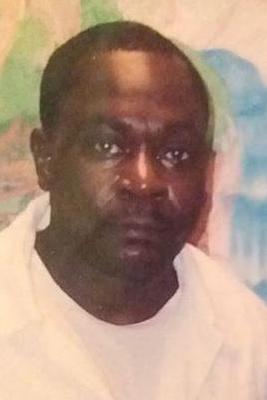
Robert Hannah was a 61-year-old man and retired hospital cafeteria worker who lived alone in a quiet neighborhood in north Columbus, Mississippi. On an October evening in 1998, the calm of that routine life was broken when a fire at his home drew first responders to the address. By the time firefighters made their way inside on October 13, the scene they found made it immediately clear they were dealing with more than an accidental blaze.
Inside the house, Hannah was discovered dead.
He had been bound and gagged, and investigators determined that he had been strangled before the fire ever took hold. Reports from the time describe him as hog-tied, with his limbs secured in a way that left no doubt about the deliberate nature of the assault. Further examination showed that someone had turned on the gas inside the home, and the subsequent fire appeared to have been set intentionally, likely to destroy evidence and make the death look like a tragic household accident rather than the carefully staged aftermath of a murder.
As detectives began to reconstruct Hannah’s final hours, they quickly realized his killing did not stand alone. In the preceding years, four other elderly Columbus residents had been slain in their homes: retired farmer Mack Fowler in 1996, George Wilbanks in 1997, and, in the weeks surrounding Hannah’s death, Louise Randall and Betty Everett in the fall of 1998. All five victims were 60 or older, lived within roughly a one- to three-mile radius of one another in the northern part of the city, and were attacked inside their own houses. In case after case, there were no signs of forced entry, suggesting that the killer was either someone the victims trusted enough to let in or someone who could present themselves as harmless at the door. National coverage later noted how similar the crimes were—stranglings in private homes, elderly victims, no apparent motive—and raised the chilling possibility that a single predator might be responsible.
In Columbus, the effect was immediate and deeply felt. The string of killings—Fowler, Wilbanks, Hannah, Randall, and Everett—turned an otherwise quiet community into a place where many older residents suddenly felt hunted. Local authorities created special investigative teams and poured resources into door-to-door canvasses, re-interviews, and forensic work, trying to find any thread that could tie a suspect to Hannah’s death or the broader pattern. A reward program offering tens of thousands of dollars for information leading to an arrest and conviction brought in tips but no breakthrough. Even as national programs like “48 Hours” profiled the case and compared Columbus to a real-life Mayberry shadowed by an unknown killer, detectives were left with a handful of eerily similar crime scenes and almost no clear answers.
Over the years, there were developments in cases around Hannah’s, but none that definitively touched his own. In 2012, police arrested Earnest Talley in connection with the 1997 murder of George Wilbanks, only for a Lowndes County grand jury later that year to decline to indict him, leaving that case unresolved. More than a decade after the murders, investigators finally made headway on the earliest of the five killings when DNA evidence linked David Murray of Jackson, Mississippi, to the 1996 stabbing and strangling of Mack Fowler; Murray was arrested and indicted for Fowler’s murder. Even then, Columbus authorities publicly emphasized that Murray had not been connected to the other four victims and that each homicide—including Hannah’s—would be treated as a separate case unless forensic evidence proved otherwise. No one was ever arrested or charged for the killing of Robert Hannah himself, and law enforcement has not publicly identified a specific suspect in his death.
Today, Hannah’s murder remains an open wound in Columbus’ history, part of a cluster of late-1990s killings that still casts a long shadow over the city’s older neighborhoods. The fire that was supposed to erase what happened in his small house instead marked the beginning of a decades-long mystery: who bound and strangled an aging retiree in his own home, turned on the gas, and walked back out into the quiet streets? With no resolution, no trial, and no conviction, his case persists as a true cold case—remembered in local accounts, revisited in documentaries, and kept alive by the hope that somewhere, in old evidence or an unshared memory, lies the piece that could finally explain how Robert Hannah died and who was responsible.