Maury Troy Travis: The St. Louis Videotape Killer
Overview
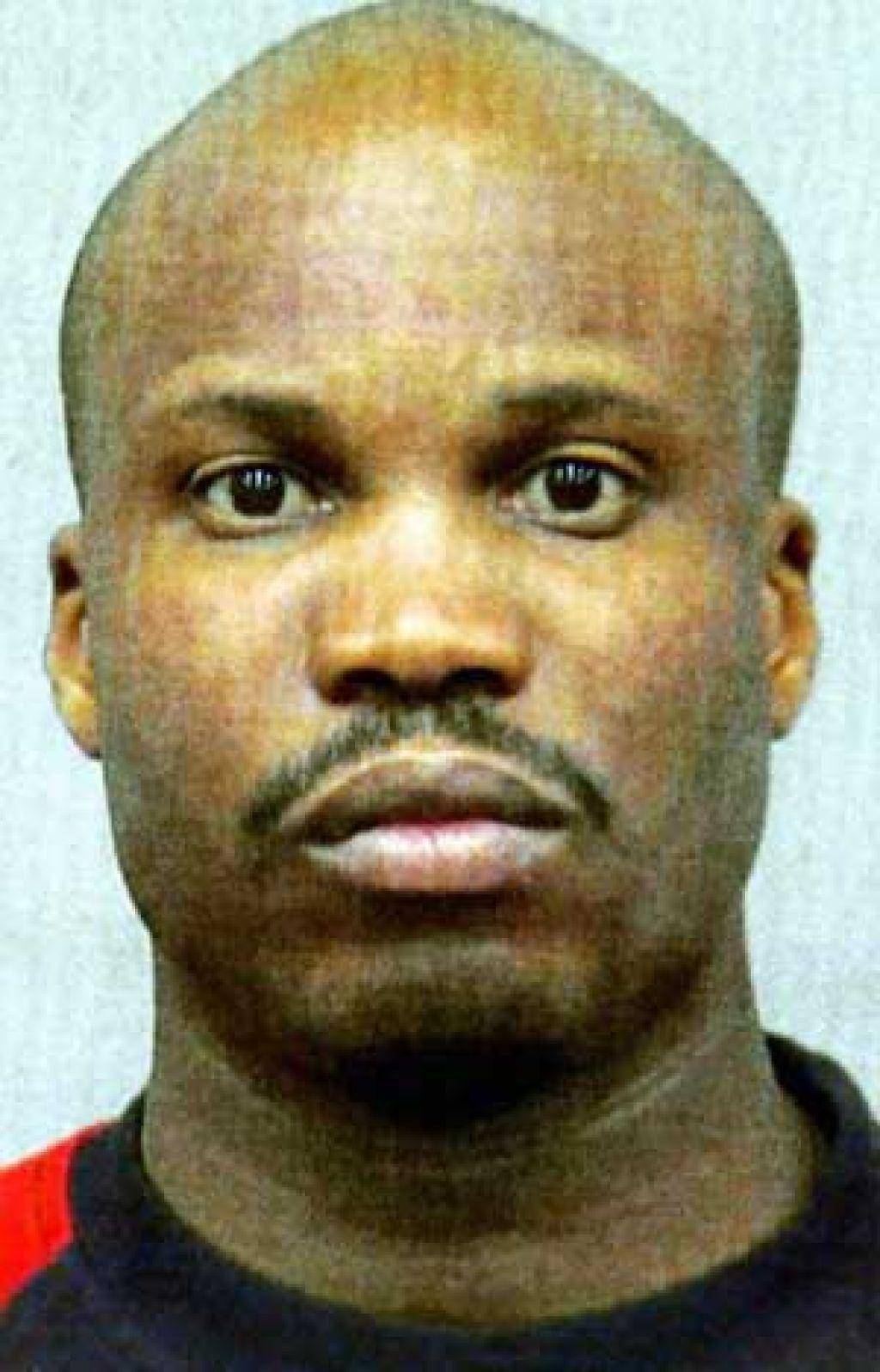
Maury Troy Travis was an American serial killer who abducted, tortured and murdered women in the St. Louis metropolitan area between approximately 2000 and 2002. Born on October 25, 1965, Travis lived in Ferguson, Missouri, and worked in the hospitality industry while maintaining a hidden basement chamber where investigators later determined that women had been restrained and violently abused.
Travis primarily targeted vulnerable Black women, many of whom were involved in street-level sex work or struggling with drug addiction. He approached women in neighborhoods around St. Louis and East St. Louis, offering money or drugs before taking them to his residence. Once inside his home, victims could be bound to a wooden post or other restraints in the basement. Evidence recovered after his arrest indicated that Travis subjected some women to prolonged physical and psychological torment before strangling or otherwise killing them.
Travis became known by several names, including the Videotape Killer, the Streetwalker Strangler and the Bi-State Strangler. The name Videotape Killer reflected one of the case's most disturbing features: Travis recorded portions of his attacks. Investigators recovered videotapes showing women being restrained, humiliated, beaten and threatened inside his basement. Some of the women visible on the recordings were never conclusively identified.
Criminal History and Escalation
Before the murders, Travis accumulated a criminal record that included armed robbery and drug offenses. He received a 15-year sentence for a 1989 robbery but was paroled in 1994. He was later convicted of drug possession and placed on probation. Despite this history, he was living in a residential Ferguson neighborhood when the series of killings attributed to him began.
The first victim commonly included in the series was Mary Shields, whose remains were discovered in East St. Louis in July 2000. Over the next two years, additional bodies appeared in isolated fields, roadside areas, creek beds and abandoned locations on both sides of the Missouri-Illinois border. Because the victims were found in different jurisdictions, investigators initially faced difficulty recognizing the deaths as the work of one offender.
Known and Suspected Victims
- Mary Shields, 61: Her remains were discovered on July 31, 2000, in East St. Louis, Illinois. She is often considered the earliest known victim linked to Travis. Her precise date of death was not established publicly.
- Cassandra F. Walker, 19: Her body was discovered on March 24, 2001, in Washington Park, Illinois. Her exact date of death remains uncertain.
- Alysia Greenwade, 34: Her body was found on April 1, 2001, in Washington Park, Illinois, after she had last been seen in Missouri. The discovery date is sometimes reported as the date associated with her death, although the exact time she was killed was not conclusively determined.
- Teresa Wilson, 36: Her body was discovered on May 15, 2001, in West Alton, Missouri. Wilson's case later became especially important because a newspaper article about her death provoked Travis into contacting the press.
- Betty James, 46: Her body was discovered on May 23, 2001, in St. Louis, Missouri. James was reportedly recognized in one of the recordings recovered from Travis's home. Investigators also connected physical evidence associated with her body to Travis.
- Verona Thompson, 36: Her body was found on June 29, 2001, near West Alton, Missouri, only a short distance from where Teresa Wilson had been discovered. Some early accounts reported June 27, but June 29 is more consistently listed as the discovery date.
- Yvonne Crues, 50: Her body was discovered on August 25, 2001, in East St. Louis, Illinois. Biological evidence recovered during the investigation reportedly linked Travis to her death.
- Brenda Beasley, 33: Her body was discovered on October 8, 2001, in East St. Louis, Illinois. DNA evidence was among the evidence used to associate her with Travis.
- Kelly Johnson: Road workers discovered her decomposed body on January 30, 2002, beside Interstate 64 near the Silver Creek overpass east of Mascoutah, Illinois. Investigators believed she had been dead for several months. She remained unidentified for more than two decades before authorities announced her identification in 2025.
- Crystal Lay: Her body was discovered by road workers on March 11, 2002, along Interstate 70 just west of Illinois Route 143 near Highland, Illinois. She was unidentified at the time and was publicly identified in 2025 through renewed forensic work.
- Carol Jean Hemphill: Her skeletal remains were discovered on March 28, 2002, in a creek bed beside Illinois Route 3 in Columbia, Illinois. The condition of the remains suggested that she had been dead for at least six months. Her identity was confirmed and publicly announced in 2025.
- Unidentified West Alton victim: Skeletal remains were discovered on May 25, 2002, near West Alton, Missouri, after Travis sent a map indicating where the body could be found. Travis referred to the woman as victim number seventeen. Her exact date of death and identity have not been conclusively established publicly.
The Letter That Exposed Him
The investigation changed after the St. Louis Post-Dispatch published a profile of Teresa Wilson. Travis responded by mailing the newspaper an anonymous letter in May 2002. In the message, he claimed that Wilson had been misrepresented and offered to reveal the locations of additional victims. To demonstrate that he was responsible, he included directions to what he called victim number seventeen.
The envelope carried a return address associated with a bondage-themed website, but the most important evidence was the computer-generated map included with the letter. Investigators determined that the map had been produced through the Expedia website. Federal authorities obtained records showing that the specific map had been generated from an internet account connected to Travis's home.
The digital trail led investigators directly to Travis. He was arrested on June 7, 2002, and charged in a federal complaint with kidnapping resulting in death in connection with two victims. Investigators believed federal jurisdiction applied because women had been taken or transported across the Missouri-Illinois state line.
Search of the Ferguson House
A search of Travis's home revealed a basement that investigators described as a torture chamber. Police recovered restraints, belts, cords, a stun gun and other objects believed to have been used against victims. Blood evidence was reportedly found in parts of the basement, including areas that had been cleaned or concealed.
The videotapes provided a direct view of Travis's methods. Recordings showed women being restrained while Travis threatened, insulted and assaulted them. He presented himself as being in total control and demanded that victims perform degrading acts or respond to commands. In some footage, he appeared to treat the violence as a performance staged for the camera.
Investigators faced the difficult task of determining whether each woman shown on the tapes had been killed. Betty James was identified from the recordings, while other women could not be conclusively matched to recovered bodies. This uncertainty contributed to the disagreement over Travis's true victim count.
Number of Victims
Authorities linked Travis to at least 12 deaths, but he claimed to have murdered 17 women. Some investigators believed the total could have been closer to 20. His claim that the body identified on his map was victim number seventeen suggested that additional remains might still be undiscovered or that some known victims had not yet been connected to him.
Travis was not convicted of murder because he died before the criminal case could proceed to trial. As a result, the level of proof connecting him to individual victims varied. Some deaths were tied to him through DNA, physical evidence or video recordings, while others were grouped into the series because of location, victim characteristics, disposal methods and investigative findings.
Death in Custody
After his arrest, Travis was held in the St. Louis County Jail in Clayton, Missouri. He was placed under suicide precautions that required periodic checks by jail personnel. On June 10, 2002, only three days after his arrest, Travis hanged himself inside his cell.
His suicide ended the possibility of a trial and prevented investigators from conducting the prolonged interrogations that might have clarified the identities and locations of every victim. Questions remained about missed observation checks at the jail and whether closer supervision could have prevented his death.
Later Identification of Victims
For years, three women found along Illinois roadways in 2002 were known only as unidentified victims. Investigators preserved their remains and forensic information while advances in DNA analysis gradually created new opportunities for identification. The Illinois State Police later worked with other law-enforcement agencies, forensic laboratories and criminal justice students from Southern Illinois University Edwardsville to review the cases.
In 2025, authorities announced that the three women had been identified as Kelly Johnson, Crystal Lay and Carol Jean Hemphill. The identifications restored their names after more than two decades and allowed investigators to examine their personal histories, movements and possible encounters with Travis. Authorities continued to describe the women as believed victims of his murder series.
Legacy of the Case
The Maury Travis investigation demonstrated both the challenges of multijurisdictional serial murder cases and the growing importance of digital evidence. Travis attempted to display his power by sending a map to a newspaper, but the electronic history behind that map led directly to him. His effort to taunt investigators became the mistake that ended his crimes.
The case also drew attention to the vulnerability of women whose disappearances and deaths did not always receive immediate or sustained public attention. Many of Travis's victims lived with poverty, addiction or involvement in sex work, circumstances that he exploited while assuming that their deaths would remain disconnected and largely unnoticed.
Although Travis died without standing trial, the evidence recovered from his home, his letter, the map, DNA findings and the recorded abuse established him as one of the most disturbing serial offenders in the history of the St. Louis region. The full number of women he killed remains unknown, and at least one victim connected to the investigation has still not been publicly identified.