Harold Glenn Smith: Murder, Torture, and the Houston Teen Group
Background
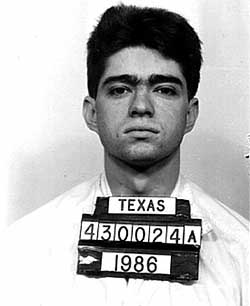
Harold Glenn Smith was a Houston, Texas, murderer who became associated with a disturbing group of teenagers involved in extreme violence during the mid-1980s. Smith was born on November 26, 1967, and was still a teenager when investigators began examining his possible connection to several killings. Contemporary reports described him as an influential figure among young people who claimed an interest in Satanism and occult practices. Later accounts sometimes classified him as a suspected serial killer, although he was convicted of only one murder: the torture and killing of 19-year-old Dennis Keith Medler.
The sensational descriptions of Smith as a cult leader became a major part of the case. However, Harris County investigators cautioned that the group did not appear to be a highly organized religious cult. Instead, authorities described it as a loose and unstable collection of teenagers who adopted Satanic imagery, discussed violence, and encouraged one another’s increasingly dangerous behavior. The occult language surrounding the group attracted public attention, but the central facts of the case concerned deliberate cruelty, group participation, and the seemingly senseless selection of a victim.
The Murder of Dennis Keith Medler
Dennis Keith Medler was 19 years old when he was killed in Houston on August 6, 1985. Medler reportedly knew or associated with members of Smith’s teenage circle. Investigators concluded that the group discussed killing him for approximately a week before persuading him to accompany them to an isolated area near Resthaven Memorial Gardens Cemetery.
According to investigators, Smith and several other teenagers surrounded Medler and subjected him to a prolonged and brutal assault. He was beaten with fists and a metal pipe, stabbed, choked, and repeatedly cut across the throat. Reports also stated that his hair was burned down to his scalp, one of his eyes was severely injured or removed from its socket, and his teeth were broken with a hammer or another heavy object. His death was attributed to strangulation, blood loss, or a combination of the injuries inflicted during the attack.
The attackers reportedly took turns participating. Authorities said the killing was not committed during a robbery, personal confrontation, or sudden argument. Investigators alleged that members of the group had discussed their desire to experience killing and wanted to watch someone die. Medler was apparently targeted because members of the group disliked him and believed he would be vulnerable to being lured away without immediately attracting suspicion.
Medler’s decomposed body was discovered on August 14, 1985, behind or near the cemetery grounds. The condition of the remains and the unusual location initially gave the murder the appearance of a ritualistic killing. As detectives began questioning teenagers known to associate with Medler, witnesses described Smith and other members of the group. Those interviews gradually revealed that multiple participants had allegedly been present during the assault.
Arrests and Other Participants
Authorities eventually charged Smith and several other teenagers in connection with Medler’s murder. Among those publicly identified were John-Michael Alexander Trimmer, who was 17, and Michael Gene Cravey, who was 19. A 16-year-old boy was detained through the juvenile justice system, while a 16-year-old girl was accused of helping attack Medler and setting his hair on fire.
Investigators described the killing as a shared act in which members of the group reinforced one another’s violent behavior. Smith was portrayed in some later accounts as the group’s self-appointed leader or “high priest,” but the participants did not operate with the structure of an established organization. Their Satanic claims appeared to provide a dramatic identity and a justification for behavior that was already becoming increasingly violent.
Victims and Suspected Victims
- Dennis Keith Medler, 19 — August 6, 1985 — Houston, Texas: Medler was lured to an isolated area near Resthaven Memorial Gardens Cemetery, where he was beaten, stabbed, choked, cut, burned, and tortured by several teenagers. His body was discovered on August 14, 1985. Smith was convicted of Medler’s murder.
- Ronald Monahan, 25 — June 25, 1985 — Houston, Texas: Monahan was found stabbed to death inside a Houston residence or apartment. The killing was initially investigated as a burglary that had escalated into murder. Later accounts alleged that Smith brought an associate to the location and showed him Monahan’s body. Smith was linked to the case in investigative and secondary accounts, but available records do not establish that he was convicted of Monahan’s murder.
- Wayne Schubert, 16 — 1985 — Houston, Texas: Schubert was shot to death and was later discussed during the investigation of Smith’s group. A teenage girl reportedly told investigators that her boyfriend had killed Schubert and had shown her his bullet-riddled body in a pickup truck. Some later accounts attributed Schubert’s death directly to Smith, while contemporary reporting indicated that other members of the group were also investigated or charged in separate killings. The exact date and Smith’s precise legal responsibility remain uncertain in available reliable accounts.
- Unidentified young woman — approximately 1985 or early 1986 — outside Houston, Texas: The body of an unidentified woman was reportedly found with fatal gunshot wounds. Tattoos on her body included an inverted pentagram and the number “666,” leading investigators to consider a possible connection to Smith’s circle. Some authorities theorized that she may have been killed because she intended to leave the group or reveal information. No confirmed identification, exact death date, or murder conviction linking Smith to the woman has been established in the available accounts.
Additional Violence Linked to the Group
As investigators interviewed members and associates of the teenage group, they uncovered allegations involving more than homicide. A 25-year-old motorist told police that he had picked up teenage hitchhikers and was attacked with a knife. One suspect who cooperated with investigators reportedly identified the attacker as a follower of Smith. The surviving motorist’s statement gave detectives another view of the group’s willingness to target people outside their immediate social circle.
The investigation also revealed that some members appeared proud of their involvement in violent acts. Witnesses described bodies being displayed to friends and stories of killings being repeated within the group. This behavior suggested that violence had become a way for certain members to gain status, frighten others, and prove their loyalty. Smith’s alleged leadership role was built less upon a formal religious doctrine than upon intimidation and the promotion of cruelty.
Trial and Conviction
Smith was arrested in connection with Medler’s murder and brought to trial in Harris County. Prosecutors presented evidence describing the planned nature of the attack, the participation of several teenagers, and the extraordinary injuries inflicted upon Medler. Witness statements helped establish Smith’s presence and role in the killing.
The jury reportedly deliberated for approximately 45 minutes before finding Smith guilty of murder with a deadly weapon. On August 13, 1986, he was sentenced to life imprisonment and assessed a $10,000 fine. Later federal court records confirmed that he remained a Texas state prisoner serving the life sentence imposed for his 1986 Harris County murder conviction.
Smith later challenged decisions by the Texas Board of Pardons and Paroles after being denied early release. A federal court record from 2017 stated that he had received parole denials in 2005, around 2009, and again on April 8, 2015. The board cited the violent and brutal nature of his offense, the continuing danger he could pose to public safety, and the amount of time he had served compared with the severity of the crime. His request for federal habeas corpus relief was rejected.
Classification as a Serial Killer
Harold Glenn Smith is frequently included in serial-killer databases with an estimated victim count ranging from one to four. That classification requires qualification. Dennis Medler is the only victim whose murder resulted in Smith’s documented conviction. Smith’s connections to Ronald Monahan, Wayne Schubert, the unidentified woman, and other violent incidents are based largely on witness statements, investigative theories, and later secondary accounts.
The involvement of several offenders also makes individual responsibility difficult to separate. Some of the teenagers charged in Medler’s murder faced additional accusations involving other victims. Statements that Smith personally killed every person associated with the group are not fully supported by the available court record. He is therefore more accurately described as a convicted murderer and suspected serial offender who was linked to a broader cluster of killings committed or discussed by members of his teenage circle.
Legacy of the Case
The murder of Dennis Medler became notorious because of its brutality and the youth of those accused. Public attention focused heavily on the defendants’ claims of Satanism, their occult symbols, and Smith’s reported role as a teenage leader. Yet investigators emphasized that the murder was not necessarily the product of a sophisticated cult. It was a planned group killing carried out by young offenders who used violent fantasies and occult language to encourage one another.
Behind the sensational aspects of the investigation was the death of a 19-year-old man who was deliberately isolated and tortured by people he knew. Medler’s killing demonstrated how group pressure, fascination with violence, and the desire for status can become lethal when reinforced by an aggressive leader and willing participants. Smith’s conviction ensured that he received a life sentence for that murder, while questions surrounding the other deaths attributed to his circle have continued to complicate his classification and the full accounting of the group’s crimes.