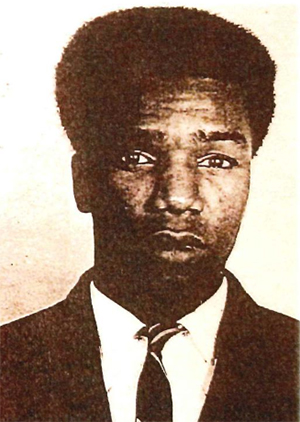
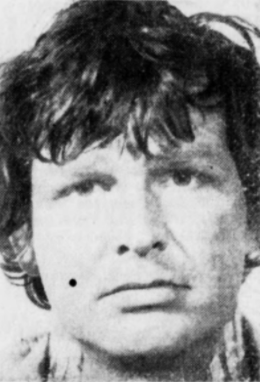
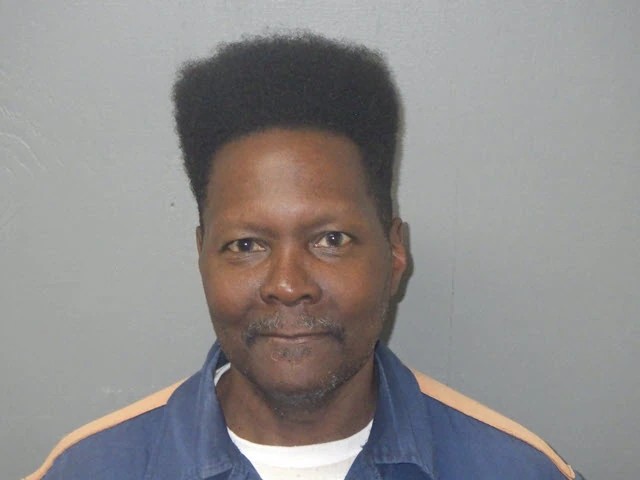
Michael Sumpter: The Boston Serial Killer Identified by DNA
Overview
For decades, a series of brutal rapes and murders of young women in the Boston area remained unsolved, leaving a legacy of fear and unanswered questions. The perpetrator, Michael Eugene Sumpter, was a career criminal who moved through the justice system for other violent crimes but was never suspected of the killings that terrorized Cambridge and Boston between 1969 and 1973. He attacked his victims in their own apartments, gaining entry through fire escapes or windows. Sumpter died of cancer in 2001, a free man, his darkest secrets seemingly taken to the grave. It was only through posthumous DNA analysis, years after his death, that investigators were finally able to connect him to the cold case murders of three women: Jane Britton, Ellen Rutchick, and Mary Lee McClain. His identification closed cases that had haunted families and investigators for nearly half a century.
Early Life and Criminal History
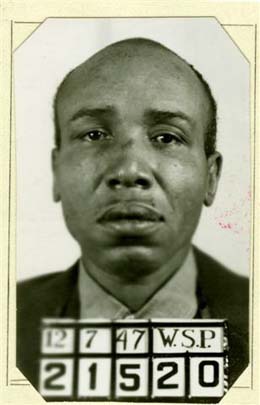
Michael Eugene Sumpter was born in Boston, Massachusetts, on September 26, 1947. His criminal activities began in his teenage years. In 1965, at age 19, he was arrested for purse snatching, an offense for which he served a short prison term. This was the start of a long and violent criminal career that escalated over time. Sumpter had numerous ties to the Cambridge area where his first known murder occurred; he had lived there as a child, attended first grade in the public school system, had encounters with Cambridge police as a juvenile, and had a girlfriend who lived there in the late 1960s.
Throughout his adult life, Sumpter was in and out of prison for a variety of offenses. In June 1972, he was sentenced to a 6-to-10-year term for assault and battery. Just over a year later, on November 20, 1973, he was granted a furlough but failed to return, triggering an arrest warrant. It was during this period on the run that he committed his final known murder. He was arrested again on December 19, 1973, for unarmed robbery and assaulting a police officer.
In August 1975, while on a work release program, Sumpter raped a 19-year-old college student in her Back Bay apartment after tricking his way inside. The victim identified him from police photos, and he was convicted and sentenced to 15 to 20 years in prison. Sumpter was paroled from this sentence in 2000, just 13 months before his death. Posthumous DNA hits would later link him to another stranger rape committed in 1985 while he had escaped from a work release program.
The Murder of Jane Britton
On January 7, 1969, Jane Sanders Britton, a 23-year-old graduate student in anthropology at Harvard University, was found murdered in her fourth-floor apartment at 6 University Road in Cambridge. Her boyfriend discovered her body after she failed to show up for an important exam. Britton had been sexually assaulted and bludgeoned to death with a sharp, heavy object; the murder weapon was never found.
The crime scene contained a detail that sent the investigation down a misleading path for decades. Red ochre powder had been sprinkled over her body, leading investigators to theorize that the killer was someone with knowledge of ancient burial rituals, likely from within Britton's academic circle at Harvard. This "red herring" caused suspicion to fall on her classmates and professors for nearly 50 years.
Investigators now believe Sumpter, who was working about a mile from Britton's apartment in 1967, gained access via the building's fire escape and entered through a window. A witness reported seeing a man matching Sumpter's build running from the area around 1:30 a.m. The case was the oldest cold case in Middlesex County to be solved.
The Murder of Ellen Rutchick
Almost exactly three years later, on the night of January 5, 1972, Michael Sumpter murdered 23-year-old Ellen Faith Rutchick in her tenth-floor apartment on Beacon Street in Boston's Back Bay neighborhood. Rutchick, a secretary, had recently graduated from the University of Minnesota.
Sumpter entered her apartment and strangled her with a stereo speaker cord. He partially removed her clothing before leaving her body on a sofa. Neighbors later reported hearing a scream that evening, but no one called the police. When Rutchick failed to appear for work, concerned colleagues went to her apartment, found the door ajar, and discovered her body. Her case remained unsolved for 38 years until her family, hearing of advances in forensic technology, asked authorities to re-examine the evidence.
The Murder of Mary Lee McClain
On December 12, 1973, Sumpter claimed his third known murder victim while he was an escapee, having failed to return from a prison furlough granted less than a month earlier. He used a fire escape to enter the Beacon Hill apartment of 24-year-old Mary Lee McClain.
McClain, a secretary, was asleep in her bed when Sumpter entered her room and asphyxiated her. Her body was discovered the next morning by a roommate. Shockingly, McClain's two roommates and a male friend were present in the apartment at the time of the murder, but none of them saw or heard anything suspicious. A neighbor did report hearing "muffled screams" followed by the sound of footsteps on the fire escape, but police were not alerted at the time. Sumpter was arrested for unrelated crimes just one week after killing McClain.
The Victims
- Jane Sanders Britton, 23 — January 7, 1969, in Cambridge. A brilliant and dedicated Harvard graduate student of anthropology, she was the daughter of a Radcliffe College administrator. Her promising academic career was cut short just hours before a major exam.
- Ellen Faith Rutchick, 23 — January 5, 1972, in Boston. A secretary and a 1970 graduate of the University of Minnesota, she was attacked and killed in her Back Bay apartment. Her family's persistence led to the re-examination of her case decades later.
- Mary Lee McClain, 24 — December 12, 1973, in Boston. A secretary for the Boston Alcohol Safety Action Project, she was murdered in her Beacon Hill apartment while her roommates were in the next room.
Investigation and Posthumous Identification
For decades, the murders of Britton, Rutchick, and McClain remained separate, unsolved cases. The Britton investigation was famously sidetracked by the red ochre theory, focusing almost exclusively on the Harvard community. The other two cases simply went cold with few leads. Michael Sumpter was never a suspect in any of them during his lifetime.
The breakthrough came long after Sumpter's death from cancer on August 10, 2001. Following his death, his DNA profile was entered into the Combined DNA Index System (CODIS). The first hit came in 2005, linking him to a 1985 rape. This prompted cold case units to examine his profile against other unsolved crimes.
In February 2010, Boston police announced a CODIS match between Sumpter's DNA and evidence from the 1972 murder scene of Ellen Rutchick. Two years later, in October 2012, another match was confirmed, this time linking Sumpter to the 1973 rape and murder of Mary Lee McClain.
The final piece of the puzzle fell into place in 2018. After renewed public interest in Jane Britton's case, investigators decided to retest the original evidence using modern forensic techniques. In October 2017, the Massachusetts State Police Crime Lab successfully obtained a male-specific Y-STR profile from the samples. In July 2018, this profile was matched to Michael Sumpter in CODIS. To confirm the finding, investigators located Sumpter's biological brother, who provided a DNA sample. The comparative analysis confirmed that Sumpter was the source of the DNA found on Jane Britton, officially solving the 49-year-old mystery.
No Trial or Sentence
Michael Sumpter was never charged, tried, or convicted for the murders of Jane Britton, Ellen Rutchick, and Mary Lee McClain. He died from cancer at the Lemuel Shattuck Hospital Correctional Unit on August 10, 2001, years before forensic science would identify him as a serial killer. Upon announcing the DNA identification in the Britton case, Middlesex District Attorney Marian Ryan stated, "I am confident that the mystery of who killed Jane Britton has finally been solved and this case is officially closed." Authorities in Suffolk County had previously declared the Rutchick and McClain cases solved based on the DNA evidence against Sumpter.
Aftermath and Legacy
The posthumous identification of Michael Sumpter brought a painful but definitive conclusion to three of Boston's most haunting cold cases. For the families of the victims, the revelations provided long-awaited answers, though they were coupled with the reality that the killer would never face justice in a courtroom. Jane Britton's brother, the Rev. Boyd Britton, expressed that "The DNA evidence match may be all we ever have as a conclusion. Learning to understand and forgive remains a challenge."
The resolution of the Britton case, in particular, exonerated the many friends, colleagues, and professors at Harvard who had lived under a cloud of suspicion for nearly five decades due to the misleading red ochre theory. The case stands as a powerful example of the evolution of forensic science and its ability to solve even the coldest of cases, rewriting history and finally bringing a measure of peace to the families left behind. In total, since his death, DNA has connected Sumpter to five separate sexual assaults, including the three murders.