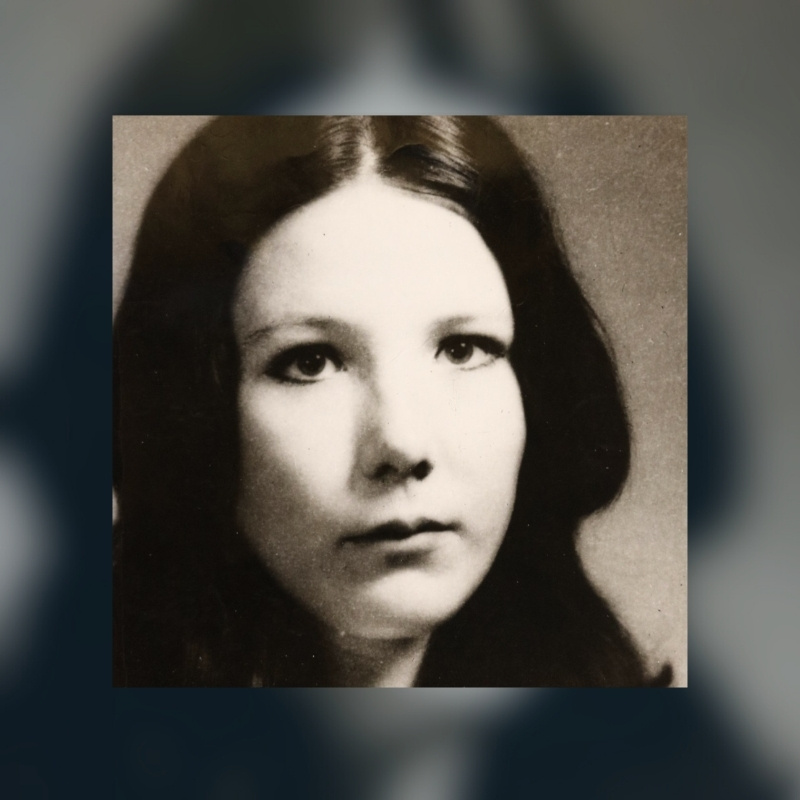
Jane Sanders Britton was a brilliant and purposeful 23-year-old woman with a passion for anthropology. A graduate student at Harvard University, she was the daughter of a Radcliffe College administrator and had distinguished herself academically, graduating magna cum laude from Radcliffe. Jane's specific interest was in the Neolithic period, and she had spent the summer before her death on an archaeological dig in Iran.
Those who knew her described a talented and confident woman with a zest for life, who loved to paint, cook, play the organ, and listen to classical music. Her promising future, both academic and personal, was brutally extinguished on January 7, 1969, in Cambridge, Massachusetts.
The previous evening, January 6, had been a pleasant one for Jane. She and her boyfriend, James Humphries, had dinner with classmates and went ice skating on the Cambridge Common. Humphries walked her back to her fourth-floor apartment at 6 University Road, a building owned by Harvard, leaving around 11:30 p.m. Jane then visited with her neighbors, Donald and Jill Mitchell, for a glass of sherry before returning to her own apartment at approximately 12:30 a.m. It was in the hour that followed that her life was taken.
The next day was the date of her anthropology general examinations, a critical milestone for the doctoral candidates. When Jane, a dedicated student, failed to appear for the exam, her classmates and boyfriend grew concerned. Humphries called her apartment repeatedly with no answer. Shortly after noon, he went to check on her. When he found her unresponsive in her bed, he sought help from the Mitchells. Jane had been sexually assaulted and bludgeoned to death. An autopsy would later confirm the cause of death as blunt force trauma, with multiple skull fractures and brain injuries. Toxicology reports suggested she was killed shortly after returning to her apartment, as the sherry she had consumed had not yet been metabolized into her bloodstream.
The initial investigation was complex and, for decades, fruitless. The crime scene held a peculiar clue that sent detectives down a misleading path for years: her body had been sprinkled with red ochre powder, a pigment used in ancient burial rituals. This detail led to intense speculation that the killer was someone within Jane's academic circle at Harvard, perhaps a professor or fellow student with specialized anthropological knowledge. This theory cast a long shadow of suspicion over her colleagues and friends, but no suspects were ever identified from the department. Nothing of value was taken from the apartment, and investigators struggled to find a motive or a solid lead.
For nearly half a century, Jane Britton's murder remained one of Middlesex County's most baffling cold cases. The mystery lingered in the public consciousness, a haunting story of a promising life cut short. But advances in forensic technology would finally provide the answer. Investigators were able to develop a DNA profile from evidence collected in 1969. In 2018, that profile was matched through the CODIS database to a career criminal named Michael Eugene Sumpter. Sumpter had died of cancer in 2001, thirteen months after being paroled from a prison sentence for a 1975 rape. To confirm the match, investigators obtained a DNA sample from Sumpter's biological brother, which proved conclusively that Sumpter was the man responsible for Jane's murder.
Michael Eugene Sumpter was a serial killer and rapist with no known connection to Jane Britton. At the time of her murder, he was working about a mile from her apartment and had other ties to the Cambridge area. Investigators believe he gained access to her apartment via a fire escape and an open window. After his death, DNA evidence linked Sumpter to the rapes and murders of two other young women in Boston: Ellen Rutchick in 1972 and Mary Lee McClain in 1973, as well as other sexual assaults. He had a long history of convictions for assault, battery, and rape.
In November 2018, nearly 50 years after the crime, Middlesex District Attorney Marian Ryan announced that the case was officially closed. "I am confident that the mystery of who killed Jane Britton has finally been solved," she stated. The identification of Sumpter brought an end to decades of speculation and cleared the names of those who had lived under a cloud of suspicion. The red ochre, once seen as a key clue, was determined to be a "red herring," unrelated to the motive of the crime. While the man responsible for her death could never face justice in a courtroom, the truth of what happened on that cold January night was finally brought to light.