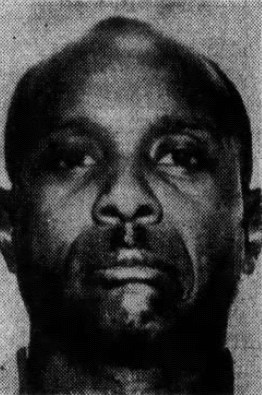
Leroy Keith: The Parolee Killer
Overview
Leroy Keith was a career criminal whose violent acts spanned more than two decades, leaving a trail of tragedy in Ohio and New York. Active in two distinct periods, 1934 and 1956, Keith murdered three men during the commission of robberies. His criminal career is marked by a startling failure of the justice system: after being sentenced to death for his first murder, his sentence was commuted to life, and he was later paroled despite warnings that he was a danger to society. Within months of his release, he killed two more people. His spree finally ended after a dramatic police shootout on the streets of New York City. He was executed in 1959, leaving behind questions about the parole system that allowed a known killer to strike again.
Early Life and First Murder
Leroy Keith was born in Warren, Ohio, in 1907. Little is known about his upbringing, but by his early twenties, he had already embarked on a criminal path with convictions for auto theft and burglary. His capacity for violence escalated dramatically on the night of July 24, 1934.
In front of a movie theater in his hometown of Warren, 52-year-old mill worker Fred Greist was sitting in his parked car. Keith, needing a vehicle to commit a planned robbery, approached Greist and ordered him out of the car. When Greist complied, Keith shot him once in the heart, killing him instantly. An accomplice, Ernest Baugh, was arrested and quickly implicated Keith in the murder. Police captured Keith a short time later while he was driving a car that had been reported stolen in Akron.
Ohio Trial and Imprisonment
Brought to trial for the murder of Fred Greist, Leroy Keith was convicted of first-degree murder and sentenced to death by Justice Lynn B. Griffith. However, Keith was granted a new trial and, in a bizarre turn, was again convicted and sentenced to death. His legal team appealed to the Ohio Supreme Court, which subsequently reduced his conviction to second-degree murder and his sentence to life imprisonment.
Keith was sent to the Ohio State Penitentiary, where he became known as a notoriously dangerous inmate. He earned the nickname "Cut" for his habit of attacking other prisoners with razor blades, often wielding two in each hand. In December 1936, he participated in a failed escape attempt with several other inmates, during which they overpowered and held two guards hostage. His violent behavior and participation in the escape attempt solidified his reputation as a menace within the prison walls.
A Controversial Parole
Despite his violent record in and out of prison, Leroy Keith became eligible for parole. In 1945, his first application was denied. Justice Griffith, the judge from his original trial, wrote to the parole board, stating, "Under no consideration should [Keith] be placed on parole as he is a dangerous character and a menace to every law abiding citizen..."
However, years later, the warning was ignored. In 1953, Keith was transferred to the London Correctional Facility. On March 6, 1956, the Ohio parole board granted his release without consulting Justice Griffith or, reportedly, fully reviewing his extensive criminal and prison record. After his release, Keith, who was supposed to live with relatives in New York, instead returned to Ohio, settling in Youngstown and doing odd jobs. It wasn't long before he returned to violent crime.
The Murders of 1956
In the fall of 1956, Keith teamed up with an ex-convict, 27-year-old Louis Johnson, and a 16-year-old, Joseph Reinthaler, to plan a series of robberies. On the night before Thanksgiving, November 21, 1956, the trio was searching for a getaway car in Akron. They targeted Coburn Von Gunten, a 40-year-old executive for the McNeil Machine & Engineering Company who was returning home from an office party.
When Keith confronted Von Gunten and demanded his car, the executive resisted. Keith shot him twice, but the wounded Von Gunten managed to start his car and drive away. Keith fired again as a police cruiser happened upon the scene. A chase and gunfight ensued, during which police lost sight of Keith but captured the young Reinthaler. Coburn Von Gunten was rushed to a hospital but died from his injuries about an hour and a half later. Under questioning, Reinthaler identified his accomplices as Leroy Keith and Louis Johnson. The parole board faced intense scrutiny for releasing Keith. Johnson later turned himself in; he was ultimately convicted of first-degree murder but received a recommendation of mercy from the jury, sparing him from the death penalty. Reinthaler was tried as a juvenile and sent to a reform school.
After the murder of Von Gunten, Keith fled to New York City. Police there were alerted that a recent string of robberies targeting liquor stores and service stations matched his methods. They began staking out his mother's apartment in The Bronx. On the night of December 19, 1956, Keith's final crime unfolded in Harlem. He and another man, accompanied by two women, hailed a taxi driven by 49-year-old David Suro. During the ride, Keith, using the alias "Frisco," and his male companion pulled out guns and announced a robbery. Suro, seeing a police car nearby, acted with incredible bravery and intentionally crashed his taxi into the patrol car to foil the robbery and attract help.
As the robbers scrambled to flee the taxi, Keith fired two shots, hitting Suro in the chest and abdomen. David Suro died from his wounds the next day. The reward offered for Keith's capture was later given to his widow in recognition of his heroic sacrifice.
The Victims
- Fred Greist, 52 — On July 24, 1934, in Warren, Ohio, Mr. Greist, a local mill worker, was senselessly murdered while sitting in his car. He was killed for his vehicle by a man planning another crime.
- Coburn Von Gunten, 40 — On November 21, 1956, in Akron, Ohio, Mr. Von Gunten was an executive returning from an office party when he was attacked. He bravely resisted his assailants and died trying to escape.
- David Suro, 49 — On December 20, 1956, in New York, New York, Mr. Suro, a taxi driver, showed immense courage when faced with armed robbers. He gave his life to thwart a crime and alert the police by crashing his cab into a patrol car.
Investigation and Capture
Following the murder of David Suro, a chaotic scene erupted on the streets of New York. Leroy Keith fled on foot, exchanging gunfire with numerous police officers who were now in hot pursuit. Miraculously, no bystanders were injured in the running gun battle. The chase ended when Keith was cornered near a parked car by five officers. He refused to surrender and fired his weapon four times, missing with each shot. Sergeant Richard Boland and Officer James J. Connelly returned fire, striking Keith five times in the chest, legs, and midsection, incapacitating him and ending his violent run from the law.
During the investigation into the Von Gunten murder, police had questioned Keith's accomplice, Louis Johnson, about a separate unsolved double murder of a grocery store owner and a clerk in Uniontown, Ohio. However, Johnson provided a substantiated alibi, and ballistics tests confirmed the murders were unrelated to their crimes.
Trial and Execution
After spending much of 1957 recovering from his injuries and undergoing mental evaluations, Leroy Keith stood trial in New York in January 1958 for the murder of David Suro. The trial lasted just 13 days. With overwhelming evidence against him, the jury returned a verdict of guilty of first-degree murder, and Keith was sentenced to death.
He was sent to the infamous Sing Sing Prison to await his execution. During the 18 months he spent on death row, he reportedly received no visitors. His execution was delayed twice by gubernatorial stays. Finally, on July 23, 1959, Leroy Keith was brought to the execution chamber. His last words were reported to be: "Sooner or later, we all come to justice. I was disappointed in Governor Rockefeller." He was then strapped into the electric chair and executed.
Aftermath and Legacy
The case of Leroy Keith stands as a stark example of a catastrophic failure in the criminal justice system. The decision by the Ohio parole board to release him in 1956, directly against the recommendation of the judge who had twice sentenced him to death, had devastating consequences. The murders of Coburn Von Gunten and David Suro were preventable tragedies that highlighted the potential dangers of a parole system that does not give sufficient weight to an inmate's history of violence and expert warnings. The case sparked public outrage and criticism of the board's judgment, serving as a grim reminder of the responsibility held by those who make decisions about the freedom of dangerous criminals.