Rapid City Creek Drownings: The Unexplained Deaths Along Rapid Creek
Overview
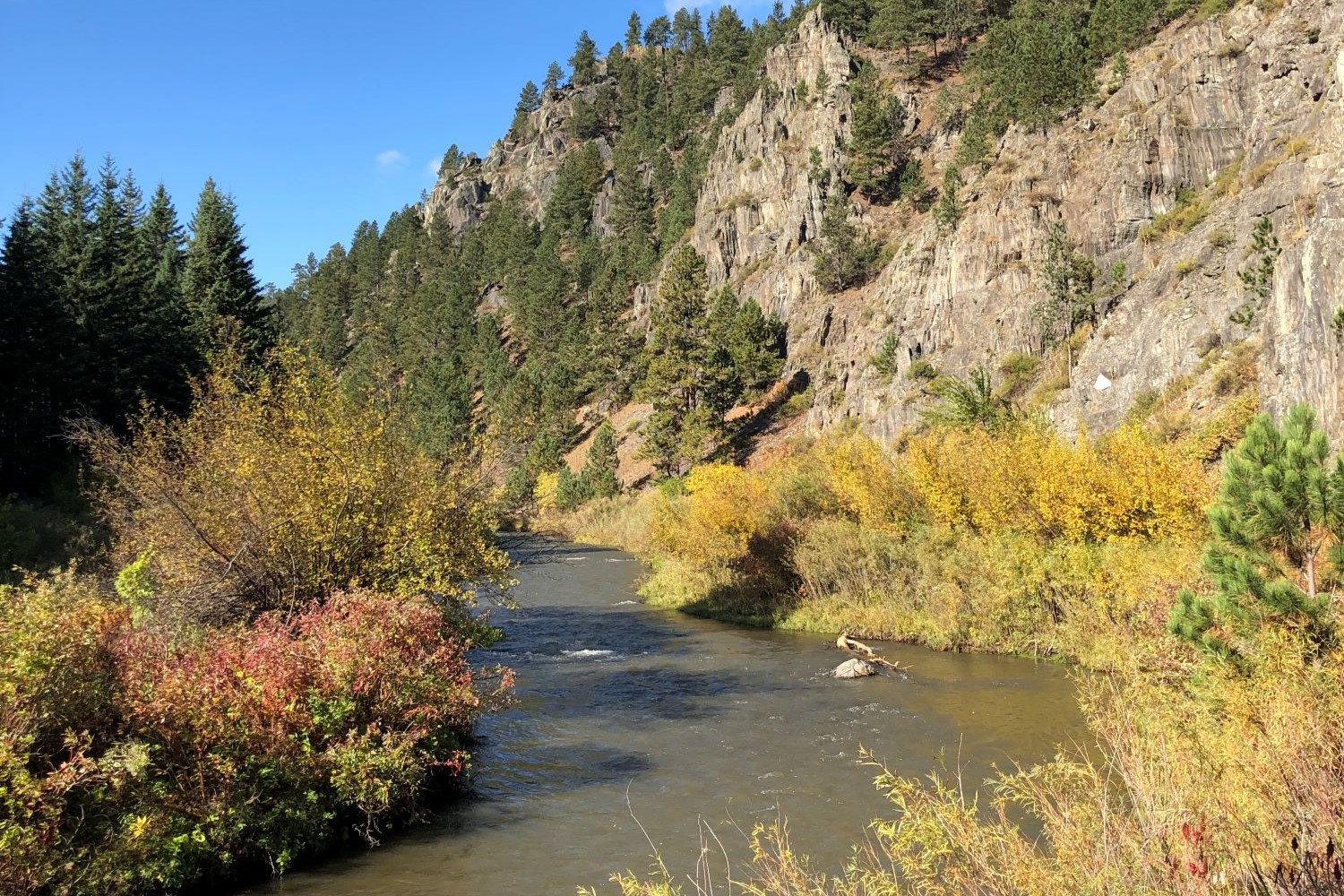
The Rapid City Creek Drownings refers to a disturbing series of deaths involving eleven men in Rapid City, South Dakota, between 1998 and December 2000. Many of the men were Native American, homeless, or living in unstable circumstances. Several were discovered in the waters of Rapid Creek, while others were found near the creek or elsewhere in Rapid City under suspicious or unexplained circumstances.
The deaths have sometimes been attributed to an unidentified serial killer or group of killers. However, no person has ever been identified, arrested, or charged as a serial offender in connection with the cases. Law enforcement investigations did not uncover physical evidence proving that a single killer caused the deaths. Some cases were officially considered accidental drownings or alcohol-related deaths, while community members continued to argue that the unusual concentration of fatalities could not reasonably be dismissed as coincidence.
The victims were particularly vulnerable. Several regularly slept beneath bridges or in makeshift camps along the creek. Many struggled with alcoholism, and some were severely intoxicated when they died. These circumstances provided a possible accidental explanation, but they also could have made the men easy targets for an attacker who understood that their deaths might receive limited scrutiny.
The First Deaths in 1998
The sequence began in May 1998 with the death of Ben Long Wolf. Long Wolf, a 36-year-old Native American man, had been sleeping beneath the Sixth Street Bridge, an area he sometimes used as shelter. His body was discovered partially upright beneath the water. Investigators believed that he had fallen asleep while heavily intoxicated and had failed to awaken as the creek rose around him.
Approximately ten days later, the body of 56-year-old George Hatton was found. Five days after that discovery, 42-year-old Allen Hough became the third man found dead during the alarming two-week period. The appearance of three bodies in such a short time was highly unusual for a creek that ordinarily accounted for approximately one death each year.
Additional unexplained deaths followed later in 1998. Royce Yellow Hawk died on November 12, 1998. Randell Two Crow was found on December 8 beneath or near the East Boulevard bridge, lying in a pool of water along the creek bank. Lauren Two Bulls was found the following day. The closeness of the discoveries intensified fears that someone might have been targeting homeless and Native American men.
The Deaths Continued in 1999
After several months without another discovery, the pattern resumed during the spring and summer of 1999. On May 29, a fisherman saw the body of 44-year-old Dirk Bartling floating in Rapid Creek. Bartling was one of two white men included among the original eight creek deaths, demonstrating that the victims were not exclusively Native American.
Nine days after Bartling was found, the body of 45-year-old Arthur Chamberlain was recovered. Approximately three weeks later, 47-year-old Timothy Bull Bear Sr. became another victim associated with the creek. Lonnie Isham, age 43, died in Rapid City on July 11, 1999 and was later included in community accounts of the eleven unexplained deaths.
By the summer of 1999, eight men had been found dead in or around Rapid Creek in approximately fourteen months. Six of those eight were Native American. The number of deaths, the short intervals between some discoveries, and the shared vulnerability of the victims led many residents to believe the men had been murdered.
Victims Associated With the Rapid City Creek Deaths
- Ben Long Wolf, 36 — Died in May 1998. His body was found beneath the Sixth Street Bridge in Rapid Creek, Rapid City, South Dakota. Long Wolf was heavily intoxicated and appeared to have fallen asleep before being submerged by rising water.
- George Hatton, 56 — Died in May 1998, approximately ten days after Ben Long Wolf. His body was found in or near Rapid Creek in Rapid City, South Dakota. His surname has occasionally appeared as “Hatten” in contemporary reporting.
- Allen Hough, 42 — Died in May 1998, approximately five days after George Hatton was found. Hough was discovered in Rapid Creek in Rapid City, South Dakota. Reports stated that he was not intoxicated at the time and had recently experienced mental-health difficulties.
- Royce Yellow Hawk, 26 — Died on November 12, 1998, in Rapid City, South Dakota. His death was included among the eleven unexplained fatalities associated with Rapid Creek.
- Randell Two Crow, 48 — Found dead on December 8, 1998, near Rapid Creek beneath the East Boulevard bridge in Rapid City, South Dakota. His body was reportedly lying in a pool of water along the bank.
- Lauren Two Bulls, 33 — Found dead on December 9, 1998, in Rapid City, South Dakota, one day after Randell Two Crow. Two Bulls was a Native American artist and reportedly had an extremely high blood-alcohol level when he died.
- Dirk Bartling, 44 — Found on May 29, 1999, floating in Rapid Creek in Rapid City, South Dakota. A fisherman discovered his body. Bartling reportedly had a blood-alcohol level of approximately 0.288 percent.
- Arthur Chamberlain, 45 — Found in June 1999, approximately nine days after Dirk Bartling, in or near Rapid Creek in Rapid City, South Dakota. Publicly available accounts do not consistently provide a verified exact date of death.
- Timothy Bull Bear Sr., 47 — Found in the summer of 1999, approximately three weeks after Arthur Chamberlain, in or near Rapid Creek in Rapid City, South Dakota. Public records and later summaries contain conflicting information concerning his exact date of death.
- Lonnie Isham, 43 — Died on July 11, 1999, in Rapid City, South Dakota. Isham was included in later lists of the eleven unexplained deaths connected to Rapid Creek, although publicly available descriptions provide few details about where his body was discovered.
- Wilbur G. Johnson, 41 or 42 — Found dead on December 22, 2000, in an alley in the 500 block of East Monroe Street in Rapid City, South Dakota. Johnson had been beaten with a heavy blunt object rather than drowned. James Ray “Jamie” Howard and Adrian Gilbert Black Bear were arrested and charged in connection with Johnson’s death, making his case materially different from the unexplained creek drownings.
Evidence and Official Findings
Autopsies did not reveal a consistent pattern of injuries among the men found in Rapid Creek. None of the original eight bodies reportedly showed clear signs of trauma. Several victims had extremely high blood-alcohol levels, including concentrations that could have caused unconsciousness, alcohol poisoning, loss of coordination, or death without outside interference.
Two of the men were reportedly determined to have died from alcohol poisoning. Others died from asphyxiation caused by drowning. Allen Hough was an important exception to the repeated intoxication pattern because investigators said he was not drunk when he died. Authorities noted, however, that he had been receiving psychiatric treatment and had recently expressed suicidal thoughts.
Although each death could be explained individually as an accident, suicide, or alcohol-related tragedy, investigators acknowledged that the total number was extraordinary. Every body in the initial group was found in the water rather than on the creek bank or in nearby grass. The deaths also occurred in clusters: three men in approximately two weeks, two men during a two-day period later that year, and three more men during a period of slightly more than one month in 1999.
The Serial-Killer Theory
The primary murder theory was that an unknown person or group preyed on intoxicated homeless men sleeping near Rapid Creek. An attacker would not necessarily have needed to use a weapon. A deeply intoxicated person could have been rolled, carried, pushed, or held in the shallow water until he drowned. The absence of obvious injuries would have made the death appear accidental.
Some Native American residents suspected that the killings were racially motivated. Rumors circulated about skinheads, young white men armed with bats, and groups that allegedly assaulted homeless Native Americans. One reported survivor claimed that assailants had attempted to hold him underwater. Despite extensive interviews, investigators were unable to prove that an organized racist group was responsible.
Some community members also believed the two white victims may have been mistaken for Native American men in the darkness. That theory remained speculative and was never supported by physical evidence or an identified suspect.
The Investigation
After five men died in the creek within seven months, the Rapid City Police Department and Pennington County Sheriff’s Office formed a task force. Investigators interviewed more than one hundred people, searched approximately ten miles of the creek, examined campsites and discarded belongings, and attempted to reconstruct the victims’ final movements.
The Federal Bureau of Investigation, the South Dakota Division of Criminal Investigation, and the Mid-States Organized Crime Information Center assisted with the inquiry. Analysts created charts showing relationships among the victims and members of the homeless community. FBI behavioral specialists were consulted to consider whether the deaths fit the actions of a serial predator.
The investigation was complicated by the conditions surrounding the victims. Many potential witnesses had been drinking heavily and could not clearly remember whom they had seen or what had happened. Some were unable to account for entire periods of time. The victims also moved between shelters, camps, bridges, detoxification facilities, and other temporary locations, making reliable timelines difficult to construct.
Community Anger and Distrust
The deaths deepened longstanding distrust between Rapid City’s Native American population and local authorities. Families and activists argued that the cases would have received greater urgency had the victims been affluent white residents rather than homeless or impoverished Native American men.
Volunteers organized patrols along the creek to protect vulnerable people and watch for suspicious activity. Community leaders repeatedly asked authorities to reopen or more thoroughly review the deaths. Four Native American victims were reportedly found face down in Rapid Creek, a circumstance that many residents considered especially difficult to reconcile with the theory of unrelated accidents.
Law-enforcement officials maintained that every available lead had been examined. Investigators found no common suspect, no forensic link among the deaths, and no evidence conclusively demonstrating that the men had been attacked. Nevertheless, some officials acknowledged that the timing was unusual. Former Pennington County Sheriff Don Holloway later stated that he did not believe every death had necessarily been accidental because so many occurred close together and then abruptly stopped.
Possible Connection to Colorado
After the Rapid Creek deaths ended, some Native American journalists and community members noted reports of Native American and homeless men being found dead in waterways near Denver, Colorado. This created speculation that an offender might have moved from South Dakota to Colorado.
No law-enforcement agency publicly established a forensic connection between the Rapid City deaths and cases in Colorado. The possible link remains an unproven theory rather than an officially recognized extension of the suspected series.
No Identified Serial Killer
Despite the label frequently applied to the case, the Rapid City Creek Drownings are not the confirmed crimes of a known serial killer. The supposed offender has no verified identity, description, arrest record, or established method beyond the theory that vulnerable men were deliberately placed or held in the water.
No confession has surfaced, and no witness has publicly identified one person as responsible for the original creek deaths. Authorities have never announced that forensic testing linked the victims to a common attacker. The case therefore remains a disputed collection of deaths that may include accidents, alcohol-related fatalities, suicides, unrelated crimes, or one or more intentional killings.
Continuing Mystery
The Rapid City Creek Drownings remain one of South Dakota’s most troubling unresolved mysteries. The official evidence did not establish that a serial killer was operating along Rapid Creek, yet the concentration of deaths continues to cause suspicion. Eleven men died within a relatively short period, most were Native American or homeless, and several were found under remarkably similar circumstances.
For the victims’ families and the Native American community, the unresolved questions are inseparable from broader concerns about violence against Indigenous people and unequal treatment within the justice system. Whether the deaths resulted from a calculating predator, multiple attackers, neglect, accidents, or a combination of causes, the men associated with Rapid Creek left behind families and communities that have continued to seek clarity, recognition, and closure.