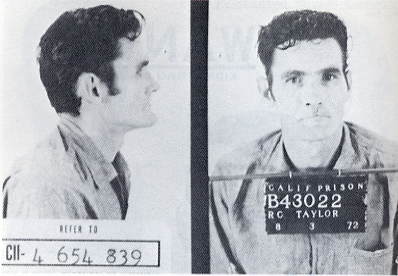
Daniel Harold Rolling: The Gainesville Ripper
Overview
Daniel Harold Rolling, commonly known as Danny Rolling and later called the Gainesville Ripper, was an American serial killer responsible for eight known murders in Louisiana and Florida. Born on May 26, 1954, in Shreveport, Louisiana, Rolling developed a lengthy criminal history involving burglary, armed robbery and violence before committing the murders for which he became notorious. His crimes were marked by unlawful entry into private homes, surprise attacks, sexual violence and the deliberate staging of victims' bodies.
Rolling murdered three members of one family in Shreveport on November 4, 1989. Less than a year later, he killed five college students in Gainesville, Florida, during a four-day period in August 1990. The Gainesville murders created widespread panic in a city preparing for the beginning of a new academic term. Students began traveling in groups, adding locks to their homes and leaving town because authorities did not know when or where the killer might strike again.
Early Life and Criminal History
Rolling grew up in a deeply troubled household. Accounts presented during his later court proceedings described his father, a police officer, as physically and emotionally abusive toward Rolling, his brother and their mother. Rolling struggled in school, had difficulty maintaining employment and repeatedly came into conflict with the law. By adulthood, he had accumulated convictions for burglary, robbery and other offenses in several states.
His background did not excuse his later actions, but it became an important subject during the penalty phase of his murder case. Mental-health specialists who examined him described serious personality disorders and abnormal sexual interests. Prosecutors maintained that Rolling remained fully responsible for crimes that required planning, preparation and repeated decisions to continue attacking defenseless people.
The Shreveport Triple Murder
On November 4, 1989, Rolling entered the Shreveport home of William Thomas “Tom” Grissom. Inside were Grissom, his 24-year-old daughter Julie and his 8-year-old grandson Sean. All three were stabbed to death. Julie's body was also subjected to postmortem mutilation and deliberately arranged, details that would later remind investigators of the Gainesville crime scenes.
The killings remained unsolved for years. After the Gainesville murders, investigators from Louisiana and Florida began comparing evidence from the two cases. They noticed similarities involving the method of entry, the use of a knife, the treatment of the victims and the staging of the scenes. Rolling was publicly linked to the Grissom murders after he had already been identified as the Gainesville killer. He eventually admitted responsibility, issuing a written confession shortly before his execution in 2006.
The Gainesville Murders
Rolling arrived in Gainesville during the summer of 1990 and lived at a secluded campsite in a wooded area near apartment complexes occupied by students. He carried burglary tools, a firearm and a large knife. Investigators later found recorded songs and audio diaries at the camp that reflected his disturbed thinking and contained references connected to the killings.
During the early morning hours of August 24, 1990, Rolling broke into an apartment shared by University of Florida freshmen Sonja Larson and Christina Powell. Both young women were attacked and stabbed to death. Powell was bound and sexually assaulted before she was killed. Rolling then repositioned the victims' bodies and attempted to alter the appearance of the crime scene before leaving.
On August 25, Rolling entered the Gainesville apartment of Christa Hoyt while she was away. Hoyt, an 18-year-old Santa Fe Community College student, returned home later that night and encountered him inside. Rolling restrained, sexually assaulted and fatally stabbed her. He mutilated and decapitated her body, then arranged the scene in an intentionally shocking manner.
Rolling struck again on August 27 at an apartment shared by 23-year-old University of Florida students Manuel “Manny” Taboada and Tracy Paules. He attacked Taboada while he was sleeping, but Taboada awoke and fought back. Rolling ultimately overpowered and fatally stabbed him. Paules heard the struggle and attempted to protect herself behind a locked bedroom door. Rolling forced his way inside, restrained and sexually assaulted her, and then stabbed her to death.
Confirmed Victims
- William Thomas “Tom” Grissom, 55 — Murdered on November 4, 1989, inside his home in the Southern Hills area of Shreveport, Louisiana.
- Julie Ann Grissom, 24 — Murdered on November 4, 1989, inside her father's home in Shreveport, Louisiana. She was Tom Grissom's daughter and Sean Grissom's aunt.
- Sean Thomas Grissom, 8 — Murdered on November 4, 1989, inside his grandfather's home in Shreveport, Louisiana.
- Sonja Larson, 18 — Murdered on August 24, 1990, inside the Gainesville, Florida, apartment she shared with Christina Powell.
- Christina Powell, 17 — Murdered on August 24, 1990, inside her Gainesville apartment. She was a University of Florida freshman.
- Christa Leigh Hoyt, 18 — Murdered on August 25, 1990, inside her Gainesville apartment. She attended Santa Fe Community College and worked for the Alachua County Sheriff's Office.
- Manuel “Manny” Taboada, 23 — Murdered on August 27, 1990, inside the Gainesville apartment he shared with Tracy Paules.
- Tracy Inez Paules, 23 — Murdered on August 27, 1990, inside her Gainesville apartment after attempting to escape from Rolling.
Fear and the Gainesville Investigation
The discovery of the five students' bodies transformed Gainesville into a city gripped by fear. News of the first two killings spread quickly, followed by the discovery of Hoyt and then Paules and Taboada. Because the attacks occurred in separate apartments and the killer had entered without attracting attention, residents feared that anyone living near the university could become the next victim.
Students purchased locks, weapons and guard dogs. Some slept in groups or stayed with friends. Others withdrew from classes and left Gainesville. Police received thousands of tips and initially investigated several possible suspects. One man, University of Florida student Edward Humphrey, attracted intense attention after an unrelated violent incident, but evidence did not connect him to the murders. He was eventually cleared.
Rolling was arrested on September 7, 1990, following an armed robbery at a supermarket in Ocala, Florida. At first, he was held only for the robbery. Investigators later learned that he had been camping near the Gainesville apartments and had committed a bank robbery during the same period as the murders. Tools and other items recovered from his camp and stored belongings were linked to marks and evidence found at the crime scenes.
A major break came when a woman who had known Rolling in Louisiana contacted authorities. She remembered disturbing statements he had reportedly made and believed he could be connected to both the Gainesville killings and the unsolved Grissom family murders. DNA evidence, blood-type evidence, burglary tools, recordings and other physical evidence gradually strengthened the case against him.
Arrest, Guilty Pleas and Sentencing
An Alachua County grand jury indicted Rolling on November 15, 1991, for five counts of first-degree murder, three counts of sexual battery and three counts of armed burglary involving a battery. He initially pleaded not guilty. On February 15, 1994, the day his trial was scheduled to begin, he unexpectedly changed his plea and admitted guilt to all charges.
Because Rolling pleaded guilty, the principal courtroom battle concerned whether he would receive life imprisonment or death sentences. Prosecutors presented evidence describing the planning, cruelty and calculated nature of the murders. The defense presented testimony about Rolling's abusive childhood and mental condition, but the jury unanimously recommended death for each of the five Gainesville murders.
On April 20, 1994, the court sentenced Rolling to death for all five murders. The sentences were reviewed and upheld through years of state and federal appeals. Although he was not separately tried for the Grissom family murders in Louisiana, Rolling acknowledged responsibility for those killings, bringing his known victim total to eight.
Execution
Daniel Harold Rolling remained on Florida's death row for more than twelve years. Shortly before his scheduled execution, he gave his spiritual adviser a handwritten statement confessing to the 1989 murders of Tom, Julie and Sean Grissom. The admission confirmed what investigators had long suspected based on the similarities between the Shreveport and Gainesville crime scenes.
Rolling was executed by lethal injection at Florida State Prison on October 25, 2006. He was pronounced dead at 6:13 p.m. Members of several victims' families witnessed the execution. Rolling did not deliver a conventional final statement, although he sang a religious hymn before his death.
Legacy of the Case
The Gainesville murders remain among the most infamous crimes in Florida history. They are remembered not only for their violence but also for the atmosphere of uncertainty they created across a college community. The victims were young people beginning their adult lives, attending school, working and making plans for the future when Rolling entered their homes and killed them.
Memorials in Gainesville continue to preserve the names of Sonja Larson, Christina Powell, Christa Hoyt, Tracy Paules and Manuel Taboada. The case also renewed attention to the Grissom family murders in Shreveport, ensuring that Tom, Julie and Sean were recognized as victims of the same offender. Rolling's crimes later influenced books, television programs and elements of popular culture, but the lasting significance of the case remains the loss of eight individual lives and the trauma suffered by their families and communities.