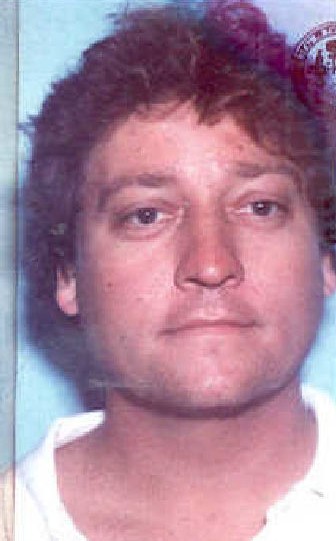
Earl Richmond Jr.: Former Army Drill Sergeant and Serial Killer
Background
Earl J. Richmond Jr. was born on November 6, 1961, in Fayetteville, North Carolina. He later joined the United States Army and rose to the position of drill sergeant. During the late 1980s, Richmond was stationed at Fort Dix, New Jersey, where he was responsible for training military personnel. His position gave him an appearance of discipline and authority, but investigators eventually uncovered a pattern of sexual violence and murder hidden behind his military career.
Richmond served at Fort Dix from approximately 1988 until his discharge in the fall of 1990. He was reportedly removed from the Army for misconduct involving money taken from trainees. By that time, women near the military installation had already been subjected to violent sexual assaults later connected to him. In April 1989, a female Air Force trainee was sexually assaulted at gunpoint near Fort Dix. Days later, a 17-year-old girl was raped inside a motel room near the base. DNA evidence eventually connected Richmond to at least one of these attacks.
Another man, Richard Stevens, was initially convicted in connection with the attack on the Air Force trainee. Stevens received a lengthy federal prison sentence, but his conviction was later overturned after evidence cast serious doubt on his guilt. The case demonstrated how Richmond’s crimes not only devastated his direct victims but also contributed to the wrongful prosecution of an innocent man.
The Murder of Lisa Ann Nadeau
Richmond’s first confirmed murder victim was 24-year-old Army Specialist Lisa Ann Nadeau. Nadeau was a payroll clerk stationed at Fort Dix and lived in military housing on the base. She was originally from Plainfield, Connecticut, and was the mother of two young daughters.
During the night of April 4, 1991, extending into April 5, Richmond entered Nadeau’s townhouse at Fort Dix. He restrained and attacked her before beating, stabbing and strangling her. Reports concerning the case also described the use of a hammer during the assault. Nadeau’s children were inside the residence but were not physically harmed.
Nadeau’s death was officially recorded as April 5, 1991. Investigators initially had no clear suspect, and the killing remained unsolved while Richmond left New Jersey and returned to North Carolina. Because the murder occurred on a federal military installation, the case would later be prosecuted in federal court.
The Hayes Family Murders
Several months after Nadeau’s murder, Richmond committed a triple homicide in Fayetteville, North Carolina. The victims were 27-year-old Helisa Stewart Hayes and her two children, 8-year-old Phillip Hayes and 7-year-old Darien Deneen Hayes. The family lived in the Sunshine Mobile Home Park in Cumberland County.
Richmond was not a stranger to the family. He was a close friend of Helisa’s former husband, Wayne Hayes, and had previously dated one of Helisa’s sisters. Because of these relationships, Richmond was familiar with Helisa and her children and could approach their home without immediately appearing threatening.
During the early morning hours of November 2, 1991, Richmond arrived at Helisa’s residence after attending an overnight party. Richmond later gave slightly different accounts of what happened, but the evidence established that he sexually assaulted Helisa inside her bedroom. He struck her in the face and strangled her to death with his hands.
Richmond then attacked Helisa’s son, Phillip. He carried the 8-year-old boy into a bathroom, stabbed him approximately 40 times with a pair of scissors and wrapped an electrical cord around his neck. Richmond next entered the bedroom where 7-year-old Darien was sleeping and strangled her with the cord from a curling iron.
The victims remained undiscovered for two days. On November 4, Helisa’s father, William Stewart, became concerned after he had not heard from his daughter. He entered the home and discovered the bodies of Helisa and his two grandchildren. Although some cemetery and memorial records use November 4 as the date of death because that was the day the bodies were found, court findings established that the murders occurred during the early morning of November 2, 1991.
Confirmed Victims
- Lisa Ann Nadeau, 24: Murdered during the night of April 4 into April 5, 1991, inside her military townhouse at Fort Dix, New Jersey. Her death was officially recorded on April 5. She was an Army specialist and payroll clerk who was beaten, stabbed and strangled.
- Helisa Stewart Hayes, 27: Raped and strangled to death on November 2, 1991, in her home at the Sunshine Mobile Home Park in Fayetteville, North Carolina.
- Phillip Hayes, 8: Murdered on November 2, 1991, inside his family’s Fayetteville home. He was stabbed repeatedly with scissors and strangled with an electrical cord.
- Darien Deneen Hayes, 7: Murdered on November 2, 1991, while sleeping in her bedroom in Fayetteville. She was strangled with the cord from a curling iron.
A Possible Additional Victim
Richmond has also been identified in some accounts as a suspect in the unsolved killing of 65-year-old Ann Sessoms Shanholtz in North Carolina in 1990. However, he was never convicted of her death, and the publicly available information connecting him to that case is limited. For that reason, Shanholtz is not included among his four confirmed murder victims.
The Early Investigation
Richmond attempted to distance himself from the Hayes murders almost immediately. Because he knew the family, police interviewed him after the bodies were found. He denied visiting Helisa’s home during the weekend of the killings and tried to direct suspicion toward her former husband, Wayne Hayes.
Richmond behaved in a manner designed to suggest innocence. He attended the funerals and served as a pallbearer, placing himself among the grieving relatives and friends of the people he had killed. Investigators initially concentrated on Wayne Hayes, Helisa’s boyfriend and other people close to the family rather than Richmond.
The investigation changed when Richmond’s sister told authorities that she had dropped him off near Helisa’s home during the early morning of November 2. Her statement contradicted Richmond’s claim that he had not been in the area. Detectives obtained a biological sample from him and compared it with evidence recovered from Helisa’s body.
DNA Evidence and Confession
DNA testing showed that semen recovered from Helisa belonged to Richmond. Police brought him in for questioning on April 3, 1992. He initially continued to deny responsibility, but after investigators informed him of the DNA results, he confessed to killing Helisa, Phillip and Darien.
Richmond described the locations of the victims and the methods used to kill them. Although he changed portions of his account during later interviews, his statements contained details matching the crime scene. He was formally indicted on July 6, 1992, for the first-degree rape and murder of Helisa Hayes and the murders of her two children.
The publicity surrounding Richmond’s arrest prompted further investigation into his conduct at Fort Dix. DNA evidence linked him to the earlier rape of the 17-year-old girl near the base. Investigators also compared evidence from the Hayes crime scene with the unsolved murder of Lisa Ann Nadeau. Richmond was ultimately charged with Nadeau’s killing and confessed to that murder as well.
Federal Conviction for Nadeau’s Murder
Because Lisa Nadeau was killed at Fort Dix, Richmond was tried in the United States District Court for the District of New Jersey. On May 28, 1993, a federal jury convicted him of her murder. He received a sentence of life imprisonment without eligibility for parole under the federal sentencing laws in effect at the time.
The federal conviction established that Richmond had killed in more than one state and separated the Nadeau case from the North Carolina prosecution. Evidence concerning the Nadeau murder was later introduced during the sentencing phase of Richmond’s North Carolina trial to demonstrate that the Hayes family killings were not an isolated event.
North Carolina Trial and Death Sentences
Richmond went on trial in Cumberland County Superior Court in May 1995 for the rape and murder of Helisa Hayes and the murders of Phillip and Darien. His defense presented evidence that he had consumed large amounts of alcohol and had used crack cocaine during the hours before the killings. His attorneys argued that his intoxication affected his ability to form the deliberate intent required for first-degree murder.
The court concluded that there was insufficient evidence showing Richmond was incapable of planning or understanding his actions. His detailed memories of the murders, his efforts to eliminate witnesses and his later attempts to mislead investigators were used to demonstrate purposeful conduct.
On May 24, 1995, the jury found Richmond guilty of first-degree rape and three counts of first-degree murder. During the sentencing phase, prosecutors presented his previous federal conviction for murdering Lisa Nadeau. The jury recommended death sentences for each of the three North Carolina murders, and Richmond also received a life sentence for the rape of Helisa Hayes.
Appeals
Richmond spent the following decade challenging his convictions and sentences in state and federal court. His attorneys argued that jury selection had been inadequate, that his trial lawyers had failed to present sufficient evidence about substance abuse and childhood trauma, and that jurors should have been told he was already serving a federal sentence without the possibility of parole.
The United States Court of Appeals for the Fourth Circuit reviewed his claims in 2004. The court found a problem with the handling of information about his parole ineligibility but concluded that the error did not justify overturning the death sentences. The court emphasized the overwhelming evidence, the calculated nature of the murders and Richmond’s conduct after the crimes.
Execution
Earl Richmond Jr. was executed by lethal injection at Central Prison in Raleigh, North Carolina, on May 6, 2005. He was 43 years old. Before the execution, he declined to request a special final meal.
In his final statement, Richmond apologized to the victims’ families and said that he accepted responsibility for his actions. He expressed hope that his death would allow the families to move forward. He was pronounced dead shortly after 2:00 in the morning.
Legacy of the Case
Richmond’s confirmed crimes claimed the lives of four people over approximately seven months in 1991. His victims included a fellow member of the military, a mother and two young children. His position as a former drill sergeant, his personal connection to the Hayes family and his willingness to participate in their funerals made the case especially disturbing.
The investigation also demonstrated the increasing importance of DNA evidence during the early 1990s. Biological evidence exposed Richmond’s false statements, connected him to the sexual assault of Helisa Hayes and helped investigators link him to crimes committed near Fort Dix. Without that evidence and the statement from Richmond’s sister placing him near the Hayes home, he might have remained outside the primary focus of the investigation for much longer.
Although Richmond was convicted of four murders, questions remain about whether he committed additional crimes during his military service or after returning to North Carolina. His known history of sexual violence, his movement between states and the possible connection to another homicide led investigators and later writers to consider the possibility of other victims. No additional murder, however, was proven in court before his execution.