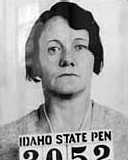
Martha Wise: The Poison Widow of Hardscrabble
Overview
Martha Wise was an American serial poisoner from the rural community of Hardscrabble, near Valley City in Medina County, Ohio. Born Martha Hasel in 1883, she became known as one of Ohio's most notorious female killers after a series of arsenic poisonings struck her own family during the winter of 1924 and 1925. Her confirmed victims were close relatives: her mother, her aunt, and her uncle. Several other family members became violently ill but survived.
Wise's crimes were especially disturbing because they unfolded inside ordinary family homes. The poison was not delivered in a sudden public attack, but quietly mixed into shared household food and drink. Family members became sick with stomach pain, vomiting, weakness, and lingering physical damage. At first, the illnesses seemed mysterious. Only after multiple relatives died, and many others suffered similar symptoms, did investigators begin to suspect that the deaths were not natural.
Background
Martha Wise grew up in Medina County, Ohio, in a farming family. As an adult, she married Albert Wise, an older farmer, and lived a difficult rural life marked by hard labor and isolation. After Albert died in 1922, Martha was left a widow with children. Around this period, she became romantically interested in a younger farmhand named Walter Johns. Her family strongly disapproved of the relationship and pressured her to end it.
The objections from her relatives appear to have enraged her. Martha's mother, Sophia Hasel, and her aunt and uncle, Lillian and Fred Gienke, were among those who criticized the relationship. After the romance ended, Martha began targeting relatives with arsenic. The poisonings were later described as revenge against family members she believed had humiliated her, controlled her, or interfered with her personal life.
Confirmed Victims
- Sophia Hasel - Martha Wise's mother. She was poisoned after Thanksgiving in 1924 and died on December 13, 1924. The poisoning occurred in the Hardscrabble and Valley City area of Medina County, Ohio.
- Lillian "Lily" Gienke - Martha Wise's aunt and the wife of Fred Gienke. She became ill after the New Year's Eve poisoning of the Gienke household and died on January 4, 1925. She was connected to the Gienke family home near Valley City, Medina County, Ohio.
- Fred Gienke - Martha Wise's uncle and the husband of Lillian Gienke. He was poisoned during the same outbreak of illness that struck his household and died on February 8, 1925. His death occurred after weeks of suffering from symptoms consistent with arsenic poisoning.
The Poisoning of Sophia Hasel
The first confirmed fatal poisoning involved Sophia Hasel, Martha's elderly mother. Around Thanksgiving of 1924, several members of the family became sick after gathering together. At first, the illness was treated as a severe stomach ailment. Some relatives recovered, but Sophia did not. Her condition worsened over the following days, and she died on December 13, 1924.
At the time, Sophia's death did not immediately expose Martha as a killer. In a rural farming community, sudden illness could be mistaken for natural disease, contaminated food, or a passing sickness. But Sophia's death was the beginning of a pattern. The symptoms that appeared in her final illness later appeared again in other relatives, especially in the Gienke household.
The Gienke Household Poisoning
On or around New Year's Eve of 1924, members of the Gienke family became violently ill. Lillian Gienke, Fred Gienke, and several of their children suffered severe stomach distress and weakness. The illness spread through the household in a way that suggested something shared had been contaminated. Later accounts stated that Martha used arsenic in common household sources such as drinking water or coffee.
Lillian Gienke died on January 4, 1925. Fred Gienke survived longer but remained gravely ill and died on February 8, 1925. Several Gienke children survived the poisoning, but some were reportedly left with lasting effects, including partial paralysis. The suffering of the survivors helped investigators understand that the deaths were connected and that the family had been deliberately poisoned.
Method of Murder
Martha Wise used arsenic, a poison that was more easily available in rural communities at the time because it could be purchased for pest control. Arsenic poisoning can cause intense abdominal pain, vomiting, diarrhea, weakness, dehydration, and progressive physical collapse. Because its symptoms can resemble natural illness, it was historically used by poisoners who hoped deaths would be mistaken for disease.
Wise's method was quiet and domestic. She did not attack strangers. She targeted her own relatives in familiar family settings. By placing poison into items people trusted and consumed together, she turned ordinary household routines into the instrument of murder. This made the crimes especially difficult to detect at first, because the victims had no reason to suspect that a family member was poisoning them.
Investigation
After the deaths of Sophia Hasel, Lillian Gienke, and Fred Gienke, the pattern became too suspicious to ignore. Multiple people from related households had become sick with similar symptoms, and three had died within a short period. Authorities in Medina County began investigating the deaths as possible poisonings.
The investigation focused on arsenic. Officials discovered that Martha Wise had purchased quantities of arsenic from a local drugstore. When Lillian Gienke's body was examined, arsenic was found, confirming that poison had played a role. Martha was questioned by Sheriff Fred Roshon in March 1925. At first, she claimed she had bought arsenic to kill rats. Under further questioning, she confessed to using arsenic against members of her family.
Confession and Motive
Martha Wise's confession revealed a motive rooted in resentment, rejection, and revenge. Her family had opposed her relationship with Walter Johns, and Martha believed her relatives had interfered in her happiness. She also had a strange fascination with funerals, and later reports claimed she admitted to being drawn to them. Some accounts described her as saying that when there were not enough funerals to attend, she created them.
Her defense later attempted to portray her as mentally unstable and easily influenced, suggesting that Walter Johns may have encouraged or commanded her actions. However, the prosecution argued that Martha herself made the decision to poison her relatives. The evidence of arsenic purchases, the matching symptoms, the autopsy findings, and her own confession created a strong case against her.
Trial
Martha Wise was charged in connection with the murder of Lillian Gienke. Her trial began in May 1925. The case attracted major attention because of the number of victims, the family relationship between the killer and the dead, and the shocking idea that a woman from a quiet rural community had poisoned so many relatives.
The defense argued that Wise was insane and not fully responsible for her crimes. The prosecution countered that she had acted deliberately. Witnesses described the illnesses, the family conflict, and the circumstances surrounding the poisonings. The jury found Martha Wise guilty of first-degree murder on May 12, 1925. Because the jury recommended mercy, she was spared the death penalty and sentenced to life imprisonment.
Aftermath
Martha Wise was sent to the Ohio Reformatory for Women in Marysville, Ohio. Decades later, in 1962, her sentence was commuted and she was briefly paroled. By then, she was elderly and had spent much of her life in prison. Her remaining family did not want to take her in, and attempts to place her in a care home failed because of her reputation and circumstances.
Within days, Wise returned to prison. Her parole and commutation were revoked, and she remained at the Ohio Reformatory for Women. She died there on June 28, 1971. Her case remains one of the most infamous poison murder cases in Ohio history because of the intimate nature of the crimes, the use of arsenic, and the fact that nearly all of the known victims were members of her own family.
Victim Summary
- December 13, 1924 - Sophia Hasel: Martha Wise's mother died after being poisoned in the Hardscrabble and Valley City area of Medina County, Ohio.
- January 4, 1925 - Lillian "Lily" Gienke: Martha Wise's aunt died after the Gienke household was poisoned near Valley City, Ohio.
- February 8, 1925 - Fred Gienke: Martha Wise's uncle died after the same poisoning outbreak that killed his wife, Lillian.