James Phillip Barnes – Convicted Double Murderer and Self-Professed Serial Killer
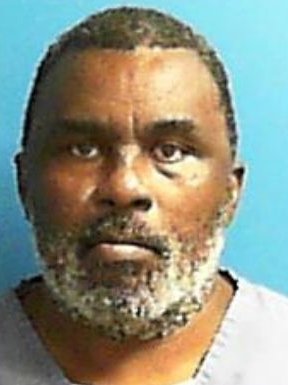
James Phillip Barnes was a Florida murderer who was convicted of killing two women in separate crimes nearly a decade apart and later claimed responsibility for additional unsolved killings. Barnes, born March 7, 1962, spent much of his adult life moving through the criminal justice system for offenses including burglary, theft, forgery, trafficking in stolen property, and weapons violations. His most serious crimes were the murders of Patricia "Patsy" Miller in 1988 and his estranged wife, Linda Barnes, in 1997.
Barnes eventually described himself as responsible for more killings than the two for which he was convicted. While imprisoned on Florida's death row, he claimed that he had also killed missing teenager Chester Ralph Wetmore and Brenda Joyce Fletcher. Those claims were investigated, but authorities said they could not corroborate them. Barnes was never charged with either case, and investigators later publicly stated that they did not consider his claims credible. For that reason, Barnes is most accurately described as a convicted double murderer and self-professed serial killer rather than attributing the additional cases to him as established fact.
Confirmed Victims
- Patricia "Patsy" Miller, 41 – Died April 20, 1988, in her condominium in Melbourne, Brevard County, Florida. Miller was a nurse. Barnes entered her residence, sexually assaulted her, attempted to strangle her, and struck her repeatedly in the head with a hammer. He then set fire to the bed in an effort to destroy evidence. Miller had already died from severe head injuries before the fire was started. Barnes pleaded guilty to her murder and related offenses and was sentenced to death.
- Linda V. Barnes, 44 – Died December 11, 1997, at her residence in the West Melbourne area of Brevard County, Florida. Linda was Barnes's estranged wife. Barnes manually strangled her and placed her body in a closet. He subsequently admitted the killing and pleaded guilty to first-degree murder. He was sentenced to life imprisonment on January 9, 1998.
The Murder of Patricia "Patsy" Miller
On April 20, 1988, 41-year-old Patricia "Patsy" Miller was killed inside her condominium in Melbourne, Florida. Miller worked as a nurse and was inside the supposed safety of her own home when Barnes entered through a bedroom window. Court records established that Barnes confronted Miller with a knife and kept control of her while committing a prolonged assault.
Barnes sexually assaulted Miller and attempted to strangle her. He ultimately used a hammer to strike her in the head multiple times. Medical evidence determined that Miller died from severe cranial and cerebral injuries caused by the blows. Barnes then set fire to the bedding and Miller's body, apparently attempting to conceal the murder and destroy physical evidence before leaving the condominium.
The attempt to eliminate the evidence was unsuccessful. Investigators recovered biological evidence from Miller's body. Barnes became a suspect within approximately a week of the murder and was interviewed by Melbourne police. He denied killing Miller and denied having been inside her residence. He voluntarily provided a blood sample, but the DNA technology available to investigators in 1988 was not sufficiently advanced to conclusively connect the recovered evidence to him.
A Murder That Remained Unsolved for Years
For years, Patricia Miller's murder remained officially unresolved. The evidence, however, was preserved. By 1997, advances in DNA testing allowed forensic scientists to reexamine biological material recovered during Miller's autopsy. The newer testing produced a match consistent with Barnes's DNA and excluded other suspects who had been examined during the investigation.
By that time Barnes had become involved in another homicide investigation—the murder of his estranged wife, Linda. Investigators approached him about the Miller case while he was incarcerated, but Barnes initially refused to discuss it. Although the new DNA results strengthened the evidence against him, Miller's case did not immediately result in a prosecution.
The Murder of Linda Barnes
On December 11, 1997, Barnes killed his estranged wife, 44-year-old Linda Barnes, in Brevard County. There was an injunction for domestic violence restricting Barnes's contact with her, but he nevertheless went to her residence. Linda was manually strangled. Her body was subsequently discovered concealed inside a closet.
Barnes was taken into custody on December 12, 1997. During the investigation, he admitted killing Linda. Court records describe Barnes telling investigators that the confrontation occurred after Linda discovered cocaine in the house. He admitted putting his hands around her neck and continuing the assault until she was dead.
After Linda's death, Barnes took property from her residence, including jewelry and money. He also obtained one of her checks and forged it. These actions produced additional criminal charges alongside the murder case.
Barnes ultimately pleaded guilty to the first-degree murder of Linda Barnes. Prosecutors waived pursuit of the death penalty in that case, and on January 9, 1998, Barnes received a life sentence. He was therefore already serving life imprisonment for Linda's murder when the long-unsolved Patricia Miller investigation returned to the foreground.
Barnes Confesses to the Patricia Miller Murder
In 2005, while serving his life sentence, Barnes began communicating with an assistant state attorney. He had converted to Islam and said that he wanted to clear his conscience. During Ramadan, Barnes sent correspondence admitting that he had murdered Patricia Miller.
On November 1, 2005, Barnes participated in a recorded interview in which he admitted the burglary, sexual assaults, murder, and arson. He provided details about Miller, the interior of her residence, and the crime itself that were consistent with the physical evidence and investigation.
Barnes subsequently entered an open guilty plea in court. He admitted entering Miller's condominium, sexually assaulting her, trying to strangle her, killing her with a hammer, and setting the bed on fire. The confession was supported by the preserved forensic evidence, including the DNA testing that connected Barnes to biological material recovered from Miller.
Conviction and Death Sentence
Barnes was convicted in connection with Patricia Miller's killing of first-degree murder, burglary of a dwelling involving an assault or battery, two counts of sexual battery involving the use or threat of a deadly weapon, and arson of a dwelling. On December 13, 2007, he was sentenced to death for Miller's murder.
Barnes represented himself during important portions of the proceedings and did not attempt to deny responsibility for Miller's death. The Florida Supreme Court reviewed his case and affirmed his convictions and death sentence in 2010.
The Miller prosecution demonstrated how improvements in forensic science could transform an old homicide investigation. Biological evidence that had been incapable of producing a definitive identification in 1988 became highly significant when newer DNA methods were applied years later. Barnes's eventual confession added a detailed admission to the scientific evidence already connecting him to the crime.
The Claimed Murder of Chester Ralph Wetmore
After his convictions, Barnes made additional claims that raised the possibility that Patricia Miller and Linda Barnes were not his only victims. One involved Chester Ralph Wetmore, a 14-year-old boy who disappeared from Bradenton, Florida.
- Chester Ralph Wetmore, 14 – Last seen May 27, 1986, in Bradenton, Manatee County, Florida. A verified date of death has never been established because Chester has never been found. Barnes later claimed that he encountered Chester after his disappearance and killed him around 1988. Barnes was never charged, and investigators said they found no evidence establishing a connection between Barnes and Chester.
Chester was reported missing after leaving his home in Bradenton on the evening of May 27, 1986. His disappearance remained unresolved for decades. Barnes later claimed that he encountered the teenager while Chester was living away from home and that the two had become acquainted.
Barnes alleged that he eventually shot Chester after accusing him of stealing property and that Chester's body was buried near a lake. No body was recovered as a result of Barnes's statements, and investigators were unable to establish that Barnes had ever known Chester.
Law-enforcement officials reviewed Barnes's claims and the available evidence. Manatee County investigators ultimately reported that there was nothing substantial demonstrating that his account was truthful and said they had no reason to connect him to Chester's disappearance. Chester therefore cannot properly be listed as a confirmed Barnes victim.
The Claimed Murder of Brenda Joyce Fletcher
Barnes also claimed involvement in the death of Brenda Joyce Fletcher, whose body was discovered in Brevard County in 1991. Once again, investigators examined his statements but did not find evidence sufficient to connect him to the crime.
- Brenda Joyce Fletcher – Last known contact with a family member was October 22, 1990. Her body was discovered April 2, 1991, in a water-filled drainage ditch near the northbound Interstate 95 entrance ramp from State Road 520 near Cocoa, Brevard County, Florida. Her exact date of death has not been publicly established. Barnes later claimed responsibility or involvement, but he was never charged and investigators said no physical or other credible evidence connected him to Fletcher or the crime scene.
Fletcher was already considered a missing person when her remains were discovered on April 2, 1991. Investigators found her in a drainage ditch near State Road 520 and Interstate 95 west of Cocoa. The date her body was discovered should not be confused with a confirmed date of death; available case information does not establish the precise day on which she was killed.
Years later Barnes claimed that he had killed Fletcher following a dispute in which he accused her of taking property from him. His account was investigated after he made the confession while imprisoned. Brevard County authorities found no evidence showing that Barnes had contact with Fletcher before her death and no evidence recovered from the crime scene connected him to her homicide.
Authorities therefore left Fletcher's killing classified as an unsolved homicide rather than clearing the case through Barnes's confession. Investigators later stated that details Barnes supplied were either publicly available or could not be independently corroborated.
Why the Additional Confessions Remain Disputed
Barnes's claims concerning Wetmore and Fletcher attracted considerable attention because he had already demonstrated that he was capable of confessing accurately to a previously unsolved crime. His confession to Patricia Miller's murder was backed by DNA evidence and highly specific information about the crime scene. That was not the situation with the Wetmore and Fletcher cases.
Investigators reviewed Barnes's statements about both cases and attempted to corroborate them. In Chester Wetmore's disappearance, investigators could not even establish a credible connection showing that Barnes had known the missing teenager. In Fletcher's case, authorities found no forensic or investigative evidence tying Barnes to Fletcher or to the location where her body was recovered.
Consequently, neither allegation resulted in criminal charges. Both cases remained unresolved after Barnes's death. Although Barnes claimed more victims, his statements alone are not sufficient to classify Wetmore or Fletcher as confirmed victims.
Criminal History and Pattern of Violence
Barnes's record extended beyond homicide. Before his murder convictions he accumulated offenses involving burglary, grand theft, forgery, possession of a firearm by a convicted felon, and trafficking in stolen property. He had repeatedly entered and left the prison system before committing the murders for which he ultimately received life and death sentences.
The two confirmed murders occurred under markedly different circumstances. Patricia Miller was attacked during an intrusion into her home in April 1988, while Linda Barnes was his estranged wife and was killed almost ten years later in December 1997. Both women were killed inside their residences. Barnes attempted to conceal or manipulate the aftermath of each crime: he set fire to Miller's bed after killing her, while Linda's body was placed in a closet and her property was taken following her death.
Execution
After more than fifteen years under a death sentence for Patricia Miller's murder, Barnes eventually chose to stop fighting his execution. Florida Governor Ron DeSantis signed Barnes's death warrant in June 2023, setting the execution for August 3, 2023. Barnes dismissed remaining post-conviction proceedings and indicated that he was prepared for his sentence to be carried out.
James Phillip Barnes was executed by lethal injection at Florida State Prison on August 3, 2023. He was pronounced dead at 6:13 p.m. He gave no final statement.
Victim Summary
- Patricia "Patsy" Miller – Age 41. Murdered April 20, 1988, inside her condominium in Melbourne, Brevard County, Florida. Barnes pleaded guilty and received a death sentence for her murder.
- Linda V. Barnes – Age 44. Murdered December 11, 1997, at her residence in the West Melbourne area of Brevard County, Florida. Barnes pleaded guilty and received a life sentence for her murder.
- Chester Ralph Wetmore – Age 14 when he disappeared from Bradenton, Florida, on May 27, 1986. Barnes later claimed he killed Chester around 1988, but Chester's body has never been recovered, no death date has been verified, Barnes was never charged, and investigators found no evidence substantiating his confession.
- Brenda Joyce Fletcher – Last known family contact October 22, 1990; body discovered April 2, 1991, near State Road 520 and Interstate 95 outside Cocoa, Florida. Her exact death date is not established in publicly available case information. Barnes claimed involvement, but investigators found no evidence corroborating his story and never charged him.
Legacy of the Cases
James Phillip Barnes died as the convicted killer of Patricia Miller and Linda Barnes. His responsibility for those two deaths was established through guilty pleas, admissions, physical evidence, and court proceedings. Patricia Miller's case in particular became an example of the importance of preserving forensic evidence in an unsolved homicide, because DNA technology developed after her death helped provide evidence that could not be obtained when the crime originally occurred.
Barnes's additional murder claims require a much different conclusion. Although he portrayed himself as a serial killer and confessed to killing Chester Wetmore and Brenda Fletcher, law-enforcement investigations did not substantiate those confessions. Chester remains a missing person and Fletcher's homicide remains unsolved. The distinction between Barnes's two proven murders and his later unverified claims is essential when documenting his criminal history and the histories of the victims whose cases he attempted to associate with himself.