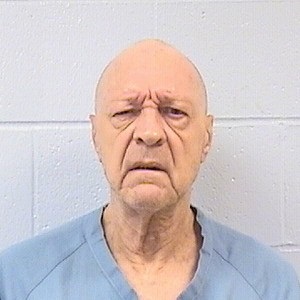
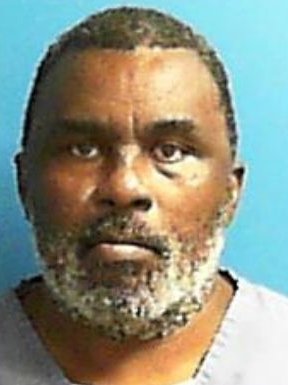
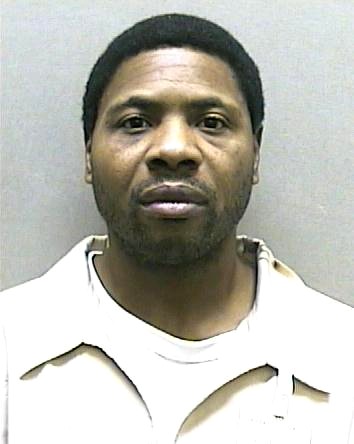
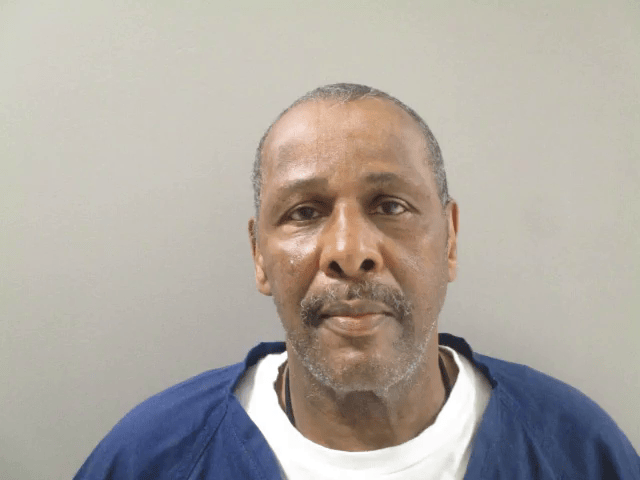
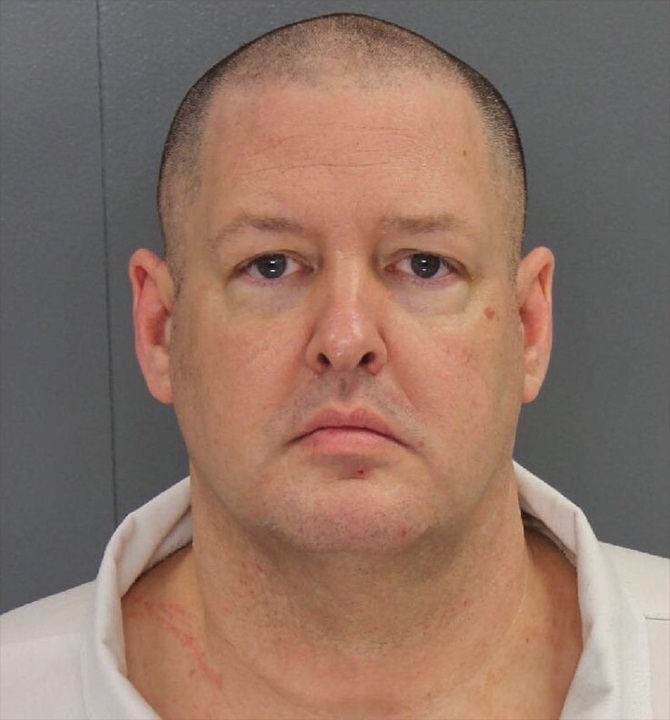
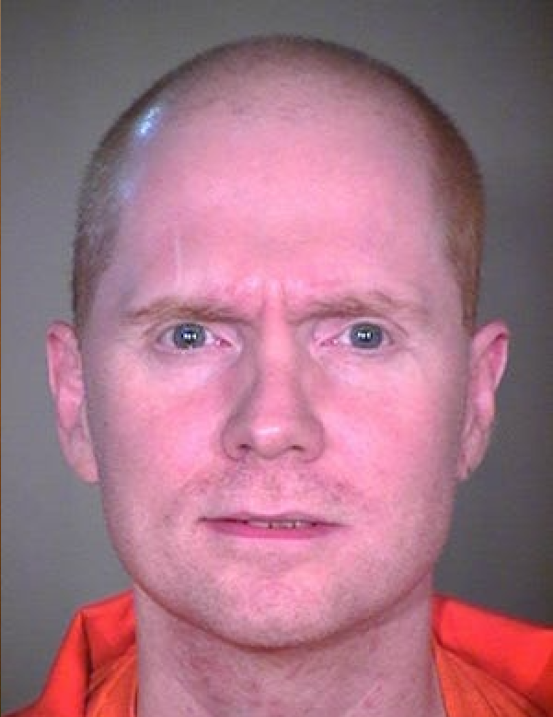
Robert Benjamin Rhoades: The Truck Stop Killer
Background and Criminal History
Robert Benjamin Rhoades, commonly known as Robert Ben Rhoades, was born on November 22, 1945, in Council Bluffs, Iowa. He later became a long-haul truck driver, a profession that allowed him to travel across the United States for extended periods without attracting suspicion. Investigators believe he used the isolation of interstate highways, truck stops, and remote rural areas to locate vulnerable victims and conceal his movements.
Rhoades became known as the “Truck Stop Killer” because he abducted women and young couples while driving commercial trucks across the country. Authorities discovered that the sleeper compartment of his truck had been altered into a mobile confinement area. Women could be restrained inside the compartment with handcuffs and chains while Rhoades continued traveling from state to state.
His crimes involved kidnapping, prolonged captivity, sexual assault, torture, humiliation, and murder. Investigators found photographs showing some of his victims while they were being held captive. These photographs became important evidence because they documented injuries, restraints, changes in the victims’ appearance, and items later connected to recovered bodies.
The Abduction of Patricia Walsh and Douglas Zyskowski
Patricia Candace Walsh and her husband, Douglas Scott Zyskowski, were newlyweds from the Seattle, Washington, area. They left Seattle in November 1989 and planned to travel across the country while sharing their religious beliefs. Because they were hitchhiking, they depended on strangers for transportation.
The couple accepted a ride from Rhoades near El Paso, Texas. According to the criminal case, Rhoades quickly separated the couple. Douglas was killed and abandoned in a remote area of Texas. His remains were discovered in January 1990 near Interstate 10 in the vicinity of Ozona and Sutton County, Texas. He was not positively identified until 1992.
Rhoades kept Patricia captive after killing her husband. Investigators concluded that she remained under his control for several days while he traveled in his truck. She was repeatedly assaulted and tortured before being killed. Her skeletal remains were discovered by deer hunters on October 26, 1990, in Millard County, Utah.
For approximately thirteen years, Patricia remained unidentified and was known as a Jane Doe. In 2003, investigators compared medical and dental evidence with records belonging to Patricia and established her identity. DNA evidence and additional investigative work eventually connected Rhoades to both murders.
In March 2012, Rhoades pleaded guilty in Texas to two counts of capital murder for killing Patricia Walsh and Douglas Zyskowski. He received two additional life sentences without the possibility of parole.
Regina Kay Walters and Ricky Lee Jones
Fourteen-year-old Regina Kay Walters disappeared from Pasadena, Texas, on February 3, 1990. She had left home with her eighteen-year-old boyfriend, Ricky Lee Jones. The two young people were traveling together when they encountered Rhoades.
Ricky was separated from Regina and killed. His partial skeletal remains were discovered on May 26, 1990, near Harleton in Harrison County, Texas. Evidence indicated that he had been shot in the head. His death left Regina alone and completely under Rhoades’s control.
Rhoades held Regina captive for a period believed to have lasted several weeks. During that time, he transported her through several states and subjected her to severe physical and psychological abuse. He cut and altered her hair, dressed her in clothing he selected, and photographed her in visible fear. Some of the photographs were later found during searches connected to the investigation.
One of the best-known photographs showed Regina standing outside an abandoned building while wearing a black dress and high-heeled shoes. Her expression and body language revealed that she was terrified. Investigators later determined that the photograph had been taken at or near the location where Rhoades eventually killed her.
Regina was strangled with a ligature and left inside an abandoned barn near Greenville, Illinois. Her badly decomposed body was discovered on September 29, 1990. Investigators initially did not know her identity, but the photographs recovered from Rhoades’s property helped connect him to her disappearance and death.
Rhoades was convicted of Regina’s murder in Illinois in 1994. He received a sentence of life imprisonment without the possibility of parole. Although Ricky Jones was recognized as one of Rhoades’s victims, the Illinois conviction centered on Regina’s murder.
Confirmed Victims
- Douglas Scott Zyskowski, 28: Abducted with his wife after the couple accepted a ride from Rhoades near El Paso, Texas, in late 1989 or early 1990. He was shot and abandoned in Sutton County, Texas. His remains were discovered near Ozona in January 1990 and identified in 1992. Rhoades pleaded guilty to his murder in March 2012.
- Patricia Candace “Candy” Walsh, 24: Abducted with Douglas Zyskowski near El Paso, Texas. She was held captive, assaulted, tortured, and killed in early 1990. Her remains were discovered on October 26, 1990, in Millard County, Utah, but she was not identified until 2003. Rhoades pleaded guilty to her murder in March 2012.
- Ricky Lee Jones, 18: Disappeared with Regina Walters from Pasadena, Texas, on February 3, 1990. Rhoades separated him from Regina and shot him in the head. His partial skeletal remains were discovered on May 26, 1990, near Harleton in Harrison County, Texas.
- Regina Kay Walters, 14: Disappeared from Pasadena, Texas, with Ricky Jones on February 3, 1990. She was held captive, tortured, photographed, and strangled in approximately March 1990. Her body was discovered on September 29, 1990, in an abandoned barn near Greenville, Illinois. Rhoades was convicted of her murder in 1994.
Survivors and Earlier Warning Signs
Rhoades’s activities came to police attention before the bodies of several victims were connected to him. In 1989, eighteen-year-old Shana Holts reported that Rhoades had held her in his truck for approximately two weeks. She described being restrained, assaulted, threatened, and controlled inside the sleeper compartment. She eventually escaped when the truck stopped in Houston, Texas.
Although police questioned Rhoades following Holts’s escape, the case did not immediately lead to a prosecution that could have permanently removed him from the road. Holts feared that she would not be believed and was reluctant to continue with charges. Investigators later recognized that her account closely matched the evidence discovered in Rhoades’s truck and the treatment of his known murder victims.
Another woman survived an encounter that resulted in Rhoades’s final arrest. During the early morning hours of April 1, 1990, Arizona Highway Patrol Trooper Mike Miller noticed a tractor-trailer stopped along Interstate 10 near Casa Grande, Arizona. When Miller approached the truck, he discovered a nude and handcuffed woman inside the cab.
Rhoades attempted to explain the situation but was taken into custody. A firearm was also recovered. He was charged with offenses that included kidnapping, sexual assault, aggravated assault, and unlawful imprisonment. The discovery gave investigators an opportunity to examine his truck and personal history more closely.
The Mobile Torture Chamber
The sleeper compartment of Rhoades’s truck was arranged so that victims could be restrained for long periods. Authorities found handcuffs, chains, restraints, weapons, and other items associated with sexual torture and captivity. Because the compartment was part of a commercial truck, Rhoades could move victims across jurisdictional boundaries while avoiding prolonged attention in any one community.
Long-haul trucking also gave him a believable explanation for traveling thousands of miles and sleeping in remote areas. He could leave one state shortly after committing a crime and appear hundreds of miles away before local authorities understood that a person had disappeared. Bodies could be abandoned near interstate highways, deserts, forests, barns, and isolated rural roads far from the places where the victims were first abducted.
The interstate nature of the crimes made the investigation especially difficult. Missing-person reports were maintained by separate police departments, while unidentified remains might be discovered in another state months later. Differences in names, ages, dates, and physical descriptions delayed connections between the cases.
Photographic Evidence
One of the most disturbing elements of the Rhoades investigation was the discovery of photographs depicting captive women. The photographs were not ordinary personal pictures. They showed victims in altered clothing, with injuries or restraints, and under circumstances suggesting that Rhoades was deliberately recording their fear and suffering.
The photographs of Regina Walters were especially significant. They documented changes in her appearance during captivity and provided investigators with visual evidence of her condition before death. Details in the background of the pictures helped authorities study the places Rhoades had visited and connect the images to the abandoned Illinois barn where Regina was found.
Photographs believed to show Patricia Walsh were also recovered. Investigators compared the women in the images with missing-person reports, physical descriptions, and unidentified remains. The photographic collection contributed to the belief that Rhoades may have harmed additional women whose identities remain unknown.
Suspected Additional Murders
Rhoades is confirmed to have killed at least four people, but investigators have long suspected that the true number is much higher. He drove throughout the United States for many years and reportedly claimed that he had been abducting and abusing women for approximately fifteen years before his arrest.
Authorities examined his trucking routes and compared them with disappearances and unsolved murders involving hitchhikers, sex workers, runaways, and women last seen at truck stops. Some investigators estimated that he could have killed dozens of victims, with figures as high as fifty sometimes associated with the case.
Those estimates have not been proven in court. Rhoades’s confirmed convictions and guilty pleas concern Regina Walters, Patricia Walsh, and Douglas Zyskowski. Ricky Jones is also widely recognized as a confirmed victim based on the investigation and Rhoades’s connection to Regina, although Rhoades was not separately convicted of Jones’s murder.
Numerous unsolved cases have been examined for possible links to Rhoades, but investigators have faced major obstacles. Records from the 1970s and 1980s were incomplete, trucking logs were not always preserved, and some unidentified victims had been buried before modern DNA testing became available. Similarities in victim type or body location are not sufficient by themselves to establish responsibility.
Convictions and Sentences
In 1994, Rhoades was convicted in Illinois of murdering Regina Kay Walters. The court sentenced him to life imprisonment without the possibility of parole. The conviction ensured that he would remain incarcerated even while investigators in other states continued reviewing unsolved crimes.
Utah authorities later pursued charges relating to Patricia Walsh because her remains had been discovered in Millard County. Those proceedings were eventually dropped so that Texas prosecutors could handle the murders of both Patricia and Douglas in one case.
In March 2012, Rhoades admitted responsibility for killing Patricia Walsh and Douglas Zyskowski. He pleaded guilty to two counts of capital murder and received two more life sentences without parole. The plea spared the families from a lengthy capital trial and formally resolved two murders that had remained under investigation for more than twenty years.
Legacy of the Investigation
The Robert Ben Rhoades case demonstrated how a mobile offender could exploit weaknesses in communication between jurisdictions. He crossed state lines constantly, selected people whose disappearances might not be immediately reported, and abandoned bodies far from the original abduction sites. These tactics delayed identification and allowed separate crimes to appear unrelated.
The investigation also showed the importance of preserving unidentified remains and forensic records. Patricia Walsh was identified thirteen years after her body was discovered because investigators continued reviewing the case and applied improved identification methods. That identification helped prosecutors connect her death with Douglas Zyskowski’s murder and eventually obtain Rhoades’s guilty plea.
Rhoades remains imprisoned under multiple life sentences without the possibility of parole. Although the murders of Regina Walters, Ricky Jones, Patricia Walsh, and Douglas Zyskowski form the established core of his known crimes, investigators have continued to consider whether additional unidentified or missing victims may belong to the same pattern. The full extent of his violence may never be known.