Crime Solvers Central
298 Cases Solved. Advancing justice for missing persons, unsolved homicides, unidentified and unclaimed remains.
⚠️ Warning: Viewer Discretion Advised ⚠️ The following section contains detailed information about serial killers, their crimes, and case details. Some content may be disturbing or graphic.

Description

See any errors? Let us know!
Summary based on 7 sources

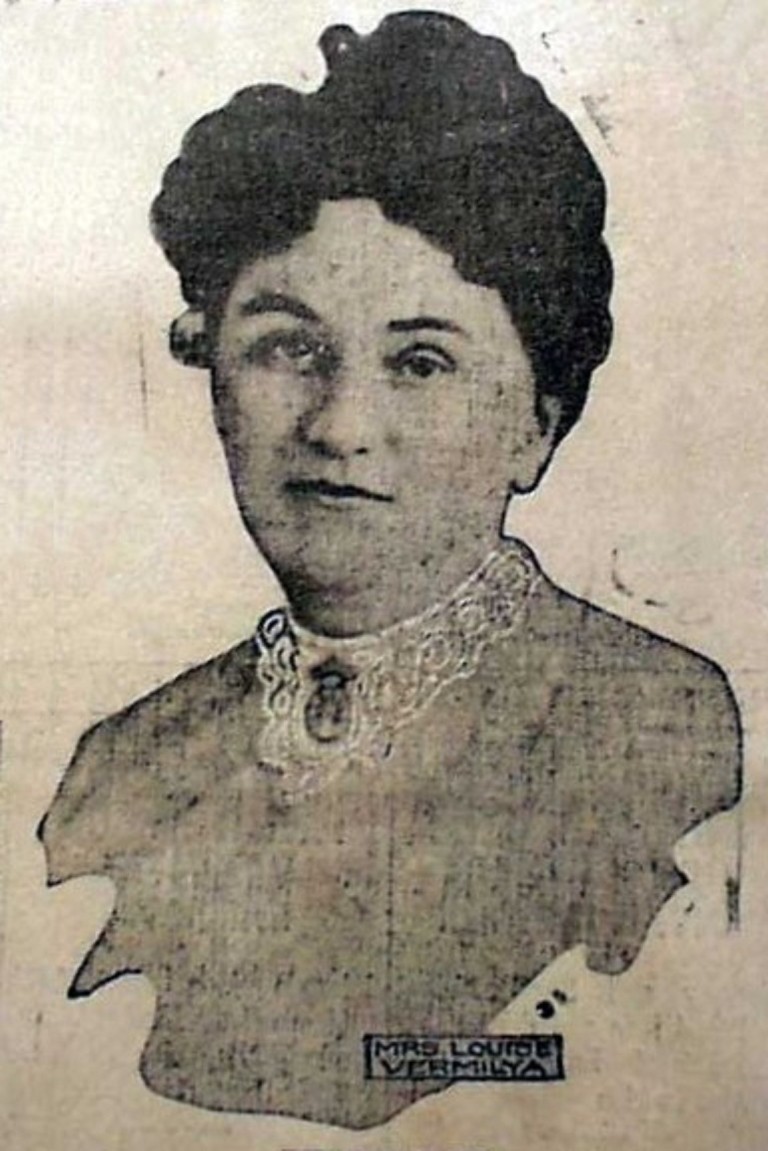
Louise Vermilya: The Alleged Chicago Arsenic Poisoner


Overview

Louise Vermilya was an American woman suspected of poisoning a succession of husbands, children, relatives, boarders, and acquaintances in Illinois between the 1890s and 1911. Newspapers portrayed her as a “black widow” poisoner after investigators connected her to an extraordinary number of sudden deaths. Authorities ultimately examined at least nine deaths associated with her, although the precise number of people she may have killed remains uncertain. Vermilya was charged in connection with two deaths and tried for one, but she was never convicted of murder. Much of the case against her was circumstantial, and several of the deaths had initially been attributed to ordinary illnesses. For that reason, she is more accurately described as a suspected serial killer rather than a legally proven one.

Early Life and Marriage

Louise was born Louesa Woolf in Illinois in July 1868. She was the daughter of Prussian immigrants and grew up in a large family. On April 2, 1885, when she was approximately sixteen years old, she married Fred Brinkamp. The couple lived on a farm near Barrington, Illinois, and had several children. A troubling pattern of deaths began developing within the Brinkamp household. Fred Brinkamp died following a brief illness during the 1890s. His death was initially attributed to natural causes, commonly reported as heart trouble or a stomach-related illness. Louise reportedly received approximately $5,000 from his life insurance policy. Two young daughters, Cora and Florence Brinkamp, also died while still children. Their deaths did not immediately generate a criminal investigation. At the time, childhood mortality remained relatively common, and doctors frequently diagnosed fatal illnesses without the laboratory testing available in later decades.

Deaths Surrounding Louise Vermilya

  • Fred Brinkamp: Louise’s first husband died in or around 1893 near Barrington, Illinois, after a brief illness. Contemporary accounts differed concerning the official diagnosis. Louise reportedly collected approximately $5,000 in insurance proceeds.
  • Cora Brinkamp: Louise’s daughter died in 1893 in the Barrington area at approximately seven or eight years old. An exact date of death is not consistently preserved in accessible historical records.
  • Florence Brinkamp: Another young daughter of Louise and Fred Brinkamp died before 1900 at approximately four and a half years old. The exact date and circumstances of her death remain uncertain.
  • Harry G. Vermilya: Louise’s stepson died on September 26, 1904, reportedly after quarreling with her over the proposed sale of family property in Crystal Lake, Illinois. His death was initially treated as natural.
  • An infant member of the Brinkamp family: A ten-day-old child connected to the family died on January 11, 1906. Historical reports later included the infant among the deaths examined during the Vermilya investigation, although evidence directly connecting Louise to the death was never established.
  • Lillian Brinkamp: A 26-year-old member of the Brinkamp family died in Chicago on January 21, 1906. Her death was attributed to acute nephritis, an inflammation of the kidneys. Some historical accounts described her as a stepdaughter, while genealogical records indicate that her precise relationship to Louise may have been more complicated.
  • Charles Vermilya: Louise’s second husband, a railroad employee, died at Maplewood in Chicago on August 1, 1909, following an illness lasting approximately six days. His death was attributed to acute gastritis. Louise reportedly received about $1,000 and obtained an interest in property in Crystal Lake.
  • Jason Rupert: A railroad fireman who visited or boarded at Louise’s Chicago residence became violently ill after eating there on January 15, 1910. He died on January 17, 1910. His symptoms were later regarded as consistent with arsenic poisoning, although Louise was not tried for his death.
  • Frank Brinkamp: Louise’s 23-year-old son died on October 30, 1910. He had reportedly received approximately $1,200 following a marital settlement or divorce, money that Louise was said to have inherited after his death. According to later reports, Frank expressed suspicion during his final illness that he was dying in the same manner as his father.
  • Richard T. Smith: An Illinois Central Railroad conductor and boarder in Louise’s home died in Chicago on March 11, 1911. He became ill after eating food prepared in the residence. His death was initially attributed to gastritis, but a later examination reportedly found a fatal quantity of arsenic in his organs. Louise was tried for his murder.
  • Arthur F. Bissonette: A 26-year-old Chicago police officer and boarder in Louise’s home died at Mercy Hospital in late October 1911. An autopsy detected arsenic in his body. His death brought the wider pattern surrounding Louise to the attention of police and led to her arrest.


The Death of Arthur Bissonette

Arthur Bissonette’s fatal illness became the turning point in the investigation. He had been staying at Louise’s residence when both he and his father became sick after sharing a meal there. The elder Bissonette survived and reportedly told investigators that he had observed Louise sprinkling a white substance over their food. She was said to have described it as white pepper. Arthur’s condition deteriorated, and he died after being taken to Mercy Hospital. Toxicological testing reportedly revealed arsenic in his organs. Investigators began reconsidering the numerous relatives and boarders who had suffered severe stomach symptoms or died after eating food prepared in Louise’s home. Police also investigated possible financial and personal motives. Louise had reportedly helped Bissonette obtain membership in an organization that offered an insurance benefit. There was discussion of an arrangement under which the two would name each other as beneficiaries after marriage. However, Bissonette’s will reportedly named his fiancée, Lydia Rivard of Kankakee, rather than Louise.

Arsenic and the “White Pepper”

Arsenic was a frequently used poison during the nineteenth and early twentieth centuries because it was readily available in household and agricultural products. Symptoms of arsenic poisoning could resemble severe gastritis, food poisoning, kidney disease, or other natural illnesses. Victims often experienced abdominal pain, vomiting, diarrhea, weakness, dehydration, and cardiovascular collapse. The alleged practice of disguising arsenic as white pepper became one of the most widely publicized details of the Vermilya case. Investigators believed that small quantities could have been added to meals without immediately attracting attention. Repeated doses could create a gradual illness, while a larger dose could cause rapid deterioration. Nevertheless, the mere presence of arsenic did not automatically prove murder. Some medications of the period contained arsenic, and environmental exposure was not unknown. This issue became particularly important during the proceedings concerning Arthur Bissonette.

Arrest and Reported Suicide Attempt

Louise was taken into custody in the autumn of 1911 and formally accused of poisoning Bissonette. While she was under guard, authorities reported that she began consuming a poisonous white powder herself. She became gravely ill and was transferred to a hospital. Her health continued to decline. Reports described serious heart problems, weakness, and partial or complete paralysis. She frequently appeared in court in a wheelchair. Prosecutors suspected that her apparent self-poisoning was a suicide attempt intended to prevent her from facing trial, although her attorneys emphasized that she was genuinely ill.

The Bissonette Charge

Louise was initially arraigned for Arthur Bissonette’s murder on November 6, 1911. Toxicologists had found arsenic in his body, and the pattern of illness appeared suspicious. However, investigators discovered that Bissonette had reportedly used medicine containing arsenic. Because the prosecution could not establish beyond a reasonable doubt that the arsenic had been secretly administered by Louise rather than consumed as part of a medical treatment, the Bissonette case weakened. The charge was dropped in March 1912.

The Richard Smith Murder Trial

Prosecutors then concentrated on the death of Richard T. Smith, believing it provided their strongest case. Smith had rented a room in Louise’s residence and was described as a railroad conductor. Reports also claimed that he and Louise had participated in some form of marriage ceremony, even though Smith remained legally married to an estranged wife. Smith became ill shortly after eating a meal prepared at Louise’s home and died on March 11, 1911. His original cause of death was recorded as gastritis. After suspicion fell upon Louise, Smith’s remains were examined. Professor Walter S. Haines, a respected toxicologist associated with Rush Medical College, reportedly found enough arsenic in Smith’s organs to have caused his death. The prosecution argued that Louise had knowingly administered the poison. The defense maintained that there was no witness who had seen her place arsenic in Smith’s food and no direct proof explaining how the poison entered his body. Questions also remained concerning motive. Unlike some of the deaths involving relatives, Smith’s death did not clearly produce a large insurance payment or inheritance for Louise. Her trial began in March 1912 and lasted more than two weeks. Prosecutors presented the sequence of suspicious deaths, the arsenic evidence, and testimony concerning Louise’s conduct. Her attorneys argued that the state was relying on rumor, sensational newspaper coverage, and unrelated family tragedies. The jury was unable to reach a unanimous verdict. The result was a hung jury rather than a conviction or acquittal. A later attempt to retry the matter also failed to produce a final determination of guilt.

Problems With the Prosecution

The Vermilya investigation demonstrated the limitations of early twentieth-century forensic medicine. Many suspected victims had been buried for years before authorities considered testing their remains. Decomposition, embalming chemicals, incomplete medical files, and uncertainty about arsenic-based medications complicated the interpretation of toxicology results. Prosecutors also had difficulty proving that Louise had personally administered poison. Most of the deaths had occurred inside homes without independent witnesses. Illnesses had been treated as natural at the time, and some evidence consisted of statements remembered years later by relatives, neighbors, and undertakers. The case was further influenced by intense press coverage. Louise was portrayed as a calculating woman who had surrounded herself with death for nearly two decades. During jury selection, numerous potential jurors admitted that newspaper stories had already convinced them of her guilt. Others stated that they were reluctant to impose the death penalty upon a woman.

Release and Final Outcome

Louise remained in custody for an extended period while prosecutors considered another trial. Because of her deteriorating health, she was eventually released on bail. Historical accounts conflict regarding the precise date of her death and the final procedural history of the charges. Contemporary court reporting indicates that the prosecution ultimately abandoned the remaining case because the available circumstantial evidence was unlikely to secure a conviction. No jury ever found Louise Vermilya guilty of murder. She therefore remained legally unconvicted despite the arsenic findings and the unusually large number of deaths connected to her family and household.

Possible Motives

Financial gain was considered a possible motive in several deaths. Louise reportedly received insurance money after Fred Brinkamp died, property and cash after Charles Vermilya’s death, and money connected to her son Frank’s estate. Historical writers have estimated that she may have obtained as much as $15,000 from the deaths, a substantial amount during that era. Money did not clearly explain every case. Jason Rupert, Richard Smith, and Arthur Bissonette were boarders or acquaintances whose deaths did not necessarily provide Louise with an immediate financial benefit. Investigators considered jealousy, control, personal conflict, and the removal of inconvenient relationships as additional possibilities. Some accounts suggested that Louise developed an unusual fascination with illness, funerals, and death. A Barrington undertaker later claimed that she frequently appeared at homes where deaths had occurred and showed an intense interest in mortuary work. Such recollections contributed to her sinister public image but did not constitute proof that she committed murder.

Historical Assessment

Louise Vermilya is commonly included in lists of American female serial killers, particularly among so-called black widow poisoners. The repeated pattern is difficult to dismiss: family members and boarders experienced sudden gastrointestinal illnesses, arsenic was discovered in at least some of the examined remains, and several deaths brought her insurance proceeds or property. At the same time, important uncertainties remain. The exact dates and relationships reported in later retellings are sometimes inconsistent, not every suspected victim was exhumed, and arsenic had legitimate medical and commercial uses. Some deaths may have resulted from natural disease, while others may have involved deliberate poisoning. The most responsible conclusion is that Vermilya was a credible suspect in multiple poisonings and may have been responsible for a series of murders extending over nearly eighteen years. However, the evidence available to prosecutors was never strong enough to establish her guilt beyond a reasonable doubt in court.

Legacy

The Vermilya case became one of Chicago’s most sensational poisoning investigations of the early twentieth century. It reflected widespread fears about arsenic, domestic poisoning, insurance murder, and the difficulty of detecting crimes committed inside private homes. Her case also illustrates how historical serial murder investigations can become entangled with folklore. Later writers often presented every death around her as a proven homicide, even though authorities only brought formal proceedings in connection with Bissonette and Smith. Separating documented evidence from newspaper sensationalism remains essential when examining her life. Louise Vermilya left behind no confession and received no murder conviction. The deaths surrounding her remain a mixture of documented arsenic exposure, suspicious financial circumstances, conflicting records, and unresolved allegations. More than a century later, she continues to be remembered as one of the most mysterious suspected female poisoners in American history.

Victims

See any mistakes? Let us know!
Confirmed Victims: (0)
Suspected Victims:
  • Fred Brinkamp , Date of Death: 1893
  • Cora Brinkamp , Date of Death: 1893
  • Florence Brinkamp , Date of Death: 1889
  • Harry G. Vermilya , Date of Death: 1904-09-26
  • An infant member of the Brinkamp family , Date of Death: 1906-01-11
  • Lillian Brinkamp Age: (26), Date of Death: 1906-01-21
  • Charles Vermilya , Date of Death: 1909-08-01
  • Jason Rupert , Date of Death: 1910-01-17
  • Frank Brinkamp Age: (23), Date of Death: 1910-10-30
  • Richard T. Smith , Date of Death: 1911-03-11
  • Arthur F. Bissonette Age: (26), Date of Death: 1911-10