James Samuel Walraven: The Bathtub Strangler
Overview
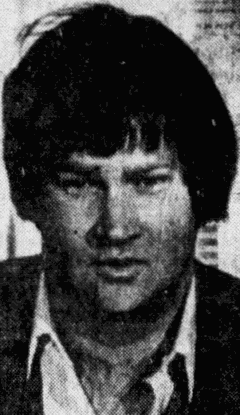
James Samuel Walraven was an American murderer and suspected serial killer associated with a series of attacks against young women in the Atlanta, Georgia, metropolitan area during the spring and early summer of 1981. The crimes became known as the “bathtub murders” because each of the three victims was found inside a bathtub at an apartment complex. Walraven was convicted only of murdering 22-year-old Giselle Yvonne Clardy, but investigators considered him the principal suspect in the remarkably similar deaths of Louise DalSanto and Patricia Berry.
All three victims were 22-year-old women who were strangled between April and June 1981. Their bodies were discovered in apartment bathrooms in DeKalb or Fulton County. The similarities in the victims’ ages, the method of killing and the placement of their bodies led detectives to suspect that one offender was responsible. The person committing the crimes appeared able to enter apartment buildings without immediately alarming residents, possibly by using a convincing pretext.
Early Life and Troubling Behavior
James Samuel Walraven was born on May 11, 1949, in Georgia. Accounts of his upbringing described a difficult family environment involving an alcoholic and abusive father. Walraven reportedly began exhibiting emotional and psychological problems while he was still in high school. As an adult, he experienced periods of unemployment and received treatment in mental-health institutions on several occasions.
Walraven frequently spent time around public tennis courts in Atlanta and DeKalb County. People who knew him described him as withdrawn, moody and emotionally unstable. He reportedly expressed deep feelings of inadequacy concerning women and his ability to form relationships. In June 1980, approximately one year before the bathtub murders, he was arrested after pointing a firearm at a tennis acquaintance named Jeff Campbell. The incident demonstrated that Walraven’s instability could become threatening and violent.
The Bathtub Murders
The series began in April 1981 when Louise DalSanto was found strangled in her apartment. Six weeks later, Giselle Yvonne Clardy was discovered dead under strikingly similar circumstances. A third victim, Patricia Berry, was found in June. All three women had been placed in bathtubs, and investigators believed that DalSanto and Clardy had been sexually assaulted before being killed.
- Louise DalSanto, 22 — April 15, 1981 — Woodcreek Apartments, Clarkston, Georgia: DalSanto was found strangled and lying face down in the bathtub of her apartment. Investigators found evidence indicating that she had been sexually assaulted. Walraven was later indicted in connection with her death, but he was never convicted of murdering her.
- Giselle Yvonne Clardy, 22 — May 29, 1981 — Cherry Hill Apartments, Brookhaven, Georgia: Clardy worked as an assistant manager at the apartment complex. She was found strangled in the bathtub of a vacant apartment. Investigators believed that she had also been sexually assaulted. This was the only bathtub murder for which Walraven was ultimately convicted.
- Patricia Berry, 22 — June 15, 1981 — Windermere Apartments, Fulton County, Georgia: Berry was found strangled in her bathtub with her own hair ribbon. Her death closely resembled the murders of DalSanto and Clardy. Walraven was questioned as the principal suspect, but he was not convicted or formally held responsible for Berry’s murder.
Attacks Preceding the Murders
While comparing the three killings, investigators examined reports of suspicious encounters and assaults at apartment complexes in the same general area. Two incidents from March 1981 became especially important because the surviving women could describe and later identify their attacker.
On March 3, 1981, Windermere Apartments resident Margaret Finnerty reported that a man entered her apartment after claiming that he needed to repair the plumbing. Once inside, the intruder attacked and strangled her until she lost consciousness. The apartment was searched, but the only item reported stolen was a World War II-era bayonet. Finnerty survived and was able to provide investigators with information about the attacker.
On March 16, Constance Harold encountered a man outside her apartment who appeared to be delivering flowers. When Harold opened her door, the man attempted to force his way inside. She succeeded in closing and securing the door before calling the police. Investigators believed these incidents demonstrated how the offender could approach women and gain access to apartment buildings by pretending to be a maintenance worker or deliveryman.
The Investigation and Arrest
After Patricia Berry became the third woman found strangled in a bathtub, detectives compared the physical descriptions supplied by Finnerty, Harold and witnesses around the apartment complexes. A composite drawing was distributed, and information received during the investigation eventually directed police toward Walraven.
Walraven was 32 years old when DeKalb County police arrested him on July 14, 1981. He was initially charged with the rape and murder of Giselle Clardy and was questioned about the other bathtub deaths. Finnerty and Harold subsequently identified him as the man involved in the earlier apartment attacks.
Investigators did not have a fingerprint or other definitive piece of physical evidence connecting Walraven to all three murder scenes. The case against him therefore depended heavily on eyewitness identifications, statements attributed to him and testimony placing him near Clardy shortly before her death.
Evidence in the Clardy Case
A mechanic named James Buffington testified that he saw Walraven speaking with Giselle Clardy in the parking area of the Cherry Hill Apartments shortly before she was murdered. This testimony placed Walraven near Clardy and the apartment complex during the critical period surrounding her death.
Another major prosecution witness was David Zorda, an inmate who had been confined in the DeKalb County Jail with Walraven. Zorda claimed that Walraven made an incriminating statement in which he admitted killing the women. Walraven denied responsibility and maintained that he had not committed the bathtub murders.
The identifications by Margaret Finnerty and Constance Harold strengthened the prosecution’s portrayal of Walraven as a man who used false explanations to approach women in apartment buildings. Prosecutors argued that the attempted intrusions and strangulation attack displayed a pattern that was consistent with the later murders.
Trial, Death Sentence and Reversal
Walraven went on trial for the murder of Giselle Clardy in November 1981. His defense emphasized the absence of fingerprints and conclusive forensic evidence tying him to the crime scene. Walraven testified and continued to insist that he was innocent.
On November 16, 1981, the DeKalb County jury found him guilty of Clardy’s murder. The jury subsequently sentenced him to death in Georgia’s electric chair. However, the Supreme Court of Georgia reversed the conviction in November 1982 after finding serious errors in the original proceedings. The reversal did not declare Walraven innocent; it required that the case be reconsidered through further legal proceedings.
Walraven was later convicted again in connection with Clardy’s murder and received a life sentence rather than another death sentence. He remained imprisoned for the rest of his life. Although authorities strongly suspected that he had also killed Louise DalSanto and Patricia Berry, those two deaths did not result in murder convictions against him.
Questions Surrounding the Other Victims
The murder of Giselle Clardy was the only killing legally established against Walraven. His classification as a serial killer therefore remains qualified, and he is more accurately described as a convicted murderer and suspected serial killer. Nevertheless, the similarities among the three cases were substantial: each victim was 22 years old, each was strangled, each was found in an apartment bathtub and all three deaths occurred within approximately two months in metropolitan Atlanta.
Walraven’s identification by survivors of earlier apartment attacks provided an additional circumstantial connection. One of those attacks occurred at the same apartment complex where Patricia Berry was later killed. Investigators believed the crimes reflected an offender who watched apartment communities, created believable reasons to approach residents and attacked women after obtaining access to private areas.
Without a confession supported by independently verified evidence or a conviction in the DalSanto and Berry cases, responsibility for those murders could not be established beyond a reasonable doubt. Walraven’s imprisonment also meant that prosecutors had less practical incentive to pursue additional trials based primarily on circumstantial evidence.
Death in Prison
James Samuel Walraven remained incarcerated in Georgia for more than two decades. On April 16, 2004, he was found dead at Jimmy Autry State Prison in Pelham, Georgia. The 54-year-old prisoner had hanged himself using material torn from a bedsheet.
Walraven died without publicly resolving the questions surrounding the murders of Louise DalSanto and Patricia Berry. His conviction established his responsibility for Giselle Clardy’s death, while the other two bathtub murders remained attributed to him only as suspected crimes.
Legacy of the Case
The bathtub murders created intense fear among apartment residents in the Atlanta area during 1981. The killer’s apparent use of ordinary disguises or explanations made the crimes especially disturbing. A maintenance request, a flower delivery or another routine interaction could be used to persuade a resident to open her door.
The investigation also demonstrated the challenges of prosecuting linked murders without strong physical evidence. Similar victim profiles and crime-scene characteristics may persuade investigators that offenses are connected, but each individual charge must still be proven in court. In Walraven’s case, prosecutors obtained a conviction for Clardy’s murder but could not establish his responsibility for the complete series through separate convictions.
Today, James Samuel Walraven is remembered by the nickname “The Bathtub Strangler.” The name refers to a short but terrifying sequence of crimes that ended the lives of three young women in Georgia. Giselle Yvonne Clardy remains his only confirmed murder victim, while Louise DalSanto and Patricia Berry are generally identified as suspected victims whose cases were never conclusively resolved in court.