Kelvin Shelby Malone: A Deadly Interstate Crime Spree
Overview
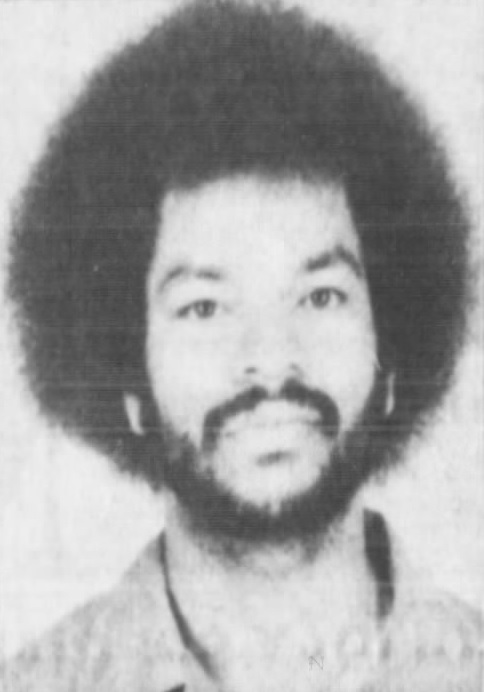
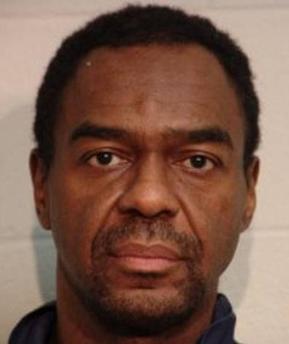
Kelvin Shelby Malone was an American murderer whose violent crimes stretched across Missouri and California during a concentrated interstate crime spree in March 1981. Although he is sometimes described as a serial killer, his murders occurred within a period of only several days, making the term spree killer a more precise classification. Malone was convicted of murdering three people and was also accused or suspected of killing at least one additional victim whose body was never recovered.
Malone committed many of his crimes with Michael Terry Crenshaw, an associate he met in Missouri before the two traveled west through a succession of robberies, kidnappings and killings. Their victims included a taxi driver, a stranded motorist, a service-station cashier and a Kansas City man whose automobile was stolen. Malone used two .25-caliber semiautomatic pistols during the crime spree, while a metal pipe was used in one particularly brutal murder.
Escape and the Beginning of the Crime Spree
Before the murders began, Malone escaped from custody in Monterey County, California. On March 10, 1981, he participated in the armed robbery of a service station in Arroyo Grande. An accomplice carried a shotgun while Malone disabled the station telephone and took the keys to a vehicle belonging to the attendant’s fiancée.
On March 11, Malone kidnapped Leroy Combs, whose surname has also appeared in some accounts as Cambs. Malone obtained a ride from Combs in the Santa Maria area and then produced a gun. He forced Combs to drive toward Los Angeles and eventually ordered him into the trunk of the automobile. Unlike Malone’s later victims, Combs survived. Malone ultimately released him near Long Beach after holding him captive for several hours.
Malone then traveled by bus to St. Louis, Missouri, where he joined Michael Crenshaw. The two men planned to finance their return to California through robberies and thefts. That plan quickly escalated into a series of kidnappings and murders.
The Murder of William Parr
During the early morning hours of March 18, 1981, Malone arrived in downtown St. Louis carrying two .25-caliber pistols. William Parr, a 62-year-old taxi driver, was dispatched to pick up a passenger near the Greyhound bus station. Several hours later, Parr was found dead in a St. Louis park with a gunshot wound to the head.
Parr’s abandoned taxicab was discovered near Crenshaw’s residence. Ballistics evidence later established that the bullet recovered from Parr’s body had been fired from Malone’s Galesi .25-caliber pistol. Malone was eventually convicted of Parr’s murder in Missouri and sentenced to death.
The Disappearance of James T. Rankin
After Parr’s murder, Malone and Crenshaw traveled to Kansas City. There they encountered 39-year-old James T. Rankin near a downtown restaurant. Rankin disappeared along with his blue Buick, credit cards, jewelry and personal belongings.
Evidence established that Malone and Crenshaw took Rankin’s vehicle and used it to continue their journey west. Rankin’s credit cards and tape recorders were later found in the men’s possession. According to testimony presented during Malone’s legal proceedings, Rankin had been placed in the trunk of his own automobile and driven toward California.
A jailhouse witness testified that Malone admitted removing Rankin from the trunk in an isolated area, forcing him to plead for his life and then shooting him. Malone was also alleged to have partially covered the body with dirt and a tarp. Rankin was never seen again, and his remains were never recovered. Because the exact location and date of his death could not be independently established, Malone was not prosecuted for Rankin’s suspected murder.
The Murder of Myrtle Dee Benham
On March 20, 1981, Malone and Crenshaw stopped at an Exxon service station in Baker, California. The station was staffed by 55-year-old Myrtle Dee Benham. Malone entered carrying two pistols, robbed the station and forced Benham into the vehicle.
The men drove Benham into the desert near Daggett in San Bernardino County. At an abandoned shack, Benham was sexually assaulted and beaten in the head with a metal pipe. She died at the scene on March 20. Her body was discovered approximately one week later inside the shack.
Investigators connected Malone to Benham through physical evidence and stolen property. When he was arrested, he possessed rings belonging to both Benham and another victim. Testimony also indicated that Malone admitted killing Benham while speaking to another prisoner. A California jury convicted him of first-degree murder, robbery and kidnapping for robbery, and it found multiple special circumstances that made him eligible for the death penalty.
The Murder of Minnie Ola White
Only one day after Benham’s murder, Malone and Crenshaw encountered 51-year-old Minnie Ola White in the desert north of Blythe, California. White was robbed, forced into the trunk of her own automobile and shot with a .25-caliber pistol.
Her body was found inside the trunk on March 21, 1981, approximately 14 miles north of Blythe near Vidal Junction. Investigators determined that the fatal bullet had been fired from a Raven .25-caliber pistol later thrown from Malone and Crenshaw’s vehicle during a police pursuit.
White’s credit cards and jewelry were found in Malone’s possession or in the stolen automobile he was driving. Tissue consistent with White’s blood type was also found on Malone’s trousers. Malone was convicted of her first-degree murder in California and received a life sentence for that killing.
Known and Suspected Victims
- William Parr, 62 — March 18, 1981 — St. Louis, Missouri: Parr was a taxi driver who was shot through the head after being dispatched near the downtown Greyhound station. His cab was abandoned close to Michael Crenshaw’s residence. Ballistics evidence connected the fatal bullet to Malone’s Galesi .25-caliber pistol. Malone was convicted of Parr’s murder.
- James T. Rankin, 39 — Presumed killed around March 19 or March 20, 1981 — Abducted in Kansas City, Missouri; suspected murder location in the western desert: Rankin disappeared after Malone and Crenshaw took his automobile, credit cards and other belongings. Testimony indicated that Malone confessed to shooting him after transporting him in the trunk. Rankin’s body was never recovered, and Malone was never charged with his suspected murder.
- Myrtle Dee Benham, 55 — March 20, 1981 — Near Daggett, San Bernardino County, California: Benham was kidnapped while working at a service station in Baker, robbed, sexually assaulted and beaten to death with a metal pipe in an abandoned desert shack. Malone was convicted of her murder and sentenced to death in California.
- Minnie Ola White, 51 — March 21, 1981 — Near Blythe and Vidal Junction, Riverside County, California: White was robbed, forced into the trunk of her automobile and fatally shot. Her body was found in the trunk, and the fatal bullet was linked to a pistol associated with Malone and Crenshaw. Malone was convicted of her murder.
- Unidentified possible victim — Approximately March 11, 1981 — Merced County, California: Malone was reportedly suspected of involvement in an additional homicide committed during the early portion of his crime spree. Publicly available details about the victim and the circumstances are limited, and Malone was not prosecuted in connection with the death.
Arrest and Physical Evidence
Malone and Crenshaw were arrested in San Jose, California, on March 24, 1981. Police officers found the men sleeping in a running automobile. When officers approached, Malone attempted to drive away, knocking one officer down and beginning a high-speed pursuit. The chase ended when the fleeing vehicle collided with a police car.
During the pursuit, a Raven .25-caliber pistol was thrown from the vehicle. A second weapon, the Galesi .25-caliber pistol, was discovered beneath the driver’s seat. Police also recovered credit cards belonging to Minnie Ola White and James Rankin, Rankin’s tape recorders and jewelry belonging to White and Myrtle Benham.
The firearms became especially important pieces of evidence. The Raven pistol was connected to White’s murder, while the Galesi pistol was linked to Parr’s fatal shooting. The stolen property demonstrated the continuity of a crime spree that had crossed several states in less than a week.
Trials and Death Sentences
Malone was tried separately for crimes committed in California and Missouri. In California, he was convicted of murdering Myrtle Benham and Minnie Ola White. He received a life sentence for White’s murder and was sentenced to death on June 14, 1983, for the kidnapping, robbery and murder of Benham.
The California Supreme Court upheld Malone’s death sentence on November 3, 1988. The court concluded that substantial evidence connected him to Benham’s murder, including his admitted participation in the robbery and kidnapping, his possession of her jewelry and testimony concerning his alleged confession.
In Missouri, Malone was convicted of the first-degree murder of William Parr. On April 26, 1984, he received a second death sentence. He remained imprisoned on California’s death row at San Quentin State Prison for many years while legal proceedings continued in both states.
Michael Terry Crenshaw
Crenshaw participated in the interstate crime spree and was present during several of the killings. His testimony became a major part of the prosecution’s case against Malone, although defense attorneys argued that Crenshaw had reasons to minimize his own role and place greater blame on Malone.
Crenshaw pleaded guilty or was convicted in connection with the murders and received a sentence of 25 years to life. The precise responsibility of each man was disputed during Malone’s trials, but courts concluded that Malone was either the direct killer or an intentional participant in the robberies, kidnappings and murders.
Execution
After spending more than 15 years under death sentences, Malone was extradited from California to Missouri on December 30, 1998. Missouri officials carried out the death sentence imposed for William Parr’s murder.
Kelvin Shelby Malone was executed by lethal injection at the Potosi Correctional Center on January 13, 1999. He was pronounced dead at 1:20 a.m. and reportedly made no final statement.
Legacy of the Case
Malone’s crimes demonstrated how rapidly an armed robbery and escape effort could develop into an interstate campaign of kidnapping and murder. Within days, victims were attacked in Missouri and California, vehicles and identities were stolen, and evidence was scattered across hundreds of miles.
Three murders resulted in convictions, while the disappearance of James Rankin remained an unresolved element of the case because his body was never found. Questions also remained about the unidentified Merced County victim and whether Malone committed other crimes that were never conclusively connected to him.
Although often included in lists of serial killers, Malone is more accurately remembered as a spree killer whose known murders occurred during a brief but extraordinarily violent journey. The convictions in California and Missouri, supported by ballistics, stolen property, witness testimony and Malone’s reported admissions, ultimately resulted in two separate death sentences and his execution in 1999.