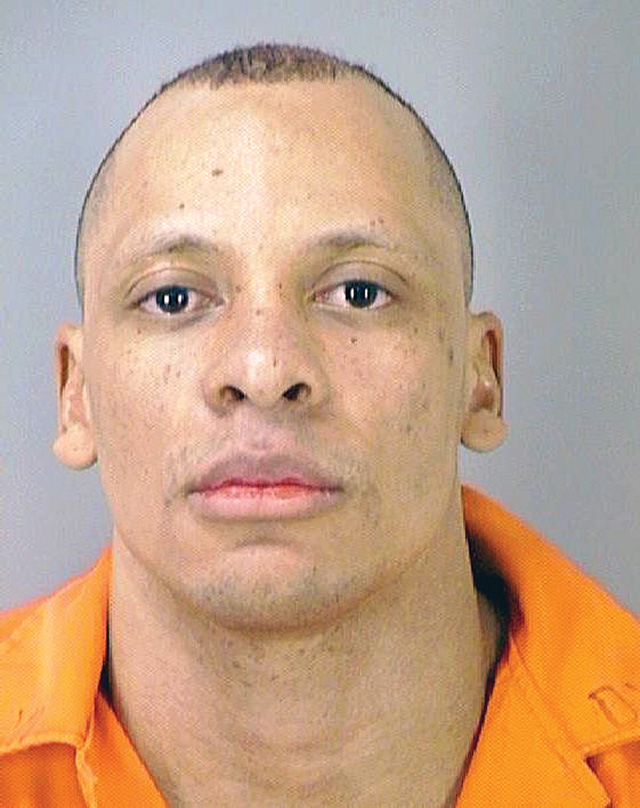
Anthony Guy Walker: Michigan Serial Killer and Contract Murderer
Background
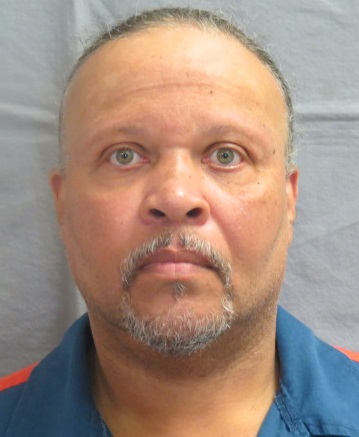
Anthony Guy Walker was born on July 11, 1957, in Adrian, Michigan. He became a violent repeat offender whose crimes included sexual assault, abduction, armed robbery and murder. Walker is known to have been responsible for at least six deaths in Michigan between 1975 and 1986, although allegations later emerged that his actual victim count may have been considerably higher.
Walker’s documented murders did not follow a single pattern. Some victims were apparently selected during burglaries, while others were killed for money or through arrangements made with other criminals. His known crimes included the killing of a young woman whose body was abandoned in a field, a triple homicide committed inside a family home, a suspected contract killing and the murder-for-hire of a fellow prisoner.
Early Violence and the Death of Arleen Salcedo
Walker later admitted responsibility for the death of 24-year-old Arleen Salcedo. Her decomposed body was discovered on September 22, 1975, in a field approximately two miles south of Blissfield, Michigan. Because of the condition of her remains, investigators were unable to establish a precise date or cause of death.
The case remained unsolved for decades. Walker was not prosecuted for Salcedo’s death, but he eventually acknowledged killing her while discussing his other crimes with investigators and attorneys. Since the precise day of her death was never conclusively determined, September 22, 1975, represents the date her body was found rather than a verified date of death.
Later in 1975, Walker was arrested after kidnapping and sexually assaulting a woman in Adrian. The kidnapping allegation was dropped as part of the court proceedings, but Walker pleaded guilty to second-degree criminal sexual conduct and was imprisoned. He was paroled in early January 1979, only days before committing the crime that would eventually result in three murder convictions.
The West Maple Avenue Triple Murder
On January 15, 1979, Walker entered a residence on West Maple Avenue in Adrian while apparently searching for a home to burglarize. Inside were 24-year-old Yolanda Torres Madison, her 11-month-old daughter Jessica Madison and Yolanda’s 19-year-old friend, Theresa Carey.
Walker restrained and assaulted the two women before shooting them. He then took money and other property from the residence. A fire was started inside the home, apparently in an effort to destroy evidence and conceal the killings. Yolanda and Theresa had already been fatally wounded, while Jessica died from the effects of the fire and smoke.
Yolanda’s brother, Francisco “Tito” Torres, arrived at the residence and became concerned when no one responded at the door. After noticing smoke, he summoned firefighters. Emergency personnel extinguished the blaze and discovered the bodies of the two women and the infant inside.
Investigators suspected Walker at the time and reportedly placed him near the scene, but the available evidence was not sufficient to charge him. The murders remained unresolved for more than three decades. Advances in forensic testing, combined with additional witness information, eventually allowed investigators to reopen the case and build a prosecution against him.
The Killing of Floyd Beatty
Walker also admitted killing 28-year-old Floyd Beatty in Manchester, Michigan, in March 1979. According to accounts of Walker’s confession, an unidentified person paid him approximately $2,000 to carry out the murder. Walker described the killing as a contract arranged in connection with criminal or drug-related activity.
Beatty was killed on March 1, 1979, and his body was reportedly discovered the following morning near the rear entrance of his Manchester residence. Although Walker admitted his role many years later, he was not separately prosecuted for Beatty’s murder under the agreement connected to his confessions.
Additional Sexual Violence and Imprisonment
In September 1979, Walker approached three teenage students who were away from school in Adrian. Pretending to be an off-duty police officer, he ordered them into his vehicle and drove them to his residence. Once there, he attempted to sexually assault one of the girls. The teenagers survived and were eventually returned to the downtown area.
Walker was arrested and convicted of assault. Because of his previous criminal record, he received a prison term of approximately 10 to 15 years as a habitual offender. His imprisonment did not end his involvement in lethal violence.
The Prison Murder of Daniel A. Staggs
While confined at the Southern Michigan Prison complex near Jackson, Walker arranged the killing of fellow inmate Daniel Albert Staggs. Staggs was 40 years old and was serving a life sentence for armed robbery.
Staggs was stabbed to death in Cell Block 4 on July 5, 1986. Walker later admitted that he had paid or otherwise recruited another prisoner to carry out the attack. The inmate believed to have physically committed the stabbing was never successfully prosecuted and was later reported to have died.
The killing demonstrated Walker’s ability to orchestrate violence even while incarcerated. As with the Salcedo and Beatty cases, Walker was not independently tried for Staggs’ death after providing information about his involvement.
Known and Admitted Victims
- Arleen Salcedo, 24 — Her decomposed body was found on September 22, 1975, in a field approximately two miles south of Blissfield, Michigan. Her exact date and cause of death could not be determined. Walker later admitted killing her.
- Yolanda Torres Madison, 24 — Shot and killed on January 15, 1979, inside her home on West Maple Avenue in Adrian, Michigan. Walker burglarized the residence and participated in an attempt to conceal the crime by fire.
- Theresa Carey, 19 — Shot and killed on January 15, 1979, while visiting Yolanda Madison’s residence in Adrian, Michigan.
- Jessica Madison, 11 months — Died from smoke inhalation on January 15, 1979, after a fire was started inside the Adrian residence where her mother and Theresa Carey had been killed.
- Floyd Beatty, 28 — Killed on March 1, 1979, in Manchester, Michigan. His body was discovered near the back of his home the following morning. Walker said he had been paid approximately $2,000 to commit the murder.
- Daniel Albert Staggs, 40 — Stabbed to death on July 5, 1986, in Cell Block 4 of the Southern Michigan prison complex near Jackson, Michigan. Walker admitted arranging the murder through another inmate.
Release, New Sexual Assault Convictions and Life Imprisonment
Walker was released from prison in June 1993. His freedom lasted for less than two years. In December 1994, he was arrested in Wayne County in connection with additional sexual offenses.
A jury convicted Walker of two counts of first-degree criminal sexual conduct. He received a life sentence, along with a concurrent term of 15 to 30 years. A Michigan appellate court later upheld those convictions.
The Cold-Case Investigation
By 2010, investigators had renewed their examination of the 1979 West Maple Avenue murders. Forensic developments and testimony unavailable during the original investigation helped authorities establish a case against Walker more than 30 years after the deaths.
Walker eventually pleaded guilty to three counts of first-degree murder for the deaths of Yolanda Madison, Theresa Carey and Jessica Madison. He admitted shooting Yolanda and Theresa but disputed responsibility for deliberately causing Jessica’s death, maintaining that he had not intentionally killed the infant. Legally, however, he was held responsible for all three deaths because the child died during the fire associated with the murders and burglary.
During the proceedings, Walker also admitted killing Arleen Salcedo and Floyd Beatty and arranging the murder of Daniel Staggs. Those admissions brought the number of known victims connected to him to at least six.
Sentencing
On January 21, 2011, Walker was sentenced in Lenawee County to three terms of life imprisonment for the Madison-Carey murders. The life sentences ensured that he would remain incarcerated for the remainder of his life.
At sentencing, relatives of the victims described decades of grief, uncertainty and anger caused by the unresolved murders. Walker reportedly displayed little remorse. His punishment for the triple homicide was imposed in addition to the life sentence he was already serving for his later sexual assault convictions.
Claims of Additional Murders
Walker’s defense attorney, Robert Jameson, stated that Walker had described numerous other killings and provided locations, dates and circumstances connected to possible victims. Jameson suggested that Walker may have been responsible for more than 30 deaths in Michigan and possibly other states.
Walker was also alleged to have claimed that he had killed several people before reaching adulthood. These claims were never fully substantiated through public prosecutions, identified remains or independently confirmed investigations. Consequently, Walker’s recognized victim count remains at least six rather than the much larger number attributed to him by his attorney.
The uncertainty surrounding those statements has left open the possibility that Walker participated in additional contract killings or opportunistic murders. However, unverified claims must be distinguished from the six deaths for which he confessed or was convicted.
Criminal Significance
Anthony Guy Walker’s case stands out because his known murders occurred under markedly different circumstances. He killed during apparent robberies, accepted money to commit a homicide and arranged a fatal attack while imprisoned. His history of sexual violence also continued across many years, interrupted by incarceration but not permanently stopped by it.
The West Maple Avenue investigation further demonstrated how a cold case can remain unresolved for decades before forensic improvements and renewed witness cooperation provide sufficient evidence for prosecution. Walker escaped accountability for the 1979 triple murder for more than 30 years, but the case was ultimately brought before a court and resulted in three life sentences.
Although allegations of a far greater death toll remain unproven, Walker is firmly established as a serial murderer responsible for at least six deaths. His documented criminal history reflects a prolonged pattern of predatory violence, calculated killing and repeated offending that continued both outside and inside Michigan’s prison system.