Alberd Tersargyan: The Little Armenia Murders
Background
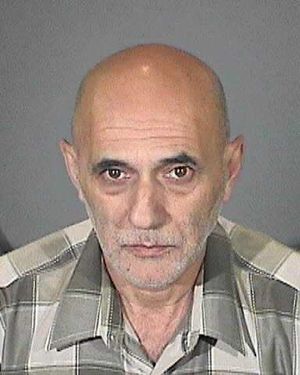
Alberd Tersargyan was an Armenian-American suspected serial killer accused of committing four fatal shootings in the Hollywood and East Hollywood neighborhoods of Los Angeles, California, between December 2008 and March 2010. His name was also reported as Albert Tersargyan, and he was sometimes identified by the alternate name Albert Huratunyan.
Born in the Armenian Soviet Socialist Republic in approximately 1951, Tersargyan reportedly served in the military before immigrating to the United States with his wife. The couple settled in the Little Armenia area of Los Angeles, where Tersargyan obtained work at a cabinet-manufacturing business. He became acquainted with Armenian immigrants Khachik Safaryan and Karine Hakobyan, a married couple raising two young daughters in Hollywood.
The two families initially shared a close friendship and occasionally spent vacations together. Investigators later alleged that Tersargyan developed an obsessive romantic interest in Hakobyan. Although she repeatedly rejected his advances, he reportedly continued pursuing her and became increasingly resentful of her marriage.
Obsession with Karine Hakobyan
According to the prosecution’s theory, Tersargyan attempted to destroy the marriage between Hakobyan and Safaryan. Safaryan allegedly confided in Tersargyan that he had been communicating with a former girlfriend in Armenia. Tersargyan then disclosed this information to Hakobyan, apparently expecting her to leave her husband.
Hakobyan instead decided to remain in the marriage. Investigators believed that her refusal to separate from Safaryan intensified Tersargyan’s anger. Safaryan subsequently received an anonymous letter threatening him with harm unless he left the United States. Authorities later viewed the threatening message as part of the escalating campaign against the family.
The Murders of Khachik and Lusine Safaryan
On the morning of December 11, 2008, a gunman entered the Safaryan family’s residence at 1227 Tamarind Avenue in Hollywood. There were no obvious signs of forced entry, suggesting that the killer may have been admitted by someone inside or possessed enough familiarity with the household to enter without immediately causing alarm.
Khachik Safaryan, 43, and his 8-year-old daughter, Lusine Safaryan, were each shot in the head. Police estimated that the shootings occurred between approximately 7:30 and 8:00 that morning. The victims were left inside the home while the gunman escaped without being identified.
Later that day, Safaryan’s surviving 12-year-old daughter returned home and discovered the bodies of her father and younger sister. The double homicide devastated the family and alarmed members of Los Angeles’ Armenian community. With no clear eyewitness and no apparent evidence of burglary, detectives initially struggled to establish a motive or identify a suspect.
Tersargyan was questioned because of his friendship with the family. During those early conversations, he reportedly failed to disclose the extent of his feelings for Hakobyan. Without that information, investigators did not immediately recognize him as a potential suspect, and the murders remained unsolved for more than a year.
The Shooting of Julie Ann Kates
On March 11, 2010, 46-year-old Julie Ann Kates was waiting near a bus stop at Sunset Boulevard and Kingsley Drive in East Hollywood when she suddenly collapsed. Witness information later indicated that she had been shot from across the street by a man associated with a dark gray van.
The attack was described as sniper-like because the gunman apparently fired from a distance and escaped before bystanders fully understood what had happened. The weapon may have been fitted with a suppressor, as the shooting was not immediately recognized as gunfire.
Kates was transported for emergency treatment but died on March 12, 2010. Investigators learned that a man believed to be a former client had accused her of stealing a DVD player. Prosecutors later alleged that Tersargyan was the distant shooter responsible for her death. The Kates murder initially appeared unrelated to the Safaryan family killings, but firearms evidence would eventually connect the cases.
The Murder of Karine Hakobyan
After the deaths of her husband and daughter, Hakobyan moved with her surviving child to another apartment only a few blocks away. Despite the relocation, the person targeting the family apparently knew where she was living and continued watching her movements.
On March 26, 2010, the 38-year-old nursing assistant returned from work and parked her Honda CR-V in the carport of her apartment complex in the 5800 block of Lexington Avenue in Hollywood. Before she could safely enter her residence, someone approached the vehicle and shot her in the back of the head.
Hakobyan’s surviving daughter, who was then 14, returned to the apartment and became concerned when her mother was not inside. She went to the parking area and discovered Hakobyan slumped behind the wheel. It was the second time the child had found members of her immediate family murdered.
The circumstances strongly suggested that Hakobyan had been specifically targeted. Nothing indicated that the shooting was a random robbery or an impulsive confrontation. Detectives began reexamining the earlier deaths of her husband and daughter, recognizing that three members of the same family had now been killed in carefully executed shootings.
Victims
- Khachik Safaryan, 43: Shot in the head on December 11, 2008, inside his family’s home at 1227 Tamarind Avenue in Hollywood, Los Angeles. His body was discovered by his surviving daughter.
- Lusine Safaryan, 8: Shot and killed with her father on December 11, 2008, inside the Tamarind Avenue residence. Police estimated that both murders occurred between approximately 7:30 and 8:00 in the morning.
- Julie Ann Kates, 46: Shot near Sunset Boulevard and Kingsley Drive in East Hollywood on March 11, 2010. She died from her injuries on March 12, 2010. Prosecutors described the attack as a sniper-style shooting from across the street.
- Karine Hakobyan, 38: Shot in the back of the head on March 26, 2010, while seated in her vehicle in the carport of an apartment complex in the 5800 block of Lexington Avenue in Hollywood.
The Investigation and Arrest
The investigation changed direction after one of Tersargyan’s coworkers noticed that he was carrying a firearm and behaving unusually. The coworker reported his concerns to an Armenian-American police officer in Glendale, who passed the information to Los Angeles investigators.
Detectives began examining Tersargyan’s relationship with the Safaryan family and learned of his alleged fixation on Hakobyan. The discovery provided a possible motive that had not been apparent during the investigation of the 2008 double homicide.
Tersargyan was taken into custody in April 2010 on firearms-related allegations. During searches connected to the arrest, investigators recovered several handguns and rifles. At least one of the weapons was believed to be unregistered.
Ballistics testing reportedly matched a small-caliber handgun recovered from Tersargyan to the weapon used to kill Hakobyan. Additional forensic examinations connected firearms associated with him to the Safaryan and Kates shootings. The ballistic links allowed prosecutors to treat what had initially appeared to be separate crimes as the work of one suspected killer.
Murder Charges
Tersargyan was first charged with the murder of Karine Hakobyan in April 2010 and was ordered held without bail. On August 3, 2010, prosecutors filed three additional murder charges involving Khachik Safaryan, Lusine Safaryan and Julie Ann Kates.
A Los Angeles County grand jury later indicted him on four counts of murder. Prosecutors alleged that the family killings were motivated by his obsession with Hakobyan and his anger over her refusal to begin a relationship with him. The indictment also included the apparently separate killing of Kates, which authorities connected to him through ballistics evidence.
The charges made Tersargyan eligible for the death penalty. However, the allegations were never tested before a jury. Although he pleaded not guilty, extensive legal proceedings and questions involving his physical and mental health delayed the case for years.
Death Before Trial
While awaiting trial, Tersargyan reportedly developed worsening symptoms of Alzheimer’s disease. Court records also documented concerns about suicidal thoughts and his ability to participate meaningfully in his defense.
On April 1, 2018, Alberd Tersargyan died by suicide while confined at the Men’s Central Jail in Los Angeles. He was approximately 66 or 67 years old. His death ended the criminal prosecution before a trial could determine his guilt.
Because Tersargyan died before trial, he was never convicted of the four murders. The case against him nevertheless rested on the alleged motive involving Hakobyan, witness information, the circumstances surrounding the victims and the ballistic evidence that prosecutors said connected his firearms to the fatal shootings.
Legacy of the Case
The killings associated with Tersargyan were particularly disturbing because three of the victims belonged to the same family. The surviving daughter endured the deaths of her father, younger sister and mother, discovering the aftermath of both attacks herself.
The case also demonstrated how vital undisclosed personal relationships can be in a homicide investigation. Tersargyan had initially appeared to be a family friend and cooperative witness. Only after investigators learned of his alleged romantic obsession did his connection to the victims take on a more threatening meaning.
Although prosecutors classified the four deaths as linked murders committed over more than a year, Tersargyan’s suicide left significant questions unresolved. No courtroom testimony publicly established the complete sequence of events, and the precise circumstances of each shooting were never examined through a completed criminal trial.