The Oakland County Child Killer
An Unidentified Killer Who Terrorized Michigan
The Oakland County Child Killer is the name given to the unidentified person, or possibly group of people, responsible for the abductions and murders of four children in suburban Detroit, Michigan, during 1976 and 1977. The victims were Mark Douglas Stebbins, Jill Robinson, Kristine Marie Mihelich and Timothy John King. All four lived in communities within Oakland County, although one victim was ultimately found in neighboring Wayne County. The children ranged from 10 to 12 years old, and each disappeared during cold-weather months after leaving home for an ordinary activity.
The crimes became especially frightening because the children were not killed immediately after being abducted. Investigators determined that they had been held captive for periods ranging from several days to nearly three weeks. Evidence indicated that the captor fed the children, kept them in a sheltered location and, in some cases, bathed or groomed them and cleaned their clothing. The victims were then killed and deliberately placed in exposed locations where their bodies were likely to be discovered. These repeated behaviors convinced investigators that the four murders were connected.
Confirmed Victims
- Mark Douglas Stebbins — February 19, 1976 — Southfield, Michigan: Mark was 12 years old and lived in Ferndale. He disappeared on February 15, 1976, after leaving an American Legion hall where he had been watching a pool tournament. Four days later, on February 19, his body was found in the parking lot of an office building on West 10 Mile Road in Southfield, approximately two and a half miles from his home. He had been strangled, bound at the wrists and ankles and sexually assaulted with an object. Injuries to the back of his head suggested that he had also been struck. Investigators concluded that Mark had been held captive before his death.
- Jill Robinson — December 26, 1976 — Troy, Michigan: Jill was a 12-year-old Royal Oak resident who left home on her bicycle on December 22, 1976, after an argument with her mother. Her bicycle was later found behind a hobby store in Royal Oak. On the morning of December 26, Jill’s body was discovered beside northbound Interstate 75 near Big Beaver Road in Troy, within sight of the Troy police station. She had been killed by a shotgun blast to the face. Jill was fully clothed and still had the backpack she carried when she left home. Investigators believed she had been held for several days and had been fed before being killed. December 26 is commonly recorded as her death date because it was the date her body was recovered, although the precise time of her murder could not be established publicly.
- Kristine Marie Mihelich — January 21, 1977 — Franklin Village, Michigan: Kristine was 10 years old and lived in Berkley. She disappeared on January 2, 1977, after walking to a 7-Eleven store near 12 Mile Road and Oakshire Avenue. A postal worker found her body on January 21 beside a rural road in Franklin Village, roughly six miles from her home. Kristine had been missing for 19 days, but investigators believed she had been killed less than a day before her body was found. She had been suffocated or smothered. Her body was fully clothed, clean and carefully placed in a snowbank where it could be seen from nearby houses. The length of her captivity suggested that the killer had access to a private location where a child could be concealed for weeks.
- Timothy John King — March 22, 1977 — Livonia, Michigan: Timothy was 11 years old and lived in Birmingham. On March 16, 1977, he left home carrying his skateboard and went to a pharmacy on Maple Road to buy candy. He was last seen leaving through the rear of the store into a shared parking lot. His disappearance produced an enormous search across metropolitan Detroit. On March 22, two teenagers found his body in a shallow roadside ditch along Gill Road in Livonia. Timothy had been sexually assaulted and suffocated only hours before his body was recovered. He had been bathed, his clothes had been cleaned and his hair had been groomed. An autopsy showed that he had eaten fried chicken shortly before his death, a disturbing detail because his mother had publicly appealed to the kidnapper and mentioned that fried chicken was his favorite food.
A Pattern of Captivity and Control
The similarities among the four cases created a recognizable pattern. Each child disappeared from a familiar neighborhood while alone. The disappearances occurred near the Woodward Avenue corridor or in communities easily reached from it. The victims were held alive for significant periods, indicating that the offender had a secure location, access to food and enough privacy to prevent neighbors or visitors from discovering the children.
The manner in which the bodies were handled also suggested an offender who wanted control over every stage of the crimes. The children were generally found fully clothed, and their bodies and clothing appeared to have been cleaned. They were placed rather than carelessly abandoned. The killer selected visible disposal sites near roads, homes, businesses or police facilities, apparently ensuring that the victims would eventually be found. The crimes combined extreme violence with an unsettling appearance of care during captivity, making the offender’s behavior unusually difficult for investigators to interpret.
The Search for Timothy King
Timothy King’s disappearance intensified public fear because investigators already believed that a serial child killer was operating in the area. Police, volunteers and members of the public searched roads, fields, wooded areas and vacant properties. His mother, Marion King, wrote a public appeal asking the person holding her son to release him unharmed. The appeal included personal details about Timothy, including his favorite meal.
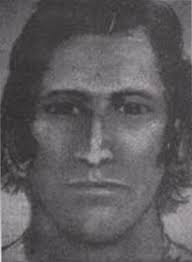
A witness reported seeing a boy resembling Timothy speaking with a man in the pharmacy parking lot. The man was described as a white male, approximately 25 to 35 years old, with dark or shaggy hair, noticeable sideburns and a dark complexion. A blue AMC Gremlin was reportedly nearby. Police released composite drawings and attempted to identify and question owners of similar vehicles throughout Oakland County. Despite the enormous effort, neither the man nor the automobile was conclusively connected to the abduction.
The Oakland County Child Killer Task Force
After investigators connected the first three murders, the Michigan State Police helped organize a special task force involving officers from numerous local departments. It became one of the largest murder investigations conducted in the United States at that time. Investigators reviewed thousands of tips, interviewed known sex offenders, examined suspicious vehicles and investigated people capable of keeping children hidden for extended periods.
Oakland County communities were transformed by fear. Parents stopped allowing children to walk or bicycle alone. Schools and police departments distributed warnings about strangers, while bumper stickers and public-service announcements reminded children not to accept rides. A substantial reward was offered for information leading to the killer. Despite the attention and resources devoted to the investigation, no one was charged with any of the four murders.
Persons of Interest and Unresolved Leads
Numerous individuals have been examined over the decades, but authorities have never officially proved that any one person was the Oakland County Child Killer. One frequently discussed person of interest was Christopher Busch, the son of a General Motors executive. Busch had a documented history of sexually abusing boys and had been investigated in connection with child pornography. He died by suicide in November 1978. Investigators reportedly found troubling items in his residence, including ligatures and a drawing that some observers believed resembled Mark Stebbins. However, the publicly known evidence has never established that Busch committed the four murders.
Archibald Edward Sloan, another convicted child molester, also became important to the investigation. Hairs recovered from Sloan’s automobile were reportedly consistent with hairs associated with Mark Stebbins and Timothy King. Later forensic testing indicated that the hairs came from the same unidentified male, but they did not belong to Sloan. This suggested that another person who had occupied or used Sloan’s vehicle might have had contact with the victims. The identity of that person has not been publicly confirmed.
Investigators also examined possible connections to a child exploitation network associated with North Fox Island in northern Michigan. The operation had presented itself as a charitable program for disadvantaged boys while secretly producing abusive photographs. Several men associated with child exploitation in Michigan were questioned or investigated, including individuals who lived in or traveled through the Detroit area. Although these inquiries exposed serious crimes against children, no publicly available evidence has conclusively tied the North Fox Island network to all four Oakland County murders.
The “Allen” Letter
One of the strangest leads came from a letter sent to a Detroit-area psychiatrist. The writer, who used the name “Allen,” claimed that he had accompanied another man called “Frank” while Frank searched for boys to murder. The author expressed fear, guilt and concern for his own safety. He proposed communicating through a coded newspaper message and offered to provide photographic evidence if he received immunity.
The psychiatrist cooperated with authorities and arranged a meeting, but the letter writer never appeared. Investigators could not determine whether the message was a genuine attempt by an accomplice to confess, a frightened witness trying to negotiate protection or an elaborate hoax. The identity of “Allen” and the man he called “Frank” remain unknown.
Forensic Evidence and Continuing Investigation
Advances in forensic science have allowed investigators to reconsider evidence that could not be fully analyzed during the 1970s. Hair recovered during the original investigation has undergone mitochondrial DNA testing, and authorities have compared genetic material with samples from various persons of interest. Testing has eliminated some suspected individuals while preserving the possibility that an unknown associate was involved.
The evidence has also contributed to questions about whether one person committed every crime. The repeated captivity, cleaning and placement of the victims point to a consistent offender or organized partnership. Differences in the victims’ sexes, causes of death and treatment have led some investigators and independent researchers to consider whether more than one offender participated. No definitive public conclusion has established whether the crimes were committed by a single serial killer, an accomplice pair or a larger network.
An Enduring Unsolved Case
The Oakland County Child Killer case remains unsolved. No person has been convicted of abducting or murdering Mark Stebbins, Jill Robinson, Kristine Mihelich or Timothy King. Additional missing or murdered children have sometimes been proposed as possible victims, but law enforcement continues to recognize these four as the confirmed cases linked by the established pattern.
The passage of time has taken away witnesses, investigators and many potential suspects, yet it has also produced new scientific methods that may reveal information hidden in the surviving evidence. Genetic genealogy, improved DNA recovery and modern database comparisons offer possibilities that did not exist when the children were killed. The case continues to be remembered not merely as a mystery, but as four separate losses suffered by families who have waited decades for answers. Until reliable evidence identifies the person or people responsible, the Oakland County Child Killer remains one of Michigan’s most disturbing unidentified serial murderers.