John Annibel – Convicted Murderer and Suspected Serial Killer
Overview
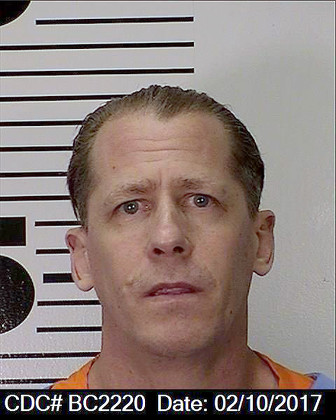
John Arthur Annibel is a convicted California murderer who has long been described by investigators, journalists, and true-crime researchers as a suspected serial killer. His name has been associated with several murdered or missing women in Northern California, particularly in Humboldt and Mendocino counties. However, an important distinction must be made: Annibel has been convicted of only one murder, the 1998 killing of Deborah “Debbie” Sloan. His suspected involvement in earlier deaths has never resulted in additional convictions.
Annibel was born on December 4, 1957, and grew up along California's North Coast. His family lived in the southern Humboldt County area, including near Fruitland Ridge and Myers Flat. As a young man, he came under suspicion in the unsolved murder of teenager Sherry Lynn Smith. Four years later, his live-in girlfriend, Andrea LaDeRoute, disappeared under circumstances that again caused investigators to focus on Annibel. He later moved to Fort Bragg in Mendocino County and worked in the lumber industry.
The suspicions surrounding Annibel might have remained part of Northern California cold-case history if not for the murder of Debbie Sloan in November 1998. After Sloan was found dead, Mendocino County investigators developed a case against Annibel, and he ultimately confessed to killing her. His arrest caused authorities in Humboldt County to take another look at the earlier cases connected to him.
Victims and Suspected Victims
- Sherry Lynn Smith – age 15 – May 1, 1976 – Southern Humboldt County, California: Smith attended a dance at the Firemen's Hall in Garberville on April 30, 1976. Witness accounts placed her with Annibel during the evening, and several people reportedly understood that she intended to leave the dance with him. Smith was killed during the early morning hours of May 1. Her body was discovered on May 2 on a secluded dirt road in the Fruitland Ridge/Eel Rock Road area near Miranda and Myers Flat. She had been beaten and strangled, and investigators concluded that she had been sexually assaulted. Annibel was questioned and became an important suspect, but he was never charged with Smith's murder. Her case remains officially unsolved.
- Andrea Edra LaDeRoute – age 21 – exact date of death undetermined, March 1980 – Fortuna/Carlotta, California: LaDeRoute was Annibel's live-in girlfriend in Fortuna. She disappeared in March 1980, with March 18 generally recorded as the date on which her disappearance was reported. Investigators quickly became suspicious of Annibel. Evidence recovered from the residence reportedly indicated that a violent event had occurred there, and blood evidence became an important part of the investigation. LaDeRoute was never found alive. On August 9, 2002, more than twenty-two years after she vanished, human remains including her skull were discovered on Pacific Lumber Company property near Carlotta. The remains were identified as LaDeRoute's. The location was significant because Annibel had worked on property in that area for years. Annibel has never been convicted of her murder.
- Deborah “Debbie” Sloan – age 42 – November 29, 1998 – Laytonville/Mendocino County, California: Sloan is Annibel's only confirmed murder victim by criminal conviction. She encountered Annibel during Thanksgiving weekend in 1998 in the Laytonville area. The two spent time together before eventually going to a motel room. During the encounter, Annibel attacked Sloan, struck her and strangled her to death. Her nude body was transported away from the motel and dumped along a remote section of Branscomb Road in Mendocino County. County road workers discovered her body on November 30, 1998. Investigators soon focused on Annibel. He was arrested on December 4 and ultimately confessed to killing Sloan. A Mendocino County jury convicted him of first-degree murder in September 1999.
The Murder of Sherry Lynn Smith
Sherry Lynn Smith's murder is one of the most important cases associated with Annibel. Sherry was only fifteen years old when she went to a dance in Garberville on the evening of April 30, 1976. Annibel, then eighteen, knew Sherry and her family. His twin brother was involved with Sherry's older sister, giving Annibel an established connection to the teenager rather than making him a stranger who happened to encounter her.
During the dance, Sherry spent time with Annibel. Witnesses later provided investigators with information indicating that Sherry had either planned to leave with Annibel or was seen heading in his direction when the dance ended at approximately 2:00 a.m. The exact details varied among accounts, but investigators considered the relationship between Sherry's last known movements and Annibel significant.
Sherry did not make it safely home. Investigators determined that she was killed during the early morning hours of May 1, 1976. Her body was discovered the following day in the Fruitland Ridge area near Eel Rock Road. She had suffered a violent assault and had been strangled. The location was especially troubling because it was close to the area where Annibel's family lived and was a secluded place with which a local resident would likely have been familiar.
Annibel was questioned extensively. His movements during the hours following the dance drew particular interest from investigators. Despite the circumstantial evidence, authorities lacked sufficient physical evidence to establish beyond a reasonable doubt that he killed Sherry. No prosecution followed. Decades later, Sherry Smith's murder remains an open Humboldt County cold case, and Annibel has never been legally established as her killer.
The Disappearance and Death of Andrea LaDeRoute
Four years after Sherry Smith was murdered, Annibel again became the focus of a homicide investigation. Andrea LaDeRoute was living with Annibel in Fortuna when she suddenly disappeared in March 1980. Annibel reported her missing, but police quickly developed reasons to question whether she had voluntarily left.
Investigators searched the couple's residence and recovered evidence suggesting that violence had occurred inside. Blood was reportedly located in the residence, including evidence associated with the bed and bedroom. Investigators considered Annibel their principal suspect. A detailed historical chronology of the investigation records that authorities obtained a murder warrant for Annibel in April 1980 and brought him before the court, but the prosecution was unable to proceed at the preliminary stage while important forensic evidence was still being examined. Later published accounts commonly describe the case as never having produced a lasting murder charge or prosecution.
LaDeRoute remained missing for more than two decades. Then, on August 9, 2002, a land surveyor discovered a human skull on Pacific Lumber Company property in the Carlotta area. The Humboldt County Coroner's Office identified the remains as those of Andrea LaDeRoute. Annibel had previously worked in the area for many years, immediately renewing questions about how LaDeRoute's remains had reached the secluded location.
The discovery established what investigators and LaDeRoute's family had long feared: she had died after disappearing in 1980. Her precise date of death has not been conclusively established in publicly available records, so March 18, 1980 should be treated as a disappearance date rather than a verified date of death. Despite the circumstances connecting Annibel to the case, he has not been convicted of killing LaDeRoute.
The Murder of Debbie Sloan
The crime that finally resulted in Annibel's imprisonment occurred more than eighteen years after LaDeRoute disappeared. On November 29, 1998, Annibel encountered 42-year-old Debbie Sloan in the Laytonville area. Accounts of the investigation describe the two spending the evening together before going to a motel room.
Inside the motel room, Sloan was assaulted and strangled. Annibel subsequently removed her body from the room, transported it west through rural Mendocino County, and discarded it in a remote ravine along Branscomb Road. Her body was found by Mendocino County road workers on November 30.
Investigators Tim Kiely and Kurt Smallcomb were among those involved in questioning Annibel. As the investigation progressed, Annibel admitted that he had killed Sloan. His statements provided detectives with details of the killing and disposal of her body. The confession gave prosecutors something that investigators in the earlier Humboldt County cases had never possessed: direct evidence tying Annibel himself to a homicide.
Annibel was arrested on December 4, 1998. In September 1999, a Mendocino County jury found him guilty of first-degree murder. His conviction established conclusively that a man who had been repeatedly investigated in connection with the violent deaths of women was himself capable of committing a strangulation murder.
Renewed Investigation of the Earlier Cases
Annibel's arrest for Sloan's murder immediately caused investigators to reconsider his past. Humboldt County authorities revisited the Smith and LaDeRoute investigations, examining old evidence with forensic techniques that had not existed when the crimes occurred.
This was particularly important in the LaDeRoute investigation. Biological evidence collected from the Fortuna residence in 1980 had been preserved. By the late 1990s, DNA testing offered investigators possibilities that had been unavailable eighteen years earlier. The later discovery of LaDeRoute's remains added another major piece of evidence, although it still did not result in a murder conviction against Annibel.
The Sloan murder also drew attention because of similarities described between the cases associated most strongly with Annibel. Sherry Smith died by strangulation. Debbie Sloan was strangled. Investigators had long believed LaDeRoute had met with violence shortly before she disappeared, and the eventual recovery of her remains confirmed that she had not simply walked away and started another life.
Other Humboldt County Murders Sometimes Linked to Annibel
Annibel has also been discussed in connection with other unsolved murders from Humboldt County during the 1970s. These associations are considerably more speculative than the Smith and LaDeRoute cases and should not be presented as established crimes committed by Annibel.
- Janet Lee Bowman – age 19 – death date not precisely established; last seen September 30, 1975 – Eureka/Blue Lake, California: Bowman, a Humboldt State University student, was last seen at the welfare office in Eureka on September 30, 1975. She frequently hitchhiked because she did not own a vehicle. Her partially disrobed body was found on October 6, 1975 in brush near Highway 299 east of Blue Lake after an anonymous letter directed authorities to the location. An autopsy determined that Bowman had been strangled and evidence indicated a probable sexual assault. Some later accounts have mentioned Annibel as a possible suspect because of geographical and behavioral similarities with subsequent killings, but no publicly established evidence proves that he murdered Bowman.
- Karen Ann Fischer – age 21 – believed killed January 14, 1976 – Trinidad Head, California: Fischer was a University of Colorado student visiting friends in Humboldt County. On January 14, 1976, she set out to see the Northern California coast and hitchhiked toward Clam Beach and Trinidad. She was seen at Trinidad Head with an unidentified man. On January 18, hikers discovered her body near the concrete cross on Trinidad Head. Investigators determined that she had been strangled and apparently sexually assaulted. Her murder resembled Bowman's and later Smith's, leading to speculation that the killings could have been connected. Annibel's name has appeared in secondary discussions of Fischer's case, but the available public evidence does not establish him as her killer.
A Case Once Associated With Annibel but Later Solved
The 1988 murder of 20-year-old Georgina Pacheco of Fort Bragg was once investigated with Annibel in mind. Pacheco disappeared after leaving her job at the Sea Pal Restaurant on September 1, 1988. Her nude body was found hidden in brush along Pearl Ranch Road on September 10. She had suffered blunt-force injuries and had been strangled with a ligature.
For years, Annibel's presence in Fort Bragg and his later identification as a murderer contributed to speculation that he might have killed Pacheco. That theory is now disproven. Advances in DNA testing eventually identified Pacheco's brother-in-law, Robert James Parks, as her killer. Mendocino County authorities announced the resolution of the case in 2013. Parks was already dead, having committed suicide years earlier. Pacheco therefore should not be counted as one of Annibel's victims.
Why Annibel Is Described as a Suspected Serial Killer
The label “serial killer” requires caution in Annibel's case. He has one murder conviction. Sherry Smith and Andrea LaDeRoute are the two earlier victims most substantially associated with him, but neither case resulted in a conviction. Other cases have been suggested largely because of location, victim characteristics, strangulation, sexual assault, and the larger pattern of unsolved murders occurring in Humboldt County during the period.
If Annibel killed Smith in 1976, LaDeRoute in 1980, and Sloan in 1998, his crimes would meet the general definition of serial murder because the killings would involve multiple victims during separate events separated by substantial periods of time. Legally, however, only Sloan can be called a confirmed Annibel victim.
The distinction is particularly important because several women were murdered by strangulation or sexual assault in Northern California during the 1970s and 1980s, and similarities in crimes do not by themselves prove that the same offender committed them. The eventual DNA identification of Robert Parks as Georgina Pacheco's killer demonstrates the danger of assuming that every superficially similar crime was committed by Annibel.
Conviction and Imprisonment
Following his 1999 conviction for Debbie Sloan's murder, Annibel was committed to the California prison system in December 1999 and received a life sentence. He has remained incarcerated for more than two decades. California Department of Corrections and Rehabilitation records continue to identify John Arthur Annibel as an incarcerated offender from Mendocino County.
His eligibility for parole has periodically brought renewed attention to the unresolved cases surrounding him. A parole hearing scheduled for January 2026 resulted in a one-year waiver, and prison records later showed another suitability hearing scheduled for December 2026. Regardless of future parole proceedings, his conviction for Sloan's murder remains separate from the unresolved investigations involving Smith and LaDeRoute.
Legacy of the Investigation
The John Annibel cases illustrate the difficulties of investigating violent crimes in rural Northern California during the 1970s and 1980s. Evidence collection was far more limited than it is today, DNA testing did not exist as an investigative tool, witnesses were sometimes difficult to locate, and the remote geography of Humboldt and Mendocino counties gave offenders countless isolated locations in which to commit or conceal crimes.
Annibel's eventual conviction confirmed that investigators who had viewed him with suspicion for years were dealing with a man who had committed at least one deliberate homicide. What that conviction could not establish was responsibility for every earlier death connected to his name.
Debbie Sloan remains his confirmed victim. Sherry Lynn Smith's murder remains unsolved despite Annibel's status as a longtime suspect. Andrea LaDeRoute's remains were finally recovered twenty-two years after her disappearance, but no one has been convicted of killing her. Janet Bowman and Karen Fischer remain victims of separate unsolved homicide investigations whose possible connection to Annibel is speculative.
For that reason, the most accurate description of John Arthur Annibel is that of a convicted murderer and suspected serial killer. The circumstances surrounding several Northern California deaths have kept his name at the center of decades-old cold-case questions, but the evidence must continue to distinguish what has been proven in court from what remains suspicion.