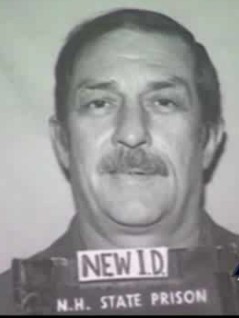
Edward Mayrand: The New England Strangler
Overview
Edward M. Mayrand Jr. was an American serial killer and rapist responsible for the murders of at least three women across New England between 1983 and 1994. A drifter with a long and violent criminal history, Mayrand was convicted for the 1994 murder of Patricia Paquette in Providence, Rhode Island. He died in prison from lung cancer in 2011 before he could be brought to justice for two other cold-case murders. Years after his death, DNA evidence definitively linked him to the 1983 killing of Kathleen Daneault in Massachusetts and the 1987 slaying of Judith Whitney in New Hampshire. His method was consistent: he targeted women, lured them to secluded areas, and strangled them, often with pieces of their own clothing.
Early Life and Criminal History
Born in Northampton, Massachusetts, in 1947, little is publicly known about Edward Mayrand's early life. His documented criminal record began in 1975 and painted a grim picture of a violent predator. His convictions included rape, assault, and illegal possession of firearms. In one particularly brutal case in December 1975, Mayrand met a woman at a bar in Warwick, offered her a ride, and then drove her to a remote location. He punched her, choked her with her own scarf, and raped her in a cemetery. The woman miraculously escaped, running naked through the woods to a nearby house for help. Mayrand was arrested and imprisoned for this crime, but he was released on parole in the fall of 1983, tragically freeing him to kill.
The Murder of Kathleen Daneault
Shortly after his parole in 1983, Mayrand claimed his first known murder victim. On the evening of November 17, 1983, 25-year-old Kathleen M. Daneault was seen with Mayrand, then 36, at the Mahaki Restaurant in Gardner, Massachusetts. It was the last time she was seen alive. The following day, November 18, workers at the S. Bent Furniture Company discovered her body on a dirt path in a wooded area not far from the restaurant. An autopsy determined she had been strangled to death with a ligature made from a piece of her own torn blouse.
Though numerous witnesses placed Mayrand with Daneault on the night she disappeared, and he was identified as the only suspect, investigators at the time felt they lacked sufficient evidence to charge him with murder. A month later, he was arrested for a parole violation and sent back to prison, but the murder of Kathleen Daneault would remain a cold case for over three decades.
The Murder of Judith Whitney
After being released from prison again in May 1986, Mayrand moved to a halfway house in Northampton, Massachusetts. In June 1987, at an Alcoholics Anonymous meeting, he met 43-year-old Judith A. Whitney of Amherst. Whitney, a divorcée with three daughters, told her family she was going on a camping trip in New Hampshire with her new boyfriend, "Ed." On July 1, 1987, she and Mayrand checked into the Valley Green Motel in Keene, New Hampshire.
Judith Whitney was last seen alive on July 2, 1987. The next day, a chambermaid saw Mayrand driving Whitney's Ford Mustang alone. In the following days, Mayrand was seen giving away jewelry that belonged to Whitney. In August 1987, police, acting on a parole violation, found Mayrand hiding in a closet in an apartment in Peterborough, New Hampshire. He was in possession of Whitney's car and a handgun. Despite the strong suspicion, there was not enough evidence to charge him with her murder. He was jailed for the parole violation.
On November 8, 1987, a hunter discovered Judith Whitney's skeletal remains in a shallow grave in Winchester, New Hampshire. The cause of death was strangulation; a drawstring from her raincoat had been tied around her neck in a distinctive granny knot, a detail that would later be seen as a signature.
The Murder of Patricia Paquette
After serving time for the parole violation, Mayrand was released. In 1994, he was living in Providence, Rhode Island. That year, he met 46-year-old Patricia Paquette at a bar. She was reported missing on December 8, 1994. On December 21, her dismembered remains were discovered stuffed into several garbage bags in an abandoned building near where Mayrand was living. An investigation revealed she had been strangled to death before being dismembered. An acquaintance of Mayrand's told police that Mayrand had asked to borrow a fine-toothed finishing saw around the time of the murder.
The Victims
- Kathleen M. Daneault, 25 — killed on November 17, 1983, in Gardner, Massachusetts. A young mother, her family remembered her as someone who loved her son "more than life itself." Her murder left a void in the lives of her son, parents, and siblings for 31 years before her killer was officially identified.
- Judith A. Whitney, 43 — killed around July 2, 1987, in or near Keene, New Hampshire. A resident of Amherst, Massachusetts, she was a mother of three daughters who was starting a new chapter in her life after a divorce. She met Mayrand at a support group meeting.
- Patricia Paquette, 46 — killed in December 1994 in Providence, Rhode Island. Her life was cut short in a brutal act of violence, and her murder was the one that finally led to Edward Mayrand's capture and imprisonment.
Investigation and Capture
Following the discovery of Patricia Paquette's body in December 1994, Edward Mayrand fled. He remained a fugitive until February 1995, when he was located and arrested in New Haven, Connecticut. He was subsequently extradited back to Rhode Island to face charges for Paquette's murder.
The murders of Daneault and Whitney remained cold cases for years, though Mayrand was always the primary suspect in both. In 2010, the New Hampshire Cold Case Unit, in collaboration with the Massachusetts State Police and the Worcester District Attorney's Office, officially reopened the investigations. This renewed effort focused on re-examining evidence with modern technology.
In June 2011, as investigators were preparing to obtain a search warrant for Mayrand's DNA, they learned he was terminally ill in prison. They were able to secure a DNA sample before his death. On June 28, 2011, Edward Mayrand died of metastatic lung cancer in a Rhode Island prison.
Trial and Posthumous Identification
For the murder of Patricia Paquette, Edward Mayrand pleaded no contest to a charge of second-degree murder. He was sentenced to 35 to 60 years in prison, ensuring he would never be free again.
The DNA sample taken from Mayrand before his death proved to be the key to solving the murders of Kathleen Daneault and Judith Whitney. In September 2014, forensic testing confirmed that Mayrand's DNA was present on the ligature used to strangle Kathleen Daneault in 1983. This direct physical evidence, combined with the extensive circumstantial evidence gathered over the years, allowed the Worcester County District Attorney's Office to officially declare the case "exceptionally cleared" and name Mayrand as the killer.
Based on the DNA link to the Daneault case, the similar method of killing (strangulation with the victim's clothing), and the wealth of evidence from the original investigation, New Hampshire authorities also officially concluded that Edward Mayrand was the murderer of Judith Whitney.
Aftermath and Legacy
The posthumous identification of Edward Mayrand as a serial killer brought a painful and long-awaited sense of closure to the families of Kathleen Daneault and Judith Whitney. In a statement, the Daneault family expressed a measure of solace, saying, "Our one solace is that Edward Mayrand passed away in prison alone without loved ones around him to comfort him, just as he left Kathy to die alone." The resolution of these cold cases highlighted the importance of persistent investigation and the power of advancements in DNA technology. Edward Mayrand's legacy is one of senseless violence and stolen lives, a stark reminder of the deep and lasting trauma inflicted on victims' families and their communities.