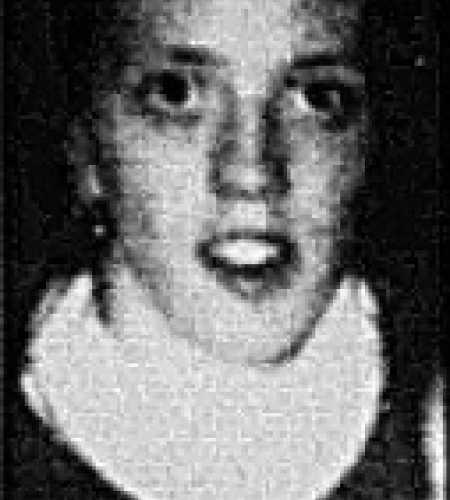
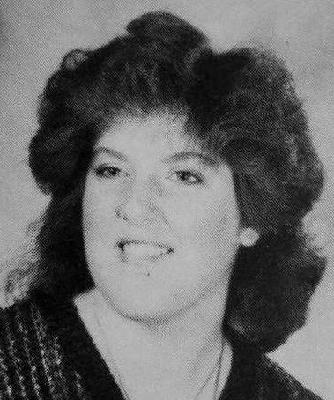
In the summer of 1987, Judith A. Whitney, a 43-year-old mother of three daughters, was embracing a new chapter in her life. Recently divorced, the Amherst, Massachusetts, resident was moving into a new apartment and looking forward to a fresh start. A woman who loved the outdoors and camping, she told her family she was taking a short trip to New Hampshire for some peace and quiet, accompanied by a new friend named Ed. That trip would be her last.
Judith was never seen alive by her family again after early July 1987.
On July 1, 1987, Judith checked into the Valley Green Motel in Keene, New Hampshire, registering for two people. She was seen at the motel and a local bank with a man later identified as Edward M. Mayrand, Jr., a 40-year-old drifter she had met at a support group meeting just a month prior. After July 2, Judith vanished. A chambermaid at the motel later saw Mayrand driving Judith’s 1980 Ford Mustang alone. When Judith failed to return from her trip or contact her family, her ex-husband and brother reported her missing on July 20. That same day, police located her abandoned Mustang in a wooded area in Fitzwilliam, New Hampshire. Her tent was found nearby, but Judith was gone. Missing from her car were a boom box and a.22-caliber handgun she was known to carry.
The investigation immediately focused on Edward Mayrand, a man with a violent criminal history, including convictions for rape and assault. In August 1987, police found Mayrand hiding in a closet in a Peterborough, New Hampshire, apartment. He was in possession of Judith's handgun and had given away her jewelry. When questioned, he gave conflicting stories about when he had last seen her. Despite the strong suspicion, there was not enough evidence to charge him with homicide. He was, however, jailed for a parole violation. The case grew cold, leaving Judith’s family with years of unanswered questions.
Four months after she disappeared, on November 8, 1987, a hunter walking through a wooded area off Route 119 in Winchester, New Hampshire, made a grim discovery. He found Judith Whitney's skeletal remains buried in a shallow grave. An autopsy determined her death was a homicide caused by ligature strangulation; she had been choked to death with pieces of her own clothing, including a drawstring from her raincoat that was still tied around her neck. The discovery confirmed her family's worst fears but did not immediately lead to an arrest for her murder.
For decades, Judith's case remained officially unsolved, though investigators and her family never lost hope for justice. The break finally came when the New Hampshire Cold Case Unit, established in 2009, reopened the investigation in 2010. Working with Massachusetts authorities, they re-examined evidence and explored links between Mayrand and other unsolved murders. Mayrand was a serial killer, responsible for the 1983 strangulation of Kathleen Daneault in Massachusetts and the 1994 murder and dismemberment of Patricia Paquette in Rhode Island. For the Paquette murder, Mayrand was convicted of second-degree murder and sentenced to 35 to 60 years in prison.
While preparing to get a DNA sample from the imprisoned Mayrand in June 2011, investigators learned he was terminally ill with lung cancer. They successfully obtained a sample before he died in a Rhode Island prison later that year. In September 2014, forensic testing confirmed Mayrand's DNA was on the ligature used to strangle Kathleen Daneault. This DNA evidence, combined with the striking similarities between the murders of the three women—all were strangled with their own clothing—and Mayrand's possession of Judith's property after her disappearance, allowed authorities to definitively name him as Judith Whitney’s killer.
In December 2014, the New Hampshire Attorney General announced that Judith Whitney's murder was officially solved. Because Edward M. Mayrand, Jr. was deceased, he could never be prosecuted for her death. The case was closed and classified as "Solved, Primary Suspect Deceased." For Judith's family, the news was a bittersweet resolution after 27 years of waiting. Her sister called it "the greatest Christmas present," confirming what they had long believed in their hearts. Though justice in a courtroom was impossible, the truth had finally been brought to light.