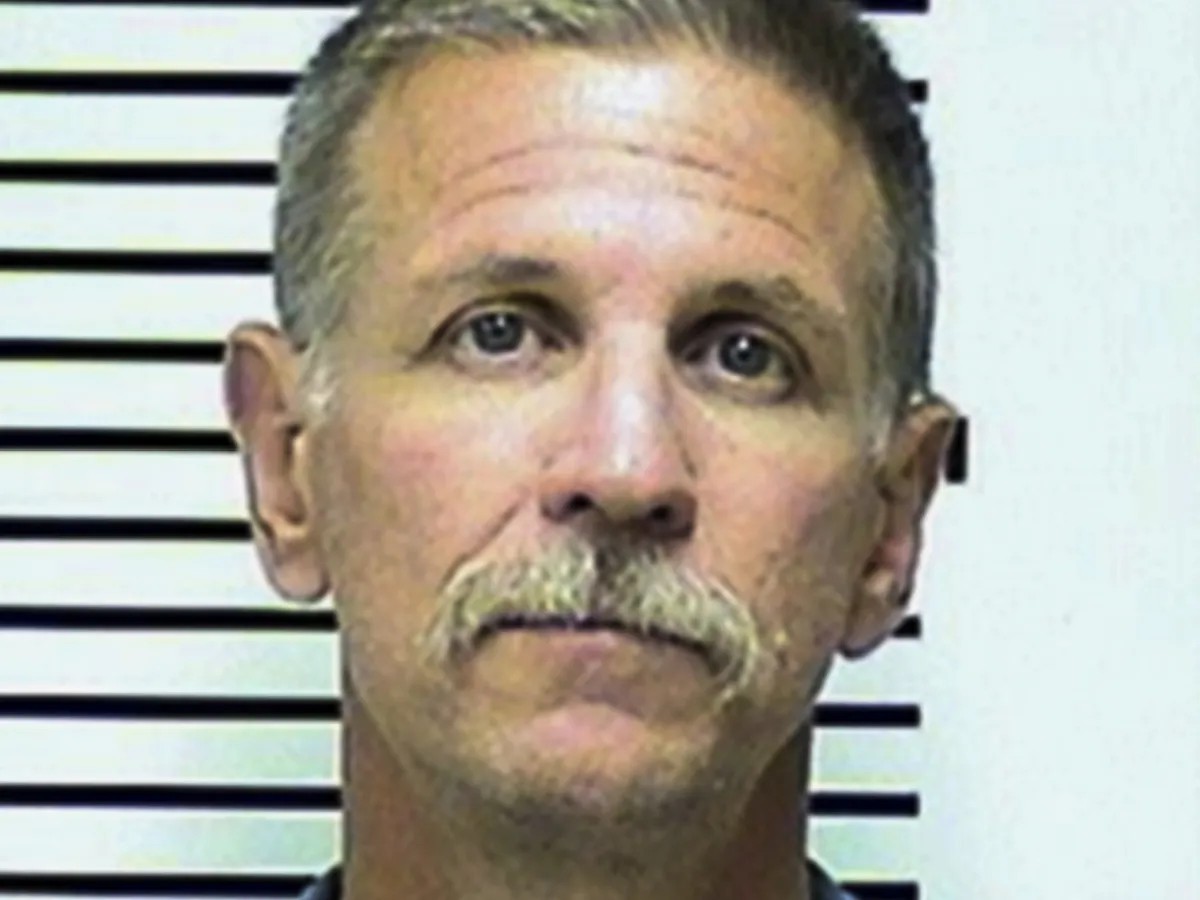
Michael Lee Platt: The Miami Shootout Killer
Overview
Michael Lee Platt, along with his accomplice William Russell Matix, carried out a violent seven-month crime spree in the Miami-Dade County area of Florida, leaving a trail of dead and wounded. The former U.S. Army Rangers were responsible for a series of brutal armored car and bank robberies that culminated in one of the bloodiest events in FBI history. On April 11, 1986, a rolling FBI stakeout located the duo, leading to a ferocious gun battle in the suburban community of Pinecrest. In a firefight that lasted less than five minutes, Platt and Matix killed two FBI Special Agents and wounded five others before they were both killed. The incident, which exposed the inadequacy of law enforcement's standard-issue firearms against heavily armed criminals, led to significant changes in the weapons and tactical training for the FBI and police departments nationwide.
Early Life and Military Service
Michael Lee Platt was born on February 3, 1954, in San Diego, California. His father was a chief petty officer in the Navy. After graduating from high school in Arizona, Platt earned a two-year degree from Miami-Dade Community College before enlisting in the U.S. Army in 1972. He entered the Army as an infantryman and later completed the rigorous Army Airborne Ranger training. He was assigned to a Military Police unit at Fort Campbell, Kentucky.
It was at Fort Campbell that Platt met William Russell Matix, who had served in the Marine Corps before joining the Army and becoming a military policeman. The two men formed a close friendship. Both were honorably discharged from the military by the late 1970s. After their service, they remained friends, and by the mid-1980s, both were living in Miami. They started a landscaping and tree-trimming business together called the "Yankee Clipper," which investigators later believed served as a cover for them to scout locations for their robberies.
A Pattern of Violence
On the surface, Platt and Matix appeared to be ordinary family men. Both were married with children and had no prior criminal records. However, a shadow hung over their personal lives. Both of their first wives died under violent and suspicious circumstances. Matix's wife, Patricia, was brutally stabbed to death along with a coworker in Columbus, Ohio, in December 1983. The case was never solved, but Matix, who collected on a life insurance policy, was considered a suspect. Almost a year later, on Christmas Eve 1984, Platt's wife, Regina, died from a shotgun blast to the head. Her death was ruled a suicide, but police later reopened the case, noting it was highly uncommon for a woman to commit suicide with a shotgun. Platt, who told police he and his wife were seeking a divorce after she had an affair with Matix, married his second wife just weeks after Regina's death. Detectives have long theorized the men may have had a pact to murder each other's wives, but no charges were ever filed.
The Robbery and Murder Spree
The crime spree that brought Platt and Matix to the attention of the FBI began on October 5, 1985. They murdered 25-year-old Emilio Briel, whom they found target shooting at a rock pit in the Everglades. They stole his gold Chevrolet Monte Carlo, which they would use as a getaway car in subsequent robberies. Over the next several months, they committed a series of daring and violent robberies of armored cars and banks along South Dixie Highway in Miami.
Their method was brutal and direct. They would ambush their targets, often in broad daylight, wearing military fatigues and armed with superior weaponry, including a Ruger Mini-14 semi-automatic rifle. They showed no hesitation in using lethal force. On January 10, 1986, they ambushed a Brink's armored truck at a Barnett Bank. They shot a guard with a shotgun and then, as he lay wounded, shot him again with the .223-caliber rifle. The guard miraculously survived.
On March 12, 1986, needing a new vehicle, they returned to a rock pit in the Everglades. There, they found Jose Collazo target shooting. They shot him multiple times and left him for dead, stealing his black 1979 Chevrolet Monte Carlo. Collazo, however, survived by playing dead and was later able to provide investigators with a description of his attackers and their vehicle. Just a week later, Platt and Matix used Collazo's car to rob the same Barnett Bank they had targeted in January.
The Victims
The crime spree of Michael Platt and William Matix left a number of victims in its wake, including those they murdered and several others who were shot and wounded but survived.
- Emilio Briel, 25 — October 4, 1985, in the Florida Everglades. Briel was target shooting when he was murdered by Platt and Matix, who then stole his car to use in their robberies. His remains were not identified until May 1986.
- Unidentified Armored Car Guard — January 10, 1986, in Miami. This guard was shot multiple times with a shotgun and a rifle during a robbery but survived his injuries.
- Jose Collazo — March 12, 1986, in the Florida Everglades. Shot multiple times and left for dead by Platt and Matix, who stole his car. Collazo survived and provided crucial information to the FBI.
- Special Agent Benjamin P. Grogan, 53 — April 11, 1986, in Miami. A 25-year veteran of the FBI, Grogan was killed by Platt during the final shootout.
- Special Agent Jerry L. Dove, 30 — April 11, 1986, in Miami. An agent for four years, Dove was killed by Platt at close range during the gun battle.
Investigation and the Final Shootout
The FBI's Miami office, alarmed by the escalating violence of the robberies, formed a dedicated squad to hunt the men they dubbed the "Rock Pit Gang." The crucial break came from the survivor, Jose Collazo, who provided the description and license plate of his stolen black Monte Carlo. Believing the robbers would use the car again, the FBI organized a massive rolling stakeout.
On the morning of April 11, 1986, a team of 14 FBI agents in 11 cars began to canvass the area. Around 9:30 a.m., Special Agents Benjamin Grogan and Jerry Dove spotted the black Monte Carlo. They began to follow, and soon, other FBI units converged. The agents attempted to perform a felony traffic stop, forcing the Monte Carlo off the road at 12201 Southwest 82nd Avenue. The suspects' car crashed into a tree.
What followed was a gunfight of extraordinary intensity. Platt and Matix immediately opened fire on the eight agents at the scene. The agents, primarily armed with service revolvers and 9mm pistols, were severely outgunned by Platt's Ruger Mini-14 rifle. Platt, though hit multiple times early in the fight, continued to fire with devastating effect.
Matix was wounded early and appeared to be incapacitated after being shot in the head and neck. Platt, however, exited the car and continued his assault. He killed Agent Dove with two shots to the head and then shot and killed Agent Grogan with a round to the chest. He also wounded agents John Hanlon, Gordon McNeill, Richard Manauzzi, Gilbert Orrantia, and Edmundo Mireles Jr.
Despite being severely wounded in his left arm, Special Agent Mireles managed to end the fight. As Platt and the wounded Matix attempted to flee in an FBI vehicle, Mireles advanced, firing his pump-action shotgun one-handed, hitting both men. He then drew his .357 Magnum revolver and fired the fatal shots, killing both Platt and Matix. The entire shootout lasted less than five minutes, during which approximately 145 shots were fired. Michael Platt had been shot 12 times; William Matix had been shot six times.
Aftermath and Legacy
The 1986 Miami shootout was a watershed moment for the FBI and American law enforcement. It stands as one of the most violent incidents in the Bureau's history and is meticulously studied in police academies to this day. The firefight starkly demonstrated that criminals were increasingly armed with powerful semi-automatic rifles that could defeat the body armor agents wore and were far superior to the standard-issue revolvers carried by law enforcement.
In the aftermath, the FBI initiated a comprehensive review of its firearms, which led to the transition from revolvers to more powerful and higher-capacity semi-automatic handguns, specifically the 10mm Auto and later the .40 S&W cartridge. Body armor standards were improved, and tactical training for agents was significantly enhanced to better prepare them for high-intensity firefights.
For his extraordinary bravery, Special Agent Edmundo Mireles Jr. was awarded the first-ever FBI Medal of Valor. In 2001, the Village of Pinecrest, Florida, honored the fallen agents by co-designating a portion of Southwest 82nd Avenue as Agent Benjamin Grogan Avenue and Agent Jerry Dove Avenue. The FBI's Miami field office, dedicated in 2015, also bears their names, ensuring their sacrifice is never forgotten.