Crime Solvers Central
298 Cases Solved. Advancing justice for missing persons, unsolved homicides, unidentified and unclaimed remains.
⚠️ Warning: Viewer Discretion Advised ⚠️ The following section contains detailed information about serial killers, their crimes, and case details. Some content may be disturbing or graphic.

Description

See any errors? Let us know!
Summary based on 5 sources

Charles Floyd: The Tulsa Serial Killer


Who Was Charles Floyd?

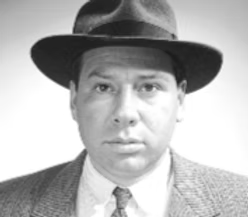
Charles Floyd was an American serial killer responsible for a series of murders and violent attacks in Tulsa, Oklahoma, during the 1940s. He should not be confused with Charles Arthur "Pretty Boy" Floyd, the famous Depression-era bank robber who died in 1934. The Charles Floyd involved in the Tulsa murders was a truck driver whose crimes remained unsolved for years. His known killing period stretched from 1942 through 1948, and he was finally arrested in Dallas, Texas, in November 1949. Floyd's crimes were centered largely on women living in apartments on Tulsa's north side and near the downtown area. Several of his victims were young women whose husbands were away from home. Contemporary investigators also noticed that a number of the women had red hair. Floyd reportedly watched or followed some victims before entering their homes, usually during the night or very early morning. His attacks generally involved severe blows to the head with a blunt object. Sexual assault, including assault after death, was associated with several of the murders.

Victims and Verified Dates of Death

  • Helen Brown — July 10, 1942 — 825 North Main Street, Tulsa, Oklahoma. Brown was approximately 19 or 20 years old and was heavily pregnant at the time of her death. Her baby was reportedly expected within days. She was attacked inside the apartment she shared with her husband, William Brown. Floyd entered the residence while she was alone, killed her by striking her in the head and sexually assaulted her after death. Because her unborn child also died, contemporary descriptions sometimes treated the crime as involving two deaths.
  • Clara "Luzzla" Stewart — January 14, 1943 — 306 North Cheyenne Avenue, Tulsa, Oklahoma. Stewart was approximately 50 years old. She was murdered in the same residence as her adult daughter, Georgia Green. Both women were attacked during the night and suffered fatal head injuries. Period newspaper reports described the crime as particularly violent and stated that the women were also sexually assaulted.
  • Georgia Green — January 14, 1943 — 306 North Cheyenne Avenue, Tulsa, Oklahoma. Green, 31, was Clara Stewart's daughter. Some later accounts give her first name as Georgina, but contemporary reporting commonly identified her as Georgia Green. She was married, and her husband was reportedly away serving in the military. She and her mother were killed in their beds during the same attack.
  • Panta Lou Liles — May 15, 1945 — 501 North Cheyenne Avenue, Tulsa, Oklahoma. Liles was 20 years old and was also known in some reports as Pat Campbell Liles. She worked at Tulsa's wartime aircraft industry and was married to William Avery Liles, who was serving in the Navy. Floyd later described watching Liles before the crime. During the early morning hours of May 15, he entered her apartment through a window after manipulating the screen. He carried a piece of pipe and struck Liles while she was in bed. Her body was discovered after her roommate became concerned and contacted authorities. Investigators determined that Liles had suffered fatal head injuries and had been sexually assaulted.
  • Ruth Norton — July 2, 1948 — Tulsa, Oklahoma. Norton was 42 years old and worked as an elevator operator in the National Bank of Tulsa Building. She was found beaten to death in her apartment during the early morning of July 2. Her murder occurred only hours after another violent home invasion in the same general part of Tulsa. Some later accounts incorrectly give July 1 as Norton's death date, but contemporary reports establish that she was found dead on July 2, 1948.


The Murder of Helen Brown

The series began on July 10, 1942, with the murder of Helen Brown. Brown was young, married and only days away from giving birth. Floyd entered her North Main Street apartment while her husband was away. Brown was struck repeatedly in the head and killed. The discovery that she had also been sexually assaulted after death gave investigators an indication that they were dealing with an offender whose motive went beyond robbery or an ordinary domestic killing. The Brown murder received considerable attention because of her pregnancy and the brutality of the attack, but police had little evidence identifying the killer. Floyd remained free and was able to strike again approximately six months later.

The Double Murder of Clara Stewart and Georgia Green

On January 14, 1943, Clara Stewart and her daughter Georgia Green were killed at 306 North Cheyenne Avenue. Both women were attacked in their beds. Their heads had been struck with tremendous force, and contemporary police reports indicated that sexual assault accompanied the killings. The crime occurred only a short distance from locations that would later become connected with Floyd's series. The similarities to the Brown case were disturbing: women attacked in their homes, a killer entering during the night and the use of overwhelming blunt-force violence. Despite these similarities, investigators did not have enough evidence to identify Charles Floyd. The murderer disappeared again, and nearly two and a half years passed before the next known killing.

The Murder of Panta Lou Liles

Panta Lou Liles was murdered in the early morning of May 15, 1945. Her killing became one of the most important cases in the Floyd investigation because another man was originally convicted of the crime. Liles lived at 501 North Cheyenne Avenue with a roommate. At approximately 5:10 that morning, police were called to the apartment, where Liles was found dead in bed with severe wounds to her head. Investigators initially focused on Leroy Benton. Benton was subjected to an extended interrogation and eventually made a confession. He was convicted of Liles's murder in 1945. The case did not end there. On February 18, 1948, the Oklahoma Court of Criminal Appeals reversed Benton's conviction after reviewing serious problems surrounding his interrogation and confession. He was subsequently released. Floyd's later confession provided investigators with an entirely different explanation for the murder and included details about the apartment and the method of entry.

The July 1948 Attacks

Floyd's final known murder was preceded by an attack in which three people survived. During the early hours of July 2, 1948, Mrs. J. B. Cole, her 13-year-old daughter Doris and 14-year-old Levon Gabbard, who was staying with the family, were attacked in an apartment in the 200 block of West Easton Street in Tulsa. All three suffered serious head injuries but survived.
  • Mrs. J. B. Cole — July 2, 1948 — 200 block of West Easton Street, Tulsa. Approximately 38 years old. She was severely beaten but survived.
  • Doris Cole — July 2, 1948 — 200 block of West Easton Street, Tulsa. The 13-year-old daughter of Mrs. Cole. She suffered serious injuries but survived.
  • Levon Gabbard — July 2, 1948 — 200 block of West Easton Street, Tulsa. A 14-year-old girl visiting the Cole family. She was attacked along with the mother and daughter but survived.
Only a short time after the Cole attack, Ruth Norton was murdered in her apartment. Norton was struck in the head and killed. The close timing and geographic proximity of the two attacks gave police important evidence that the same offender could be responsible. The fact that survivors existed also gave investigators information they had not possessed after the earlier murders.

Investigation, Arrest and Confession

Investigators eventually developed information pointing toward a man connected with truck driving. Detectives examined trucking companies and the movements of drivers who had been in Tulsa around the attacks. Charles Floyd became increasingly important to the investigation, particularly after authorities discovered that he had left the area. Floyd was arrested in Dallas, Texas, on November 22, 1949. During questioning he confessed to the Tulsa crimes and described details that investigators believed connected him to murders dating back to 1942. His account of the Liles murder was especially significant. He described watching her before the attack, obtaining a piece of pipe, approaching the apartment, forcing his way through a window and attacking her while she was in bed. Details in his statement corresponded with facts from the crime scene and helped establish that the earlier case against Leroy Benton had targeted the wrong man.

Floyd's Criminal Pattern

Floyd's known crimes displayed a repeated pattern. He selected women in or around Tulsa apartments, often approached their homes late at night, entered quietly and attacked while the occupants were vulnerable. Blunt instruments were used repeatedly. Several victims were sexually assaulted, and investigators concluded that Floyd's behavior included a sexual interest in his victims after death. Later accounts also describe him as a voyeur who watched women before some attacks and as having a particular interest in red-haired women. Robbery does not appear to have been the principal motive. The violence itself, along with Floyd's sexual behavior and repeated selection of similar victims, formed the central pattern. His ability to travel as a truck driver may also have made him more difficult to trace and allowed him to disappear from investigators' attention for extended periods.

Legal Outcome and Legacy

Floyd never became as publicly notorious as many later American serial killers. After his confession, his mental condition became a major legal issue. He was determined to be mentally unfit and was committed to a state mental institution in Vinita, Oklahoma, rather than proceeding through a conventional murder trial for the entire series. The known Tulsa series left five murdered women: Helen Brown, Clara Stewart, Georgia Green, Panta Lou Liles and Ruth Norton. Helen Brown's unborn child also died in the first attack. At least three additional people survived Floyd's violence in 1948. The crimes stretched across six years, from July 10, 1942, through July 2, 1948, before Floyd's arrest in November 1949 finally connected a single offender to a succession of brutal attacks that had troubled Tulsa investigators for years.

Victims

See any mistakes? Let us know!
Confirmed Victims: (5)
  • Helen Brown Age: (19), Date of Death: 1942-07-10
  • Clara Stewart Age: (50), Date of Death: 1943-01-14
  • Georgia Green Age: (31), Date of Death: 1943-01-14
  • Panta Lou Liles Age: (20), Date of Death: 1945-05-15
  • Ruth Norton Age: (42), Date of Death: 1948-07-02

  • Survivors:
  • Mrs. J. B. Cole Age: (38), Date of Attack: 1948-07-02
  • Doris Cole Age: (13), Date of Attack: 1948-07-02
  • Levon Gabbard Age: (14), Date of Attack: 1942-07-02