Robert Edward Maury: The “Tipster Killer” of Shasta County
Background
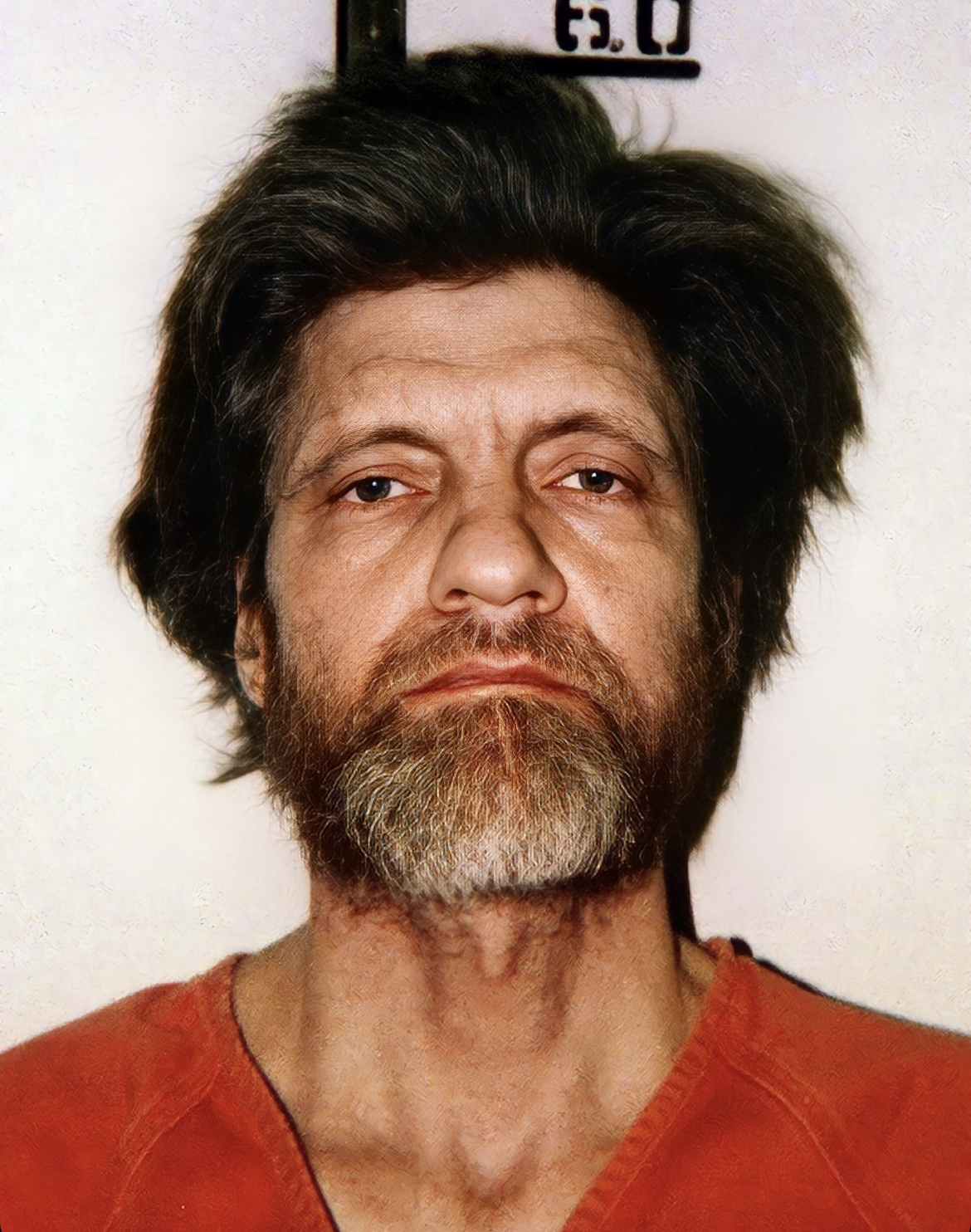
Robert Edward Maury was an American serial killer and sexual offender convicted of murdering three women in Shasta County, California, between 1985 and 1987. Born on February 24, 1958, in Crescent City, California, Maury later lived in the Redding, Anderson and Happy Valley areas. He worked intermittently as a landscaper and dried-flower arranger after leaving the United States Army. His crimes became especially notorious because he repeatedly contacted an anonymous crime-tip program with information about the locations of his victims’ bodies.
Maury became known as the “Tipster Killer” because he used the Shasta County Secret Witness hotline to insert himself into the investigations. The program allowed callers to provide information anonymously and receive cash rewards when their tips helped solve crimes. After killing women, Maury supplied details that directed investigators to their remains. He sometimes portrayed himself as a witness, intermediary or person who had obtained information from the supposed real killer. Prosecutors later argued that he used the hotline both to manipulate law enforcement and to collect reward money.
The Murder of Averill Weeden
In May 1985, Maury rented a room in the Redding home of 48-year-old Averill Weeden. Weeden was last known to be alive during the evening of May 23, and her disappearance was reported shortly afterward. Investigators determined that she had probably been killed on or about May 25, 1985. Maury initially attracted attention because he lived in her home, gave inconsistent information and had access to her during the period in which she disappeared.
Several weeks later, an anonymous man began contacting the Secret Witness hotline. The caller said he knew where Weeden’s body could be found and demanded a reward in exchange for the information. His first directions led investigators to an area near Bechelli Lane and South Bonnyview Road in Redding, close to the Sacramento River. When authorities failed to locate the remains, the caller telephoned again and provided more precise instructions.
Investigators subsequently found Weeden’s decomposed body concealed beneath debris. A clothesline-type cord was wrapped around her neck, and medical evidence established that she had been strangled. The anonymous caller claimed that another person had killed Weeden and that he was merely involved in concealing the crime. He collected a $250 reward after the body was recovered. Maury was questioned, but investigators did not yet possess enough evidence to charge him.
The Sexual Assault That Connected the Crimes
On June 20, 1987, Maury encountered a woman identified in court records as Jacqueline H. in the Happy Valley area. He took her to a secluded location, placed a rope around her neck and tightened it before forcibly raping her. She survived the attack and later recognized Maury outside a store. Maury called her by the name “Dawn,” apparently confusing her with another woman, and asked whether she was Dawn Berryhill.
The survivor reported the encounter, and her description of Maury, his motorcycle and the remote location became important evidence. The assault occurred only two days before Dawn Berryhill disappeared. Prosecutors later emphasized the similarities between the attack and the murders, particularly Maury’s use of ligatures around women’s necks and his tendency to take victims into isolated parts of Happy Valley.
The Murder of Dawn Marie Berryhill
Twenty-year-old Dawn Marie Berryhill disappeared from Redding on June 22, 1987. Berryhill was the mother of a six-month-old child and was reportedly looking for an apartment. Earlier that day, a man who called himself “Bob” telephoned Berryhill’s residence and discussed meeting her. Berryhill’s mother later saw her daughter speaking with Maury near a park, where he was sitting on a motorcycle.
That evening, Berryhill left her baby with a neighbor and said she was going out to purchase marijuana. Witnesses saw her speaking with Maury and leaving the area on a motorcycle resembling his. This was the last confirmed sighting of Berryhill alive. The circumstances supported the conclusion that she was killed late on June 22 or shortly afterward.
In September 1987, the Secret Witness hotline began receiving calls from a man demanding payment for information concerning Berryhill. The caller knew that she had been strangled with a scarf and gave detailed directions to a remote location in Happy Valley. On September 22, investigators found Berryhill’s decomposed body beneath a discarded mattress in dense brush. A scarf remained wrapped around her neck, and authorities determined that strangulation caused her death.
Berryhill had been carrying a roll of money when she disappeared, but the money was missing when her remains were found. Maury was therefore charged not only with murder but also with robbery. Prosecutors established that the caller received $1,250 for revealing the location of Berryhill’s body. Officers conducting surveillance identified Maury when he collected the reward money.
The Murder of Belinda Jo Stark
Thirty-year-old Belinda Jo Stark disappeared during the final week of June 1987. She had been staying with a friend in Fall River Mills and was last reliably seen on approximately June 25, 1987. Stark had planned to travel to Nevada City for a traffic-court appearance scheduled for June 29, but she never appeared. Because she sometimes traveled without immediately notifying friends, she was not initially reported missing.
In August, the familiar anonymous caller contacted Secret Witness and offered information about a dead woman whom he falsely identified as “Gretchen Olsten.” He gave details about a body located near Palm Avenue and Monte Vista Road in the Happy Valley area. On August 17, 1987, investigators followed his directions and discovered Stark’s skeletal remains in a thicket.
Stark’s clothing had been partially removed, and evidence indicated that she had been assaulted with the intent to commit rape. Her jaw had been fractured near the time of death. Although decomposition prevented medical examiners from identifying one definitive cause of death, experts agreed that she died from unnatural causes. Evidence presented at trial supported the conclusion that Maury strangled her, possibly with a bootlace or similar cord.
Maury also knew where Stark’s purse had been discarded and personally directed an investigator to it. His fingerprint was found inside the purse. Stark had owned a small chrome-colored handgun, and witnesses testified that Maury later possessed or attempted to dispose of a similar weapon. A blanket resembling one owned by Maury was also discovered near her remains.
Confirmed Victims
- Averill Weeden, 48: Killed on or about May 25, 1985, in Redding, Shasta County, California. Her body was found near Bechelli Lane and South Bonnyview Road after Maury anonymously supplied directions. She had been strangled with a clothesline-type cord.
- Dawn Marie Berryhill, 20: Last seen alive with Maury on June 22, 1987, in Redding, California, and believed to have been killed that night or shortly afterward. Her body was found on September 22, 1987, in the Happy Valley area of Shasta County. She had been strangled with a scarf and concealed beneath a mattress.
- Belinda Jo Stark, 30: Last seen around June 25, 1987, in or near Fall River Mills, Shasta County, California, and believed to have been killed shortly afterward. Her remains were discovered on August 17, 1987, near Palm Avenue and Monte Vista Road in Happy Valley. She had suffered a fractured jaw and evidence of an attempted sexual assault.
The Secret Witness Calls
The Secret Witness calls became the central link connecting the three murders. Hotline employee Shirley Landreth believed that the same distinctive caller contacted the program after each woman’s death. She recognized his rapid speech, forceful manner and abrupt way of ending conversations. Investigators eventually recorded several of the calls, and detectives who had spoken with Maury identified the caller’s voice as his.
The caller revealed facts that were not publicly known. He accurately described the locations of the bodies, the surrounding terrain, the victims’ clothing and the ligatures used to strangle them. In Berryhill’s case, he specifically stated that a scarf was around her neck. He also knew that Stark’s purse had been discarded separately from her body and was able to direct police to it.
Police arranged surveillance around the location where the Berryhill reward was deposited. Maury was observed collecting the money, and his fingerprints were found on an envelope used in the reward transaction. After receiving the payment, he used part of the money to purchase a motorcycle and pay personal expenses. These actions damaged his claim that he was simply an innocent person who had accidentally discovered the bodies.
Arrest and Evidence
Maury was arrested on November 7, 1987. Investigators had accumulated a combination of physical evidence, witness testimony, recorded telephone calls and incriminating statements. His fingerprint inside Stark’s purse placed him in contact with her property, while multiple witnesses connected him with Berryhill shortly before she disappeared. The survivor of the June 1987 rape also positively identified him.
Several people testified that Maury had made disturbing comments about violence and strangulation. One former coworker recalled that he threatened to kill her and claimed that he had killed before. A jail inmate testified that Maury discussed fantasies involving strangulation and sexual activity. Other witnesses said that Maury expressed hostility toward women or appeared excited by the fact that police considered him a suspect.
Maury repeatedly changed his explanation for possessing detailed knowledge of the murders. At various times, he claimed that he had accidentally discovered the bodies, witnessed someone else commit a killing, received information from the actual murderer or participated only in covering up a crime. He accused several acquaintances of responsibility, but investigators found no credible evidence supporting those allegations.
Trial and Conviction
Maury’s trial took place in Shasta County in 1989. Prosecutors presented the murders as an interconnected series committed against small, vulnerable women whom Maury knew or had encountered. They argued that his methods, the remote disposal sites and the Secret Witness calls demonstrated a continuing pattern. They further contended that financial reward money was one motive for the calls and possibly for the murders themselves.
The jury convicted Maury of the first-degree murders of Averill Weeden, Dawn Berryhill and Belinda Jo Stark. He was also convicted of robbing Berryhill, assaulting Stark with the intent to commit rape and forcibly raping Jacqueline H. The jury found special circumstances involving multiple murders and a murder committed during a robbery.
During the penalty proceedings, Maury continued to insist that he was innocent. He made the unusual declaration that if the jurors truly believed he had committed three murders, they should sentence him to death rather than life imprisonment. The jury returned a death verdict, and the trial court formally imposed the death penalty.
Appeals and Later Status
The California Supreme Court reviewed Maury’s case and affirmed his convictions and death sentence in 2003. The court concluded that the circumstantial evidence, Secret Witness recordings, physical evidence and Maury’s own conduct provided substantial support for the verdicts. Later attempts to overturn the judgment through habeas corpus proceedings were also unsuccessful.
In 2024, the California Court of Appeal rejected another challenge involving the conduct of Maury’s attorneys during the penalty phase. The court again described the evidence against him as strong and compelling. Although Maury received a death sentence, California has not carried out an execution since 2006, and a statewide moratorium has prevented executions from proceeding.
Suspected Additional Victims
Authorities have considered the possibility that Maury killed additional women. His comments about having killed before, his familiarity with isolated disposal locations and his repeated fantasies concerning strangulation created concern that the three proven murders might not represent the full extent of his violence. Some accounts describe him as a suspect in as many as two other deaths, but he was never convicted of additional murders.
No additional victim should be attributed to Maury as a confirmed murder without supporting evidence and a legal finding. His established criminal record consists of the murders of Weeden, Berryhill and Stark, the rape of a surviving woman and related assault and robbery offenses.
Legacy of the Case
Robert Edward Maury’s case remains unusual because he attempted to transform his own crimes into opportunities for attention, manipulation and financial gain. Instead of distancing himself from the investigations, he repeatedly approached the hotline, police officers and detectives. He appeared to enjoy controlling when and how the victims were found while presenting himself as a valuable source of secret information.
The strategy ultimately exposed him. Each telephone call created another connection between Maury and the murdered women. His knowledge of confidential evidence, his collection of the reward money, the recognition of his voice and his fingerprints on crucial items allowed investigators to dismantle his stories. The anonymous tip program that he tried to exploit became one of the most important sources of evidence used to convict him.
The murders of Averill Weeden, Dawn Marie Berryhill and Belinda Jo Stark left three families grieving while Maury attempted to profit from revealing the locations where he had concealed their remains. His conviction brought legal accountability for those deaths, while the survival and testimony of Jacqueline H. provided additional evidence of the violent pattern that connected the cases.