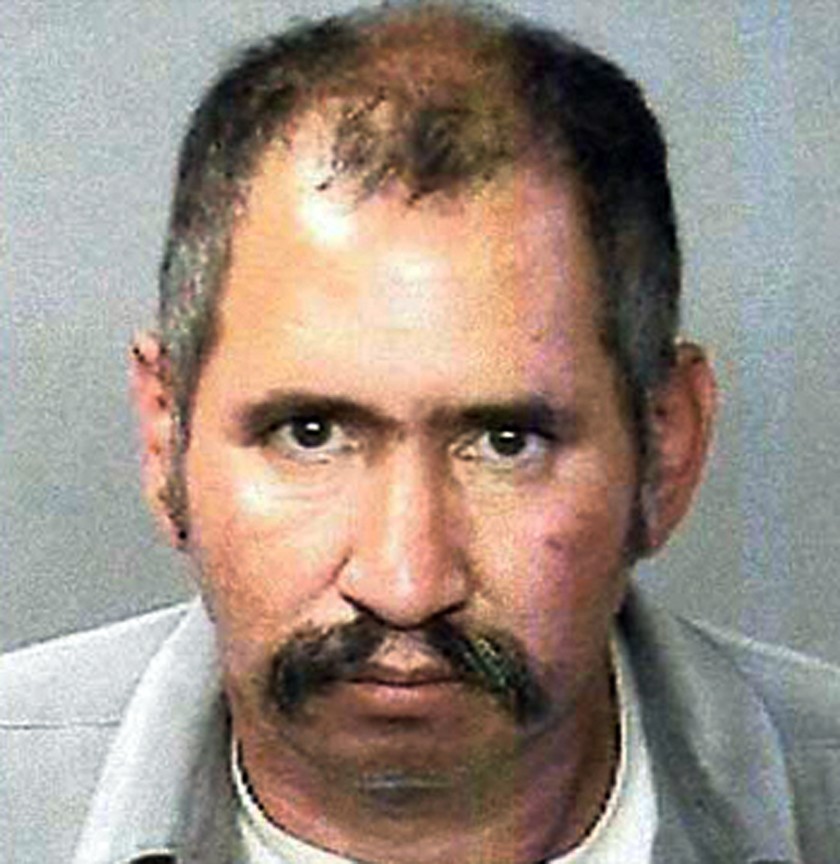
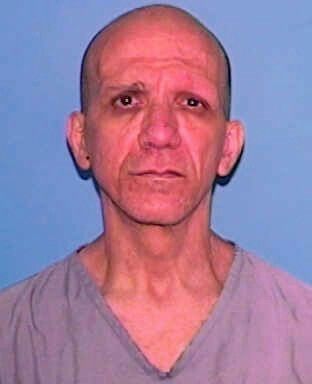
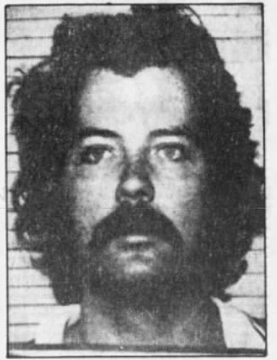
José Manuel Martínez: The Cartel Hitman Known as “El Mano Negra”
Background and Years of Violence
José Manuel Martínez, born on June 13, 1962, in California, became one of the most prolific confessed contract killers in modern American criminal history. Known by the nickname “El Mano Negra,” meaning “The Black Hand,” Martínez described himself as an enforcer and assassin who collected debts for Mexican drug traffickers. When payments were not made, he said he was hired to kill the people responsible. His known crimes stretched from California to Florida and Alabama, while his broader confessions implicated him in killings across numerous other states.
Martínez claimed that he began killing while still a teenager and continued for more than three decades. He eventually confessed to approximately 36 murders, although authorities were unable to independently prove every claim. Twelve killings resulted in murder convictions: nine in California, two in Florida and one in Alabama. Investigators also connected him to an attempted murder in California.
Most of Martínez’s confirmed victims were adult men. The killings were usually calculated rather than impulsive. Victims were shot in isolated agricultural areas, orange groves, rural roads or forests where their bodies might not be discovered immediately. Several of the California murders remained unsolved for decades because the victims had been killed in remote parts of the Central Valley and there was little physical evidence identifying the gunman.
Confirmed Victims and Locations
- David Bedolla, 23 — October 21, 1980: Bedolla was killed in Tulare County, California, in a rural area between Lindsay and Strathmore. Martínez later admitted shooting him. The murder, committed when Martínez was approximately 18 years old, became the earliest California killing included in his eventual convictions.
- Sylvester Ayon, 30 — October 1, 1982: Ayon was killed near Santa Ynez in Santa Barbara County, California. Martínez confessed that he carried out the shooting as part of his work settling disputes and collecting debts.
- Raul Gonzalez, 22 — October 19, 1982: Gonzalez was shot and killed east of Porterville in Tulare County, California. His death occurred less than three weeks after Ayon’s murder and demonstrated how freely Martínez was moving through California while committing contract killings.
- Domingo Perez, 29 — April 8, 1995: Perez was killed north of Richgrove in Tulare County, California. Martínez admitted shooting him in a rural agricultural area. The killing occurred nearly 13 years after the two confirmed murders from October 1982.
- Santiago Perez, 56 — February 14, 2000: Perez was killed near Pixley, California. Prosecutors later included his death among the nine California murders to which Martínez pleaded guilty.
- Javier Huerta, 20 — November 8, 2006: Huerta was killed in Marion County, Florida, near the Ocala National Forest. Authorities said the murders were connected to a debt involving approximately 10 kilograms of cocaine. Huerta and Gustavo Olivares-Rivas were restrained with plastic zip ties and shot repeatedly inside a pickup truck.
- Gustavo Olivares-Rivas, 28 — November 8, 2006: Olivares-Rivas was killed alongside Huerta near State Road 19 in the Ocala National Forest. He worked in construction and was reportedly drawn into the situation through his association with Huerta. Investigators discovered both men inside the truck with multiple gunshot wounds.
- Jose Alvarado, 25 — February 15, 2007: Alvarado was shot to death outside McFarland in Kern County, California. Martínez later pleaded guilty to the murder as part of the California prosecution.
- Juan Bautista Moreno, 52 — March 23, 2009: Moreno was killed near McFarland in Kern County, California. The remote location and lack of an immediately identified suspect allowed the case to remain unresolved until Martínez confessed years later.
- Joaquin Barragan, 45 — September 30, 2009: Barragan was killed east of Earlimart in Tulare County, California. His death was another example of Martínez using the isolated farmland and roads of the Central Valley to carry out shootings away from witnesses.
- Gonzalo Urquieta, 54 — February 7, 2011: Urquieta disappeared before his body was discovered in an orange grove outside Richgrove, California. He had suffered multiple gunshot wounds. Martínez later admitted responsibility, bringing an end to another previously unsolved Central Valley homicide.
- Jose Ruiz — March 2013: Ruiz was shot in the head and his body was abandoned near a wooded area in Lawrence County, Alabama. Public accounts consistently identify March 2013 as the time of the murder, but do not consistently provide a verified exact day. Unlike many of Martínez’s other killings, Ruiz’s murder was described as personal rather than a paid cartel execution. Investigators said Martínez killed him after Ruiz made a derogatory or insulting remark about Martínez’s daughter.
The Florida Double Murder
The November 8, 2006, murders of Javier Huerta and Gustavo Olivares-Rivas became especially important because forensic evidence eventually connected Martínez to the crime. The two men were taken to a remote area near the Ocala National Forest after being lured with the suggestion of construction work. According to the prosecution, Martínez forced the victims to restrain one another with zip ties before placing them in the rear portion of their pickup truck and shooting them repeatedly.
Authorities believed Huerta was connected to a drug dispute involving cocaine allegedly taken during a robbery. Martínez said he had been hired to collect the resulting debt. Olivares-Rivas, a construction worker, was reportedly present because of his relationship with Huerta rather than because he was directly responsible for the missing drugs. Both men were nevertheless killed so that no witness would remain.
A discarded cigarette recovered from the victims’ truck proved crucial. DNA found on it was eventually matched to Martínez. The evidence, combined with his detailed confession, allowed Florida prosecutors to bring the long-unsolved case to trial. In June 2019, a Marion County jury convicted him of two counts of first-degree murder. Prosecutors sought the death penalty, but the jury did not unanimously recommend execution. Martínez instead received two consecutive life sentences.
The California Cold Cases
For decades, the California killings appeared to be disconnected homicides scattered through Tulare, Kern and Santa Barbara counties. Many of the victims were found in orchards, fields or isolated areas between small agricultural communities. Investigators often had little more than a body, gunshot wounds and evidence that the victim had been deliberately taken away from populated areas.
Martínez’s confessions changed that. He gave detectives details about the killings that had never been publicly released and that authorities believed only the murderer could have known. His statements allowed investigators to connect him to cases dating back to 1980. Families who had waited years or decades for answers finally learned who had killed their relatives, although the confessions also revealed that the murderer had remained free while continuing to accept additional assignments.
Martínez pleaded guilty in October 2015 to nine California murders and one attempted murder. A judge imposed ten consecutive life sentences without the possibility of parole. Prosecutors described the punishment as ensuring that Martínez would never again be released, regardless of what happened with prosecutions in Alabama or Florida.
The Murder That Led to His Capture
The killing of Jose Ruiz in Alabama ultimately exposed Martínez’s larger history. Ruiz was connected socially to Martínez’s daughter and her boyfriend. Authorities said the two men traveled together in Alabama before Martínez shot Ruiz in the head and left his body near the woods. Investigators quickly suspected Martínez, but he fled toward Mexico before they could arrest him.
On May 17, 2013, Martínez was apprehended near the United States–Mexico border in the Yuma, Arizona, area. After being returned to Alabama, he began speaking with investigators. What started as questioning about one Alabama homicide developed into a sweeping confession covering decades of killings.
Martínez reportedly spoke calmly and directly about the murders. He claimed that he had killed more than 30 people in at least a dozen states, often because they owed money to drug traffickers. Detectives from other jurisdictions traveled to interview him, comparing his statements against unresolved homicide files. In several cases, he accurately described crime scenes, locations and details that had been withheld from the public.
In June 2014, Martínez pleaded guilty to murdering Ruiz. He received a 50-year prison sentence in Alabama. That conviction was followed by the California guilty pleas and the later Florida trial.
Confessions Beyond the Proven Murders
Martínez claimed responsibility for approximately 36 killings, but not every confession resulted in charges. Some alleged murders occurred so long ago that evidence had disappeared, witnesses had died or investigative records were incomplete. Other claims involved victims or locations that authorities could not conclusively identify.
He said his work had taken him through numerous states and that he frequently traveled long distances to collect money or carry out executions. His confessions suggested that he operated across the country while maintaining an ordinary family life in California. Investigators described the contrast as disturbing: relatives knew him as a father, grandfather and dependable family member, while victims and law-enforcement officers came to know him as an experienced contract killer.
Authorities treated some of his uncharged admissions cautiously. A confession alone does not prove that a person committed a particular homicide, especially when a suspect claims responsibility for dozens of crimes. Investigators therefore looked for corroborating details, including descriptions of weapons, body locations, victim injuries and evidence that had never appeared in news reports.
Sentences and Imprisonment
By the conclusion of the prosecutions, Martínez had been convicted of 12 murders and one attempted murder. His penalties included a 50-year Alabama sentence, ten consecutive life terms from the California case and two consecutive life sentences for the Florida double murder. The combined sentences guaranteed that he would spend the remainder of his life in prison.
The Florida prosecution represented the final major trial arising from his known confessions. Although prosecutors requested the death penalty, the jury chose life imprisonment after hearing testimony concerning Martínez’s family background and personal history. The decision did not reduce the severity of his confinement because he was already serving multiple life sentences without any realistic possibility of release.
Legacy of the Case
José Manuel Martínez’s case stands apart because of the enormous gap between the number of murders he claimed and the number authorities could definitively prosecute. His confirmed crimes covered more than 30 years, beginning with David Bedolla’s murder on October 21, 1980, and ending with the killing of Jose Ruiz in March 2013. During that period, Martínez moved between states, crossed jurisdictional boundaries and took advantage of the secrecy surrounding illegal drug activity.
His eventual confession resolved numerous cold cases and gave investigators insight into how a contract killer could operate for decades without attracting sustained attention. The victims were separated by years and hundreds or thousands of miles, making the murders appear unrelated. Only after Martínez began talking did the broader pattern emerge.
Although Martínez portrayed many of his killings as assignments connected to unpaid debts, the convictions established that each victim was deliberately targeted and killed. Some were involved in criminal disputes, while others may simply have been present with the intended target. His crimes left families without answers for decades and demonstrated the difficulty of identifying a mobile killer whose victims were scattered across multiple jurisdictions.