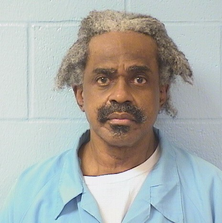
Terry Peder Rasmussen: The Chameleon Killer
Overview
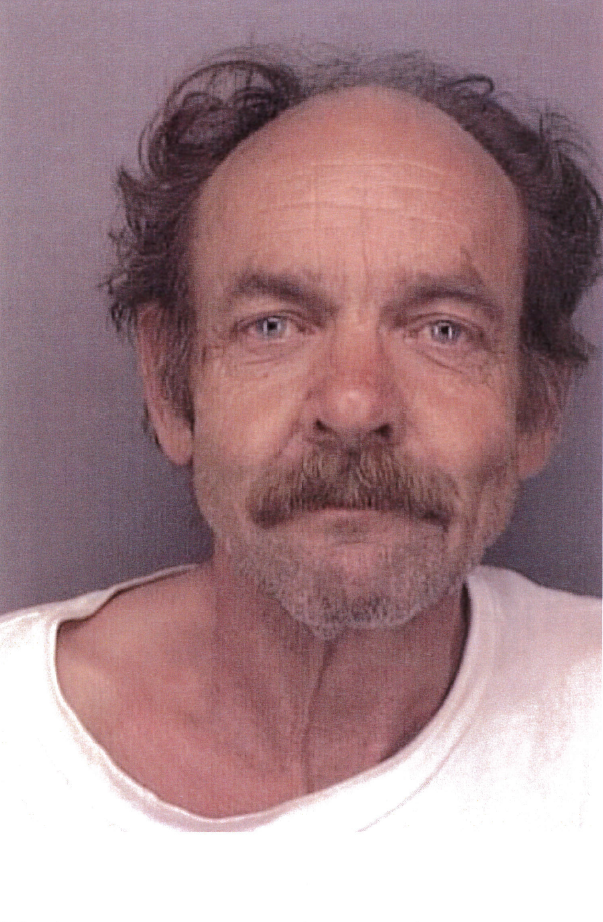
Terry Peder Rasmussen was an American serial killer whose crimes remained concealed for decades because he repeatedly changed his name, moved between states, and formed relationships with women whose disappearances were not immediately reported. Born on December 23, 1943, in Denver, Colorado, Rasmussen used numerous aliases, including Robert “Bob” Evans, Curtis Mayo Kimball, Gordon Jenson, Gerry Mockerman, and Lawrence “Larry” Vanner. His ability to assume new identities eventually earned him the nickname “The Chameleon Killer.”
Rasmussen was convicted of only one murder during his lifetime: the killing of Eunsoon Jun in California. After his death, investigators connected him through fingerprints, DNA testing, genetic genealogy, employment records, and witness accounts to the Bear Brook murders in Allenstown, New Hampshire. Authorities have also identified him as the likely killer of missing women Denise Beaudin and Pepper Reed. Investigators believe additional victims may remain unidentified because Rasmussen traveled extensively and significant periods of his life remain undocumented.
The Disappearance of Marlyse Honeychurch and Her Daughters
In 1978, Rasmussen became involved with Marlyse Elizabeth Honeychurch, a young mother living in California. Honeychurch had two daughters from previous relationships: Marie Elizabeth Vaughn and Sarah Lynn McWaters. On Thanksgiving Day in November 1978, Honeychurch argued with members of her family at her mother’s home in La Puente, California. She left with Rasmussen and took both children with her.
Honeychurch, Marie, and Sarah were never seen alive by their relatives again. Their family initially believed they had left voluntarily and started a new life elsewhere. Rasmussen apparently transported the mother and children across the country to New Hampshire, where he was later known as Bob Evans. Investigators believe Rasmussen killed all three, along with his own young daughter, and concealed their bodies inside industrial barrels near Bear Brook State Park.
The precise dates of the four Bear Brook murders have never been established. Investigators determined that the victims were killed sometime after Honeychurch and her daughters disappeared in November 1978 and before the first barrel was discovered on November 10, 1985. Authorities have generally placed the murders in the late 1970s or early 1980s. Because no exact death dates have been verified, the victims should not be assigned specific dates of death.
The Bear Brook Barrel Discoveries
On November 10, 1985, a hunter discovered a metal barrel on private property near Bear Brook State Park in Allenstown, New Hampshire. Inside were the remains of an adult woman and a young girl. Both had suffered fatal blunt-force injuries to the head. Their advanced decomposition prevented investigators from identifying them, and the case remained unsolved for years.
On May 9, 2000, investigators examining the surrounding area located a second barrel approximately 100 yards from the first discovery site. It contained the remains of two additional young girls. Evidence indicated that the second barrel had probably been placed in the woods at approximately the same time as the first but had been overlooked during the original search.
For decades, the four victims were known collectively as the Allenstown Four. DNA testing eventually established that the adult woman was the biological mother of two of the children. In 2019, genetic genealogy identified them as Marlyse Honeychurch, Marie Vaughn, and Sarah McWaters. The remaining child was biologically related to Rasmussen but not to Honeychurch. In September 2025, authorities announced that the final unidentified victim was Rea Rasmussen, Terry Rasmussen’s biological daughter.
Confirmed and Attributed Victims
- Marlyse Elizabeth Honeychurch — Honeychurch was last seen in La Puente, California, around Thanksgiving Day in November 1978. She left with Rasmussen and her two daughters. Investigators believe she was killed sometime between late 1978 and the early 1980s. Her remains were discovered on November 10, 1985, inside a barrel near Bear Brook State Park in Allenstown, New Hampshire. She died from blunt-force trauma to the head.
- Marie Elizabeth Vaughn — Marie, Honeychurch’s older daughter, disappeared with her mother and younger sister in November 1978. She was approximately six years old when last seen. Her remains were found with her mother’s body on November 10, 1985, near Bear Brook State Park. Investigators determined that she had been killed by blunt-force trauma. Her exact date of death remains unknown.
- Sarah Lynn McWaters — Sarah was approximately one year old when she disappeared with her mother and sister in November 1978. Her remains were discovered in the second barrel on May 9, 2000, near Bear Brook State Park. Investigators believe she was killed during the same general period as the other Bear Brook victims, although her exact date of death could not be established.
- Rea Rasmussen — Rea was born in Orange County, California, in 1976 and was the biological daughter of Terry Rasmussen and Pepper Reed. She was estimated to have been between two and four years old when killed. Her remains were discovered with Sarah McWaters on May 9, 2000. DNA proved that Rasmussen was her father, and genetic genealogy established her identity in 2025. Her exact date of death remains unknown, but authorities believe she was murdered in the late 1970s or early 1980s.
- Eunsoon Pamela Jun — Jun was a chemist living in Richmond, California, when she became involved with Rasmussen, who was calling himself Larry Vanner. She disappeared in June 2002. Police later found her partially dismembered body beneath a large pile of cat litter in the basement or crawlspace area of her Richmond residence. She had been killed by blunt-force trauma to the head. Rasmussen pleaded no contest to her murder in 2003 and received a sentence of 15 years to life in prison.
Rea Rasmussen and the Disappearance of Pepper Reed
The identification of Rea Rasmussen created another unresolved branch of the investigation. Rea’s birth certificate identified her mother as Pepper Reed, a Texas-born woman who had lived in California. Reed has not been seen since the late 1970s, after Rea’s birth. Investigators have not located her body or established a verified date or location of death.
Authorities believe Rasmussen may have killed Reed and taken possession of their daughter. Rea’s remains were later transported to New Hampshire and placed in a barrel with the other Bear Brook victims. Reed remains officially missing, and the investigation into her disappearance is active. Because her death has not been conclusively established, she is considered a suspected rather than confirmed victim.
The Disappearance of Denise Beaudin
By 1981, Rasmussen was living in Manchester, New Hampshire, under the name Bob Evans. He became involved with Denise Beaudin, who had an infant daughter. Beaudin was last seen by members of her family during Thanksgiving in November 1981. Soon afterward, Rasmussen, Beaudin, and the child disappeared from their Manchester residence.
Beaudin’s family initially believed the couple had left because of financial difficulties, and she was not immediately reported missing. Rasmussen later appeared in California with Beaudin’s daughter but without Beaudin. He claimed the child was his own and presented himself as a widowed or single father. Authorities believe he murdered Beaudin somewhere between New Hampshire and California, although her body has never been recovered and her date of death is unknown.
Rasmussen retained control of Beaudin’s daughter for several years, changing both his identity and the story of her parentage. In June 1986, while using the name Gordon Jenson, he abandoned the child at an RV park in Scotts Valley, California. She was eventually placed in protective care and adopted. Rasmussen was later prosecuted for child abandonment.
Aliases, Arrests and Flight
Rasmussen’s repeated use of aliases made it difficult for authorities in different jurisdictions to recognize that they were dealing with the same man. He used false names to obtain work, enter relationships, conceal his criminal history, and avoid outstanding warrants. His known identities included Bob Evans in New Hampshire, Curtis Kimball and Gordon Jenson in California, Gerry Mockerman after another arrest, and Larry Vanner during his relationship with Eunsoon Jun.
After abandoning Beaudin’s daughter, Rasmussen was arrested and eventually sentenced to prison. He was paroled in 1990 but quickly violated parole and disappeared again. He remained a fugitive for more than a decade. During this period, he traveled under false identities and left major gaps in his documented history, raising the possibility that he committed additional crimes.
The Murder of Eunsoon Jun
Rasmussen resurfaced in California as Lawrence “Larry” Vanner. In approximately 1999, he began a relationship with Eunsoon Jun, an educated professional who worked as a chemist. The couple participated in an unofficial marriage ceremony in 2001 and lived together in Richmond, California.
Jun disappeared in June 2002. Rasmussen gave evasive explanations about her whereabouts and continued occupying her home. Police became suspicious and questioned him. Fingerprint comparisons revealed that Larry Vanner was actually the fugitive previously known as Curtis Kimball and Gordon Jenson.
Investigators searched Jun’s residence and discovered her remains concealed beneath a large quantity of cat litter. Her body had been dismembered, and evidence showed that she had suffered fatal blunt-force trauma to the head. The concealment of the body allowed Rasmussen to remain in the home and create the appearance that Jun had simply gone away.
Rasmussen was arrested in 2002 and formally charged with Jun’s murder. In 2003, he entered a no-contest plea and was sentenced to 15 years to life in prison. His fingerprints connected his various aliases, but the full extent of his crimes was still unknown.
DNA and the Unraveling of Rasmussen’s Identity
The abandoned child Rasmussen had called his daughter became central to solving the larger mystery. DNA testing established that Rasmussen was not her biological father. Investigators eventually determined through genetic genealogy that she was Denise Beaudin’s daughter. Her true identity connected Rasmussen’s California child-abandonment conviction to Beaudin’s 1981 disappearance in New Hampshire.
That connection placed Rasmussen in New Hampshire during the period when the Bear Brook victims were killed. DNA testing also revealed that he was the biological father of one of the unidentified girls found in the second barrel. Investigators reconstructed his movements and determined that he had worked for a man associated with the property where the barrels were discovered.
In 2017, authorities publicly identified the man previously known as Bob Evans as a suspect in the Bear Brook murders and Beaudin’s disappearance. Later that year, fingerprint analysis and genealogical research established his true identity as Terry Peder Rasmussen. Although he had died years earlier, investigators were finally able to connect his separate identities and crimes.
Suspected Victims
- Denise Beaudin — Last seen around Thanksgiving in November 1981 in the Manchester and Goffstown area of New Hampshire. Rasmussen later appeared in California with her infant daughter but without Beaudin. Authorities believe he killed her, but her remains and exact date of death have never been located or verified.
- Pepper Reed — Reed was the mother of Rea Rasmussen and was last known to be alive in California during the late 1970s. Her disappearance remains under investigation. Authorities believe Terry Rasmussen may have killed her before taking Rea across the country. No body or verified death date has been found.
Death and Continuing Investigation
Terry Peder Rasmussen died on December 28, 2010, while incarcerated at High Desert State Prison in Susanville, California. He was 67 years old. His death was attributed to complications involving lung cancer, chronic obstructive pulmonary disease, and pneumonia. At the time, he had not yet been publicly connected to the Bear Brook murders.
Investigators continue examining Rasmussen’s movements through California, New Hampshire, Texas, Arizona, Oregon, Virginia, and other states. Because he changed identities frequently and targeted women who could be separated from relatives, authorities believe some victims may never have been reported missing or may remain unidentified in unsolved cases.
Rasmussen’s case became a landmark example of how DNA analysis and genetic genealogy can connect unidentified remains, missing people, abandoned children, and offenders using false identities. The identification of all four Bear Brook victims restored their names after decades, but the unresolved disappearances of Denise Beaudin and Pepper Reed demonstrate that the full scope of Rasmussen’s crimes remains unknown.