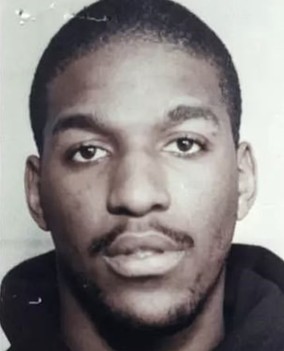
Robert Neal Rodriguez: The Officer Who Confessed
Overview
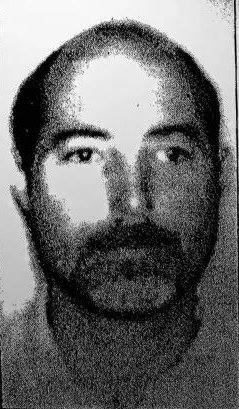
Robert Neal Rodriguez was a former police officer who confessed to the murders of three females in northern Florida between 1984 and 1992. For eight years, the murder of a Tallahassee college student remained a cold case. It was only after Rodriguez committed a brutal double murder of two teenage girls on a remote beach that the investigation led to him. Before he could be apprehended, Rodriguez, age 42, fled across the country, mailing detailed confessions and calling investigators to admit his guilt. He ended his own life with cyanide at a New Mexico rest stop, closing the case but leaving a legacy of pain and unanswered questions for the families of his victims. His motive, as he explained it, was to silence his victims after his attempts to sexually assault them failed.
Early Life and Police Career
Born in Portland, Oregon, in 1950, Robert Neal Rodriguez grew up in a transient military family. The son of a U.S. Air Force veteran of 22 years, he moved frequently, attending schools in Florida, Georgia, and Alabama before graduating from high school in Fort Walton Beach, Florida. He went on to attend Okaloosa-Walton Junior College and later enrolled at Brigham Young University in Utah, where he converted to Mormonism.
Rodriguez’s early adulthood was marked by a commitment to his new faith; he spent two years in Guatemala as a Mormon missionary. Upon his return, he earned a law enforcement degree from BYU. In March 1975, he was hired by the Portland Police Bureau in his birth city. However, his law enforcement career was short-lived. He resigned just two years later, in 1977. While most reports state he left on good terms, one news article from the time quoted a Portland officer who claimed Rodriguez quit after becoming involved with Scientology.
After leaving the police force, Rodriguez moved to Tallahassee, Florida, to live with his mother. There, he took graduate classes at Florida State University and worked a series of odd jobs, including as a sign-painter, a newspaper deliveryman, and a maintenance man for an apartment complex. He also became an active member of the local Unity Church, where he occasionally delivered sermons. To those who knew him, he presented a quiet and religious facade, belying the violent compulsions he would later confess to harboring since he was a teenager.
The Murder of Valerie Hunt
In June 1984, the quiet community of Tallahassee was shaken by the disappearance of 22-year-old Valerie Hunt. A student at Tallahassee Community College, Hunt was last seen at the city's Westwood shopping center. For three months, her whereabouts remained a mystery. The search came to a grim end when her skeletal remains were discovered in a sinkhole in rural Wakulla County. The state of the remains made it difficult for medical examiners to determine a precise cause of death, and with few leads, the investigation eventually went cold. For eight years, her family lived without answers, her murder an unsolved file in the archives of the Florida Department of Law Enforcement (FDLE). It would take another, even more shocking crime, to finally bring the truth of what happened to Valerie Hunt to light.
The Murders of Megan Carr and Cherish DeSantis
On March 27, 1992, two best friends from Thomasville, Georgia, drove to the Florida coast to enjoy a day of sun during their spring break. Megan Carr and Cherish DeSantis, both 16-year-old high school juniors, were inseparable. Megan was active in her school's band and drama troupe, while Cherish was a cheerleader. They came from well-known families in their small town and were looking forward to a carefree day on the secluded beach at Alligator Point in Franklin County.
They left home around 10 a.m. and arrived at the beach sometime after noon. At approximately 2 p.m., a vacationing police officer and his wife were walking along the shore when they discovered the girls' bodies. Both were still in their bikinis, lying on their beach towels. They had each been shot twice in the head with a .38-caliber handgun.
The crime scene was perplexing for investigators. There were no signs of a struggle, and neither robbery nor sexual assault appeared to be the motive; the girls' purses and valuables were left untouched at the scene. The Franklin County Sheriff's Office, assisted by the FDLE, launched an intense investigation, but with no weapon and few witnesses, the case quickly stalled. One person at the beach recalled seeing a suspicious car, but it was a slim lead in a crime that seemed to have no rational explanation.
The Victims
- Valerie Hunt, 22 — A student at Tallahassee Community College, she disappeared from a shopping center in June 1984. Her family and community were left without answers for eight years until her killer confessed.
- Megan Marie Carr, 16 — A high school junior from Thomasville, Georgia, who was active in her school's band and drama programs. She and her best friend were enjoying a spring break trip to the beach when their lives were tragically cut short.
- Cherish Fountain DeSantis, 16 — A cheerleader and the best friend of Megan Carr, she was known to friends as "Sherry." The two girls, born just a day apart, were lifelong friends who were killed together on March 27, 1992.
Investigation and Breakthrough
The investigation into the murders of Megan Carr and Cherish DeSantis floundered for weeks. Then, on May 15, 1992, the case broke wide open. The FDLE received a phone call from a woman who identified Robert Neal Rodriguez as the killer, stating that her ex-boyfriend had confessed the crime to her. Investigators had, in fact, already spoken to Rodriguez. His car matched the description of the suspicious vehicle seen at Alligator Point, and he had been interviewed on May 5. Shortly after that interview, and following the recent death of his mother, Rodriguez disappeared from his Tallahassee apartment.
Just hours after the tip from his ex-girlfriend, Rodriguez himself called the FDLE from a payphone. In the chilling call, he confessed not only to the murders of Carr and DeSantis but also to the 1984 murder of Valerie Hunt. He provided details about the crime scenes that only the killer could have known, leaving no doubt in the minds of investigators that they were speaking to the man responsible. Rodriguez told them he had mailed a more detailed confession to an FDLE agent and warned them that he intended to take his own life.
The Final Pursuit and Suicide
After his phone call to the FDLE, Robert Neal Rodriguez became a fugitive. He had already sent multiple letters, including a six-page confession to FDLE agent Delbert McGarvey and another to the *Arizona Daily Sun* newspaper in Flagstaff. In the letter to the newspaper, he gave a tip on a "good news story," stating that his body would be found in the Coconino National Forest. He wrote, "I don't think they could prove any of the three, but I can't live with myself if I'm going to act like this."
On Saturday, May 16, 1992, authorities in New Mexico found Rodriguez’s 1979 Plymouth Volare, bearing stolen Utah license plates, at a rest stop along Interstate 40 near the town of Grants. His body was inside. He had died by ingesting cyanide powder from a small vial. He left a note on his car warning authorities not to attempt mouth-to-mouth resuscitation. At the age of 42, the man who had evaded justice for his first murder for eight years had chosen his own end rather than face capture.
Aftermath and Legacy
The confession letters from Robert Neal Rodriguez provided a horrifying window into his crimes. He admitted to the FDLE that he had harbored fantasies of rape since he was a teenager. He explained that he drove to Alligator Point on March 27 specifically looking for a victim. When he encountered Megan Carr and Cherish DeSantis, he intended to rape Cherish. He shot Megan first, and when Cherish began to scream, he shot her as well, before shooting each girl a second time to ensure they were dead.
Regarding his first victim, he confessed to abducting Valerie Hunt from the shopping center and taking her to a remote pond, where he slit her throat with a knife. He claimed he did not rape her and that she had pleaded with him not to hurt anyone else. After her murder, he wrote, he decided he would kill himself if he ever took another life.
Rodriguez's suicide meant he would never stand trial for the three lives he destroyed. For the families of Valerie Hunt, Megan Carr, and Cherish DeSantis, the confessions brought a painful resolution but no true justice. The case stands as a chilling reminder of how a seemingly quiet, religious man who had once worn a police uniform could harbor a dark secret life, culminating in a spree of violence that ended only with his own self-inflicted death.