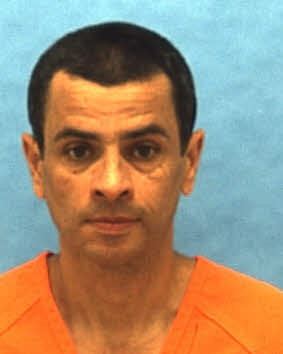
Edward Allen See: Confessed Serial Killer and Violent Offender
Background and Criminal History
Edward Allen See, also known by the alias David Penny, was born in North Carolina in 1947. Although relatively little reliable information is publicly available about his childhood and early adulthood, court records and later accounts establish that he developed an extensive history of violent criminal behavior. His offenses included armed robbery, kidnapping, rape and murder. By the time authorities connected him to killings in Nevada and North Carolina, See had already demonstrated a willingness to use weapons, intimidation and sexual violence against vulnerable victims.
See traveled between states and used different names, making it more difficult for authorities to trace his movements and identify the full extent of his crimes. He is known to have spent time in Nevada during 1979, when several women disappeared from bars and casinos in the Las Vegas area. He later returned to North Carolina, where an armed restaurant robbery led to his arrest and eventually opened the door to an investigation of his suspected murders.
The 1979 Las Vegas Murders
In September 1979, women in the North Las Vegas area were disappearing after visiting bars, casinos and other late-night establishments. Witnesses reported seeing some of the women with an unfamiliar man. The cases were initially difficult to solve because the offender appeared to be passing through the area and left little evidence that immediately revealed his identity.
See was eventually convicted of murdering Sheila Gay Griffith and Johnsie Bame. Both women encountered him under different circumstances, but each was persuaded to enter or remain in his vehicle. See later admitted that he strangled both women and abandoned their bodies in remote desert locations. Griffith's remains were recovered, while Bame's body was never found.
Sheila Gay Griffith
Sheila Gay Griffith was a 22-year-old cocktail waitress who had recently moved from Oklahoma to Nevada. She was living with her sister in North Las Vegas and had obtained a job at Caesars Palace approximately one month before her disappearance.
On the evening of September 23, 1979, Griffith and her sister visited the Silver Nugget Casino in North Las Vegas. The sisters initially left together, but Griffith later returned to the casino alone to eat. Witnesses last saw her leaving the establishment with a white man described as having brown hair, a medium build and a height of approximately five feet seven inches to five feet nine inches.
Griffith's 1972 Plymouth Satellite was discovered on September 30, 1979, behind a hotel in Eloy, Arizona. The vehicle had been deliberately burned. Investigators determined that a toolbox had been removed from the car, suggesting that robbery may have been one of the offender's motives. The location of the abandoned automobile also indicated that the killer had traveled south after leaving Nevada.
On November 27, 1979, a rabbit hunter discovered Griffith's nude body wrapped inside a sleeping bag in a ravine near Whiskey Pete's Casino, close to the Nevada-California state line. Several of her teeth were missing, but authorities were able to identify her remains. The medical examiner determined that she had been strangled. Evidence indicated that she had been dead for a considerable period, and investigators believed she was killed shortly after she disappeared on September 23.
After his arrest, See admitted that he had persuaded Griffith to leave the Silver Nugget with him. According to his confession, he became angry when she rejected his sexual advances. He sexually assaulted her, strangled her and transported her body to the remote ravine where it was later found.
Johnsie Bame
Johnsie Bame was approximately 62 years old when she disappeared in the Las Vegas area during the fall of 1979. She had been leaving a casino when she slipped in the parking lot and badly scraped her knee. See noticed her injury and approached her while pretending to be a helpful stranger.
See offered Bame a ride home so that she could clean and treat the wounds on her legs. She accepted the offer and entered his vehicle. After taking her home, See reportedly offered to drive her back to the casino. During the return trip, however, he attacked and strangled her.
See later admitted that he abandoned Bame's body somewhere in the Nevada desert. He claimed that he could no longer remember the exact location. Extensive searches failed to recover her remains, leaving her family without the opportunity to bury her. Despite the absence of a body, prosecutors accepted See's confession and supporting information, and he pleaded guilty to her murder.
Confirmed and Suspected Victims
- Sheila Gay Griffith, age 22: Last seen alive on September 23, 1979, leaving the Silver Nugget Casino in North Las Vegas, Nevada. She was believed to have been killed shortly afterward. Her body was found on November 27, 1979, in a ravine near Whiskey Pete's Casino at the Nevada-California state line. Her cause of death was strangulation.
- Johnsie Bame, approximately age 62: Disappeared in the Las Vegas, Nevada, area during the fall of 1979 after accepting a ride from See. See confessed that he strangled her and left her body in the desert. Her remains have never been recovered, and an exact date of death has not been publicly established.
- Unidentified North Carolina victim: See was reportedly convicted of one murder in North Carolina after confessing to multiple killings. Publicly available accounts provide limited consistent information about the victim's identity, location and exact date of death.
- Linda Jenkins, suspected victim: Last seen alive during the early morning hours of September 8, 1979, after leaving a North Las Vegas bar with a man known as “Al.” Her body was discovered in the desert south of Blue Diamond Road on September 23, 1979. See was in the area, matched aspects of the witness description and may have used a shortened version of his middle name, but he was never charged with Jenkins's murder. Her case officially remains unsolved.
The Unsolved Murder of Linda Jenkins
Linda Jenkins was a young mother of two and an employee at a downtown Las Vegas clothing store. On the night of September 7, 1979, she went drinking with a friend at several North Las Vegas establishments. During the evening, Jenkins reportedly caught a stranger searching through her purse. Despite the suspicious encounter, Jenkins and her friend continued socializing with the man, who introduced himself as “Al.”
After leaving the Sky Club, Jenkins drove her friend home. At approximately 3:00 a.m. on September 8, she drove away with “Al” sitting in the passenger seat. She was never seen alive again. Her body was found on September 23 in an undeveloped desert area south of Blue Diamond Road and Arville Street. Her abandoned 1972 Ford Maverick was discovered on October 1 at Lindbergh Field in San Diego, California. Records indicated that the car had been parked there since September 9.
Investigators believed Jenkins may have been murdered inside her vehicle while traveling toward San Diego. Witness descriptions of “Al” were reportedly similar to descriptions of the man seen with Sheila Griffith. See was operating in the Las Vegas area at the time, and the name “Al” could have been derived from his middle name, Allen. Nevertheless, no physical evidence has publicly established that See killed Jenkins, and authorities never formally charged him in her death.
Arrest in North Carolina
See's freedom ended after an armed robbery at a McDonald's restaurant in Robeson County, North Carolina. On October 16, 1979, a man carrying a small revolver entered the restaurant and threatened employees. Witnesses later testified that the weapon resembled a .22-caliber handgun displayed during See's trial.
The robbery was connected to a series of additional violent crimes committed during the same period. Evidence presented in court showed that See kidnapped and sexually assaulted a woman while using threats and a firearm to control her. During the ordeal, he allegedly told the victim that he had previously kidnapped another woman, increasing her fear that she would be seriously harmed or killed.
See was tried under the name Edward Allen See, also known as David Penny. He was convicted of serious offenses that included armed robbery, kidnapping and rape. His prior violent felony record contributed to the imposition of consecutive life sentences. The North Carolina Supreme Court reviewed his case in 1980 and found that he had received a fair trial.
Confessions to Multiple Murders
Once See understood that he was facing life imprisonment, he began speaking with investigators about murders he claimed to have committed. He reportedly told authorities that he had been sentenced to all the time they could give him and then confessed to five killings. FBI agents participated in interviews concerning the alleged murders.
Among the five killings were the murders of Sheila Griffith and Johnsie Bame in Nevada. He also provided information concerning at least one homicide in North Carolina. The complete identities and circumstances of all five claimed victims were not consistently disclosed in surviving public accounts, making it impossible to determine whether every confession was independently verified.
His statements nevertheless contained enough information about Griffith and Bame for Nevada authorities to prosecute him. The details concerning how the women were approached, strangled and left in desert locations were consistent with the known circumstances of their disappearances.
Nevada Murder Convictions
See entered guilty pleas to two counts of first-degree murder for killing Sheila Griffith and Johnsie Bame. He received two consecutive life sentences. As part of the legal arrangements surrounding his pleas, See was transferred from North Carolina to serve his punishment in Nevada.
The conviction for Bame's murder was notable because her body had never been recovered. Prosecutors relied on See's confession and the details he gave about approaching her after she fell in the casino parking lot. His admission removed much of the uncertainty surrounding her disappearance, although the location of her remains remains unknown.
Prison Hostage Incident
Imprisonment did not end See's violent conduct. Only months after receiving his Nevada life sentences, he and another inmate attempted to escape from the Nevada State Prison in Carson City. The prisoners armed themselves with knives and confronted a Reno gospel singing group known as the Parable Players after the group performed for inmates.
See and his accomplice took nine singers and the prison chaplain hostage. Among the captives was a 15-year-old girl. The prisoners initially demanded a helicopter and safe passage away from the institution. Negotiators continued speaking with them for several hours and gradually reduced their demands.
By the end of the standoff, See and the other inmate agreed to surrender if they were not harmed and were permitted to receive medical examinations. They handed their weapons to the chaplain and were taken into custody without the hostages being injured. See received an additional 15-year prison sentence for his role in the incident.
Death and Unanswered Questions
Edward Allen See remained imprisoned for the rest of his life and reportedly died of natural causes while in custody. His exact date of death has not been consistently reported in readily available public records.
Although See confessed to five murders, only a limited number of those killings have been described in detail. Sheila Griffith and Johnsie Bame remain his best-documented victims, while the identity of at least one North Carolina murder victim is difficult to establish from accessible records. Questions also continue to surround the unsolved murder of Linda Jenkins and whether See was the man witnesses knew as “Al.”
See's crimes demonstrate how a mobile offender could move between states, use aliases and exploit brief encounters with strangers. He approached victims in public locations, presented himself as friendly or helpful and then attacked once he had gained control. His arrest for an unrelated robbery ultimately exposed his connection to murders committed thousands of miles away and brought legal resolution to two Nevada cases, although the complete number of people he killed may never be known.