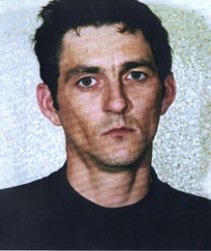
Jose Guerrero: The Madera Serial Killer
Overview
Between 1995 and 1998, a series of brutal murders haunted the agricultural community of Madera, California. Three women were abducted, sexually assaulted, and killed, their bodies left discarded in the rural orchards that surround the city. For years, the cases remained cold, leaving a quiet fear in the Central Valley town. The perpetrator, Jose Manuel Guerrero, was a low-profile day laborer who hid in plain sight. He was only unmasked nearly six years after his last murder, when a routine DNA sample taken after a drunk driving conviction connected him to the long-unsolved crimes. His 2009 trial brought a delayed justice, revealing a pattern of predatory violence and ending with a death sentence.
Early Life and Background
Jose Guerrero was born in 1973 and lived an unremarkable life in his hometown of Madera. Before his eventual arrest for murder, he had no documented history of violent crime and was not on law enforcement's radar for such offenses. He worked as a day laborer and was described by family during his trial as the youngest of eight siblings who had learning disabilities and was shy and non-violent in his youth. This seemingly quiet exterior belied the brutal violence he would later commit. His first recorded offense was for driving under the influence in 1999, an act that would ironically lead to his downfall.
The First Attack and a Survivor
The series of attacks began on November 28, 1995. Evelyn Estrada, 42, accepted a ride from Guerrero on C Street in Madera, an area known for prostitution and drug activity. Once she was in his truck, Guerrero's demeanor changed. He grabbed her, held a grape knife to her throat, and drove to a remote, rural road. There, he punched her and slashed her face and neck, leaving her with permanent scars. Despite her severe injuries, Estrada fought back fiercely and managed to escape. She became the only person to survive an attack by Jose Guerrero. Her harrowing testimony would prove crucial in his trial years later, providing the only eyewitness account of his methods.
The Murders
Julie Ann Woodley
On the morning of April 23, 1995, a farmworker discovered a woman's body in an orchard south of Madera. The victim was identified as 42-year-old Julie Ann Woodley, a native of Madera also known as Julie Ann McDonald. A mother of two, Woodley had been facing difficult circumstances and her children were not living with her at the time. She was last seen alive about eight hours before her body was found. An autopsy revealed she had been sexually assaulted and shot to death; the fatal wound was a gunshot to the heart.
Sharlene Fowler
For nearly three years, the violence seemed to have stopped. Then, on July 14, 1998, the body of 30-year-old Sharlene Fowler was found in another Madera orchard. An autopsy determined that she had been strangled to death. The similarities to the Woodley case were alarming, but without definitive evidence, investigators could not officially link the two murders.
Tamara Jones Hernandez
The final murder occurred four months later. On November 22, 1998, Tamara Jones Hernandez, 22, was in Madera visiting family from her home in Eureka, California. That evening, she left the house on a simple errand to buy milk for her children and never returned. Her body was later found face down near a vineyard. The scene told a story of a violent struggle; prosecutors would later describe her death as "especially gruesome." Hernandez had fought her attacker with all her might, and in doing so, had scratched him, collecting his skin and blood under her fingernails. This final act of defiance would become the key that would ultimately unlock the entire case. An autopsy concluded she had been stabbed to death.
The Victims
- Julie Ann Woodley, 42 — Killed on April 23, 1995, Julie was a mother of two from Madera. She was found in a rural orchard after being sexually assaulted and shot.
- Sharlene Fowler, 30 — Found on July 14, 1998, Sharlene's life was cut short when she was strangled and left in an orchard.
- Tamara Jones Hernandez, 22 — A young mother visiting family, Tamara was abducted and stabbed to death on November 22, 1998. Her fierce struggle for her life provided the crucial DNA evidence that would one day identify her killer.
Investigation and Capture
For years, the murders of Woodley, Fowler, and Hernandez remained unsolved, and the connection between them was not definitively established. The cases went cold, leaving the community with unanswered questions and a lingering sense of unease.
The break came from a completely unrelated incident. In 1999, about six months after Tamara Hernandez's murder, Jose Guerrero was arrested for drunk driving and subsequently sentenced to at least five years in prison. While incarcerated at Wasco State Prison, Guerrero's arrogance became his undoing. He began bragging to fellow inmates about committing violent crimes, including at least three murders.
In 2004, as Guerrero's release date approached, he was required to submit a DNA sample to the state's expanding criminal database. In October of that year, the California Department of Justice crime lab made a stunning match: Guerrero's DNA profile was a perfect match for the DNA recovered from underneath Tamara Hernandez's fingernails. After nearly six years, Hernandez had identified her killer from beyond the grave.
Madera County Sheriff's investigators immediately went to Guerrero's prison cell and arrested him for the murder of Tamara Hernandez. Further DNA testing soon linked him to the murders of Julie Ann Woodley and Sharlene Fowler, as well as the attempted murder of Evelyn Estrada. The seemingly unrelated attacks were now revealed to be the work of a single, brutal serial killer.
Trial and Sentence
In March 2009, Jose Guerrero was ruled competent to stand trial. His case, which began the following month in Madera County Superior Court, was the most high-profile murder trial in the county since the infamous Chowchilla kidnapping case of 1976.
The prosecution, led by Deputy District Attorney Edmund Gil, presented a powerful case built on a foundation of scientific evidence and survivor testimony. The DNA evidence was irrefutable, linking Guerrero to three of the victims. The most compelling witness was Evelyn Estrada, who took the stand and, looking at her attacker, recounted in detail the night he abducted her and slashed her throat. Inmates who had heard Guerrero's jailhouse confessions also testified against him.
Guerrero's defense attorney, Eric Green, did not deny that his client had killed the women. Instead, he argued that the sexual encounters were consensual and that the killings were not premeditated, making Guerrero guilty of second-degree murder rather than first-degree. The defense also claimed Guerrero suffered from mental illness and delusional disorders.
On April 15, 2009, after a ten-day trial, the jury deliberated and found Jose Guerrero guilty on all counts: three counts of first-degree murder and one count of attempted murder. They also found true the special circumstances of committing multiple murders and committing murder during the course of kidnapping and sexual assault, making him eligible for the death penalty.
During the penalty phase, the victims' families delivered emotional impact statements. In a remarkable display of compassion, some family members, along with survivor Evelyn Estrada, initially expressed that they did not want Guerrero to be sentenced to death, preferring he spend the rest of his life in prison. However, after seeing the graphic crime scene evidence, some changed their minds. On April 22, 2009, the jury recommended a sentence of death.
On June 23, 2009, Judge W. DeGroot formally sentenced Jose Guerrero to death. Guerrero, who had shown no emotion throughout the proceedings, was transferred to California's death row at San Quentin State Prison.
Aftermath and Legacy
The conviction of Jose Guerrero brought a sense of closure to a community that had lived with the shadow of these unsolved crimes for over a decade. The case became a landmark for Madera County, highlighting the transformative power of DNA evidence in solving cold cases and the importance of preserving evidence.
For the families of Julie Ann Woodley, Sharlene Fowler, and Tamara Jones Hernandez, the verdict was a long-awaited, albeit painful, form of justice. For Evelyn Estrada, it was a validation of her survival and her courage to confront her attacker in court.
As of today, Jose Guerrero remains on death row. In 2019, California Governor Gavin Newsom placed a moratorium on all executions in the state. Guerrero's case continues to move through the automatic appeals process, but he remains confined within the walls of San Quentin.